
Ginkgo
A deciduous tree in the ginkgo family, recognizable by its fan-shaped leaves and yellow autumn foliage.
- Scientific name
- Ginkgo biloba
- Family
- Ginkgoaceae
- Other names
- Maidenhair tree
- Reviewed
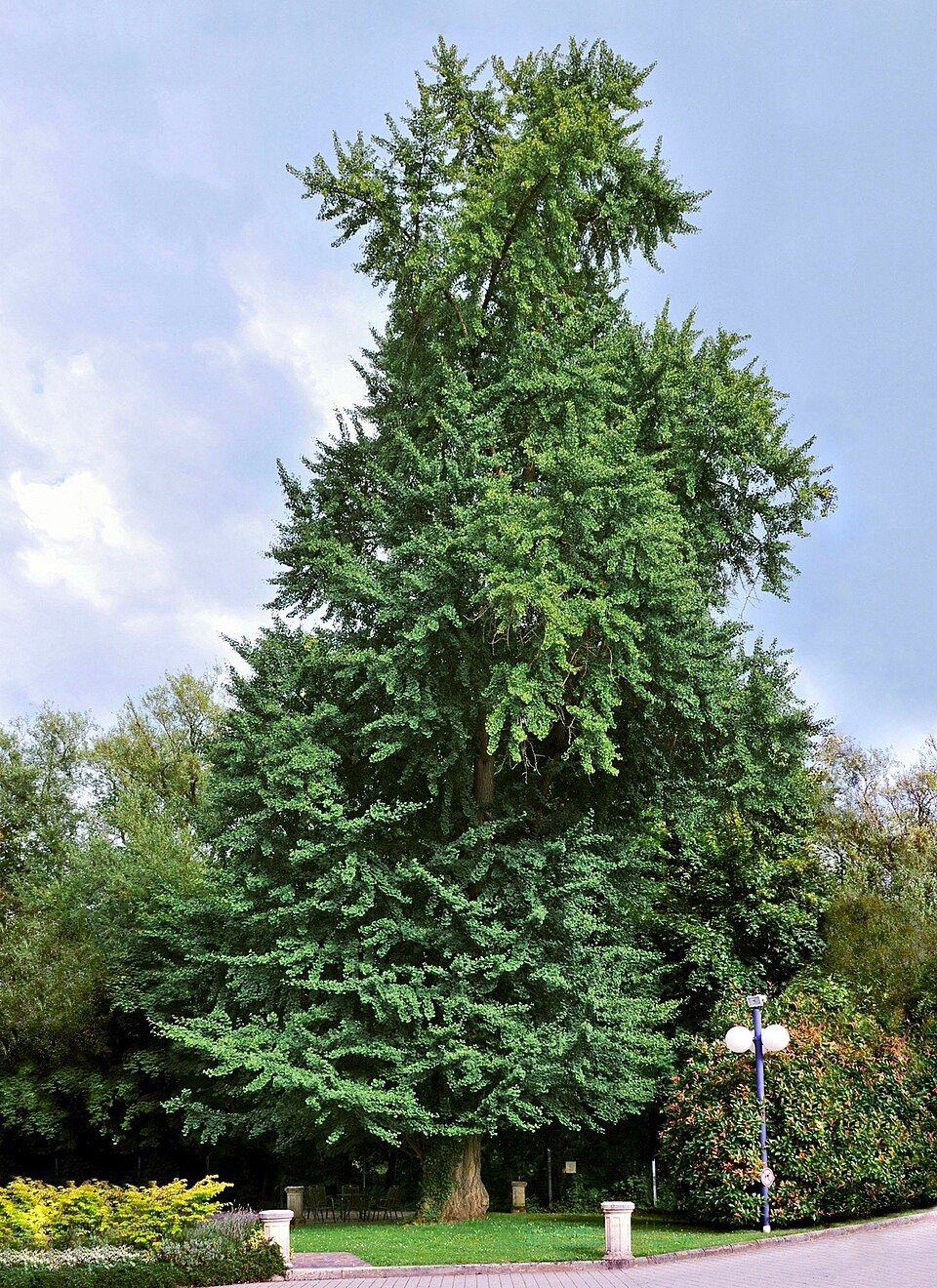
A reference photograph of ginkgo. Leaf shape and color can vary between specimens and seasons.
Photo credit: EecherplazGinkgo06.jpg : Cayambe derivative work: Ginkgotree ( talk )
License: CC BY-SA 3.0
The photograph was resized and converted to JPEG.
Names and classification
Ginkgo is a gymnosperm in the ginkgo family, belonging to a different lineage from flowering trees. This entry covers Ginkgo biloba; horticultural cultivars with different sizes and forms are distinguished.
Observable features
The fan-shaped leaves have veins that repeatedly fork. The notch at the leaf tip varies, and foliage turns yellow in autumn, so a single leaf shape does not identify a cultivar.
Distribution and habitat
Natural populations are known in China, while the tree is widely planted in parks and along streets in many countries. Being common in a city does not mean it is native to that region.
Ecology and life cycle
Male and female reproductive structures generally occur on separate trees. The outer seed tissue on female trees becomes thick and fleshy, but is not structurally the same as a flowering plant's fruit.
Cultivation and care
A sunny, well-drained site is suitable. Allow space for the mature tree and consider where seeds will fall, checking the characteristics of cultivars and grafted specimens as well.
Observation and use precautions
The outer seed tissue can irritate skin, and eating large quantities of seeds carries a poisoning risk. Do not use this article to decide whether to collect, eat or use the plant medicinally.