
Sacred lotus
A perennial aquatic plant that sends large leaves and flower stalks up from rhizomes rooted in mud.
- Scientific name
- Nelumbo nucifera
- Family
- Nelumbonaceae
- Other names
- Indian lotus · Lotus
- Reviewed
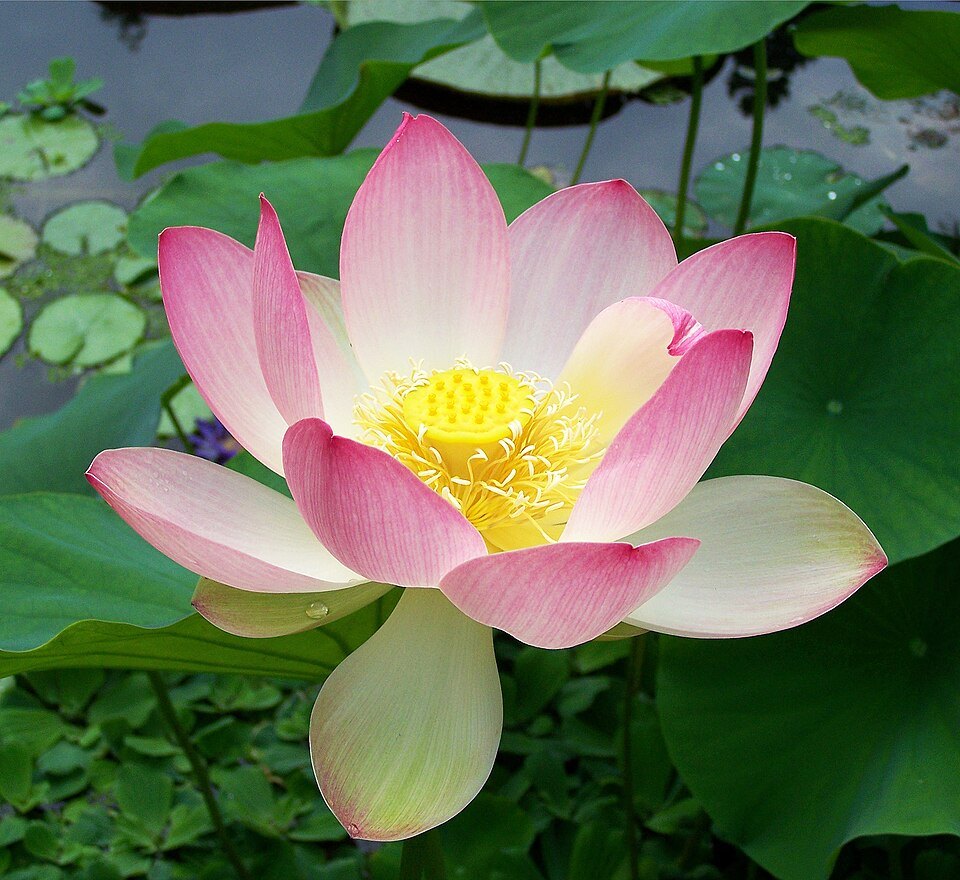
A reference photograph of sacred lotus. Leaf and flower color, size and height above water can vary with growing conditions and cultivar.
Photo credit: T.Voekler
License: CC BY-SA 3.0
The photograph was resized and converted to JPEG.
Names and classification
Sacred lotus is a perennial aquatic plant in the lotus family. It is distinguished from water lilies that spread leaves on the surface; this entry covers Nelumbo nucifera.
Observable features
The leaf stalk joins near the center of a round leaf, and leaves and flowers may rise above the water. After flowering, the distinctive receptacle with seed-containing holes can be observed.
Distribution and habitat
Its known distribution is centered on Asia, and it grows in ponds and calm, shallow water. Its long history of cultivation and transport means a pond specimen should not immediately be regarded as native locally.
Ecology and life cycle
It roots in underwater mud and spreads sideways through thick rhizomes. Leaves and flower stalks connect submerged growing parts with the space above water; vigorous spread can cover large areas of a pond.
Cultivation and care
Grow it in a sunny location without strong waves. Consider container or pond depth together with cultivar, and check overwintering conditions in cold regions so the rhizomes do not freeze through.
Observation and use precautions
Do not transfer it to other ponds or natural wetlands, and check local aquatic-plant management rules. Its sale as a food ingredient does not mean collecting or eating outdoor specimens is safe.