
Birds
Eurasian Tree Sparrow
Tree Sparrow
Classification and scientific name: Passer montanus
Sources checked:
A sparrow with a brown crown and black cheek spots
The bird commonly called chamsae in Korea is the Eurasian tree sparrow, Passer montanus.
Origins and distribution
Native to Eurasia; introduced in some regions
- Tree sparrow
- Seeds
- Insects
- Around people
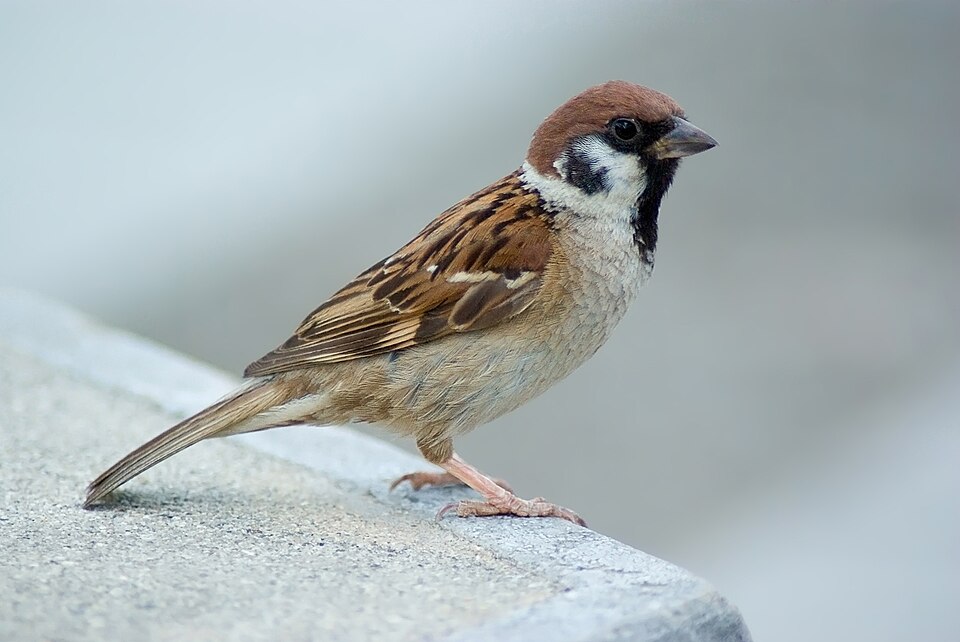
Reference photograph
Reference photograph of a Eurasian tree sparrow. Examine this individual's color and form alongside the identification descriptions in the text.
Source: Laitche · Original material · Public domain
1. Classification, origins and habitat
The bird commonly called chamsae in Korea is the Eurasian tree sparrow, Passer montanus. The broad English name sparrow includes house sparrows and even North American sparrows from other families, so photographs must be distinguished. It uses wooded open environments, farmland and areas around homes in Eurasia, and people introduced it to some continents. Being seen near people does not mean living only on human food. Ground and grasses for foraging and holes for shelter or nesting are necessary. Group size and site use may vary with season and region, so do not generalize observations in one alley to the whole species' life.
2. Appearance and identification
A brown crown, black spots on pale cheeks and a dark area below the throat are important identification features. Compare these with a male house sparrow's gray crown. The back has brown and black markings, and the bill suits handling seeds. This species looks different from the house sparrow, whose sexes have very distinct plumage, so do not assign every individual's sex by face color alone. Juveniles' paler patterns can also differ from adults' clearer markings. Bright exposure can obscure cheek spots in photographs; checking crown, wings and the source's species name together is more accurate.
3. Behavior and way of life
Plant foods include seeds and grain, while insects and other small animal foods also matter during breeding. Do not assume food given to nestlings is the same as adults' winter diet. Nests are made in sites such as tree holes and building gaps, and birds communicate vocally with others. Groups at feeding and resting sites are familiar, but relationships around nests vary seasonally. Hopping on the ground and short flights while foraging respond even to small environmental changes. Coming close does not mean a bird can be touched, and the distance of familiarity with people differs by place.
4. Observation, conservation and care
When observing sparrows, also consider hazards around people, including windows, roads and cats. Blocking nest holes or photographing closely during breeding can disturb care of young. Instead of feeding, consider maintaining vegetation with insects and seeds, and safe resting places. Throwing salty human food or bread to wild birds differs from natural foraging. Keep the exact species name in photographs to avoid wrongly applying house sparrow sex differences to this description. Even common birds differ in regional trends, so frequent sightings nearby are not a good reason to judge habitat condition.
Evidence and references
- Animal Diversity Web — Passer montanus
Classification, distribution, appearance, diet and reproductive behavior
- Cornell Lab — Eurasian tree sparrow
Tree sparrow identification, habitat, diet and reproduction