
Dinosaurs
Triceratops
Triceratops
Classification and scientific name: Triceratops
Sources checked:
A latest-Cretaceous ceratopsian with three horns and a broad frill
Triceratops was a ceratopsian dinosaur living in Late Cretaceous North America. Its name refers to a three-horned face, taken from the long horns above the eyes and the horn above the nose.
Origins and distribution
Late Cretaceous, North America
- Triceratops
- Extinct animal studied through fossils
- Distinguish reconstruction from evidence
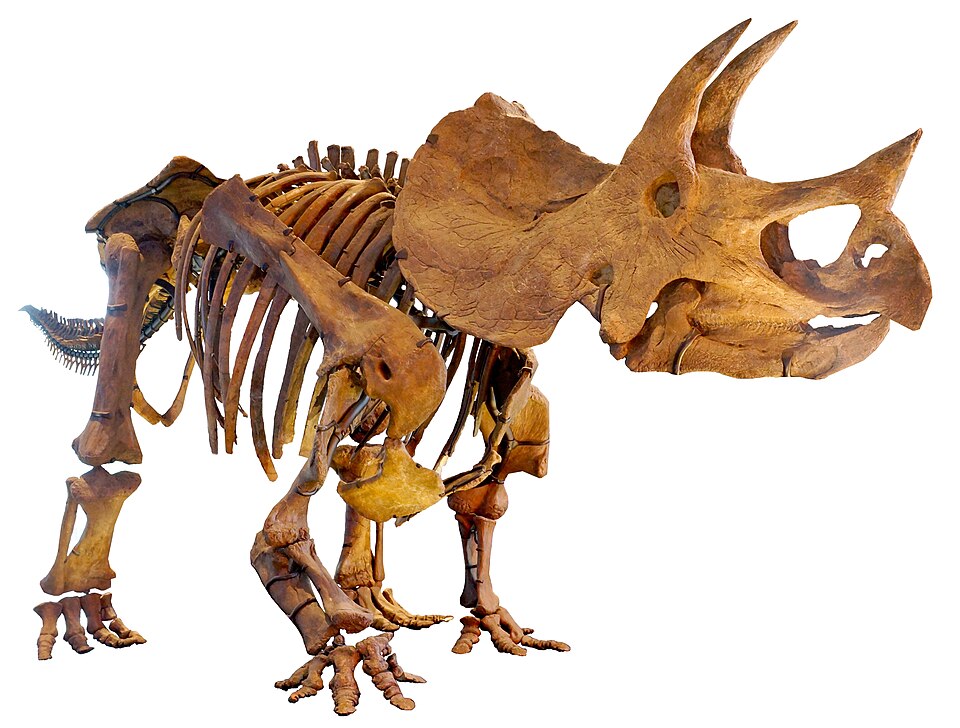
Fossil or skeletal specimen
Triceratops fossil or skeletal exhibit material. Displays may include replicated or supplemented parts; this is not a photograph of a living individual.
Source: Source: Allie_Caulfield Derivative: User:MathKnight · Original material · CC BY-SA 3.0
1. Classification, discovery and geological context
Triceratops was a ceratopsian dinosaur living in Late Cretaceous North America. Its name refers to a three-horned face, taken from the long horns above the eyes and the horn above the nose. It is found in strata of a similar time and region to Tyrannosaurus, so they frequently appear together in studies of the same ecosystem. However, fossils from the same strata cannot by themselves reconstruct a particular single confrontation. Comparing skulls from different specimens also allows study of growth and species distinctions.
2. Appearance and identification
Features include a broad bony frill behind a large head, horns, beak-like front jaws and teeth for processing plants. Four legs supported the heavy body, and the frill was part of the skull, rather than a separate ornament worn around the neck. Distinguish the preserved bony horn cores from the outer covering present in life. In skull photographs, observing the starting positions of brow horns, the nasal horn and the frill margin together helps comparisons with other ceratopsians. Horn count alone should not make every ceratopsian the same species.
3. Evidence for ecological interpretations
Beak, teeth and jaw structures support an interpretation of herbivory, cutting and processing plants. Several possible functions of horns and frills are discussed, including defense, signals and contact within the species. Bone damage and healing traces help behavioral research, but not every wound arose in a fight with a predator. Descriptions of always living in family herds or invariably having an aggressive temperament require separate evidence. The key is to distinguish descriptions of body structure from inferences about how that structure was used.
4. Limits of the fossil record and reconstructions
Studying the preservation of discovered bones alongside surrounding sediments helps investigate the terrestrial environment and processes of fossil accumulation. Museum skeletons may be completed using several specimens or replicas, so check specimen information on labels. The Triceratops appearance shown on this page is also fossil material or reconstruction, rather than photographic records of a living animal. Body colors, skin around the eyes and distances between individuals in reconstructions are not all established by bones. Observe by comparing actual skull evidence with interpretation in images.
Evidence and references
- Natural History Museum — Triceratops
The genus's discovery regions, geological time, skeleton and interpretations of diet
- UC Museum of Paleontology — Ornithischian dinosaurs
Distinguishing ornithopod, ceratopsian, stegosaur and ankylosaur lineages