
Amphibians
Poison Dart Frog
Poison Dart Frog
Classification and scientific name: Dendrobates tinctorius
Sources checked:
Distinguish poison dart frogs generally from the dyeing poison frog's colors and life cycle
Poison dart frog is a common name for several species in the poison frog family. Here the dyeing poison frog Dendrobates tinctorius is the representative.
Origins and distribution
The Guianas region and surrounding forests of northeastern South America
- Dendrobates tinctorius
- The Guianas region and surrounding forests of northeastern South America
- Observe species-specific ecology
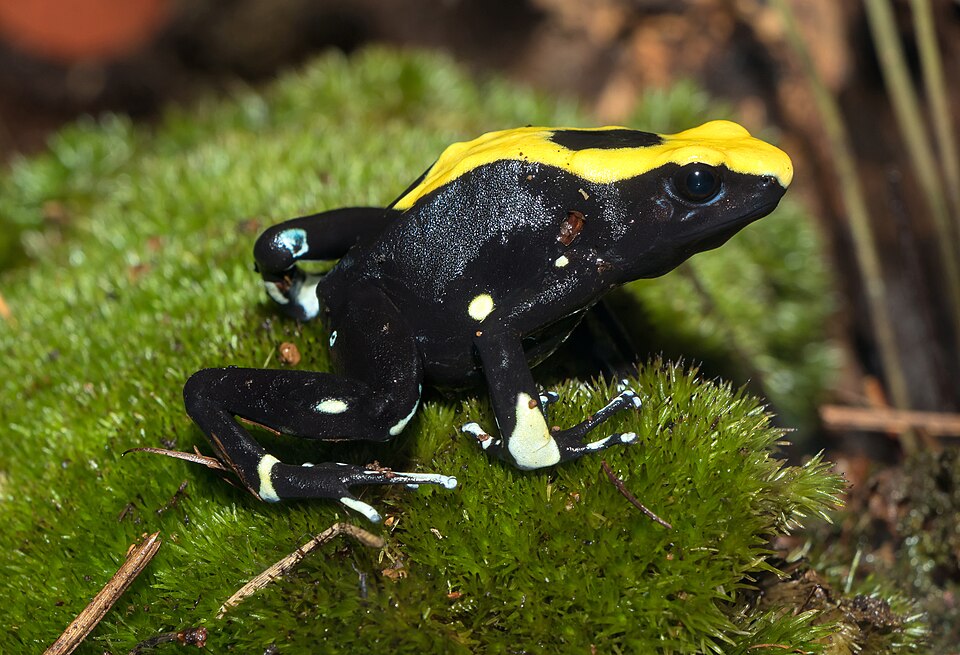
Reference photograph
Reference photograph of a poison dart frog. Examine this individual's color and form alongside the identification descriptions in the text.
Source: H. Zell · Original material · CC BY-SA 3.0
1. Classification, origins and habitat
Poison dart frog is a common name for several species in the poison frog family. Here the dyeing poison frog Dendrobates tinctorius is the representative. Naturally distributed in northeastern South American forests, it is known for varied regional yellow, blue and black patterns. The cultural history of using poison on darts directly concerns some other poison frog species, so do not generalize that this species was used identically.
2. Appearance and identification
Examine the small body, strongly contrasting patterns, and legs and toes used to move over leaves and ground. Colors and patterns vary with regional populations and captive lines, so one brilliant photograph cannot be the standard for every individual. A blue form previously known under a separate name also requires checking classification material. An explanation of warning coloration and specific toxicity strength are different information; do not simplify them into a ranking where brighter colors mean greater danger.
3. Behavior and way of life
They use small arthropods during the day, and care of eggs and tadpoles during breeding is known. Adults carrying tadpoles to water connect aquatic larval stages with terrestrial adult life. Skin alkaloids relate to wild food, but do not assert captive individuals are always entirely nontoxic and safe to touch. Other poison frogs' parental-care methods must not be copied as all this species' behavior.
4. Observation, conservation and care
Leaf litter, cover, small water environments for breeding and forest microconditions matter. A ground-dwelling adult does not mean an animal whose life cycle can be completed without water. Observe on natural leaves and ground rather than placing animals on a hand for photographs. Match this page's representative photograph to the source's scientific name, without combining other poison frogs' brilliant colors, toxicity records and distributions as one animal's features.
Evidence and references
- University of Michigan, Animal Diversity Web — Dendrobates tinctorius
The species's distribution, appearance, diet, reproduction and life cycle
- Animal Diversity Web — Dendrobates tinctorius classification
Amphibian classification and close groups associated with this scientific name