
Amphibians
Japanese Tree Frog
Tree Frog
Classification and scientific name: Dryophytes japonicus
Sources checked:
Rounded toe tips and breeding calls: the tree frog encountered in Korea
The tree frog on this page means the East Asian Dryophytes japonicus, without grouping all animals called tree frogs in different countries into one species. Older material uses the scientific name Hyla japonica.
Origins and distribution
East Asia, including the Korean Peninsula and Japan
- Dryophytes japonicus
- East Asia, including the Korean Peninsula and Japan
- Observe species-specific ecology
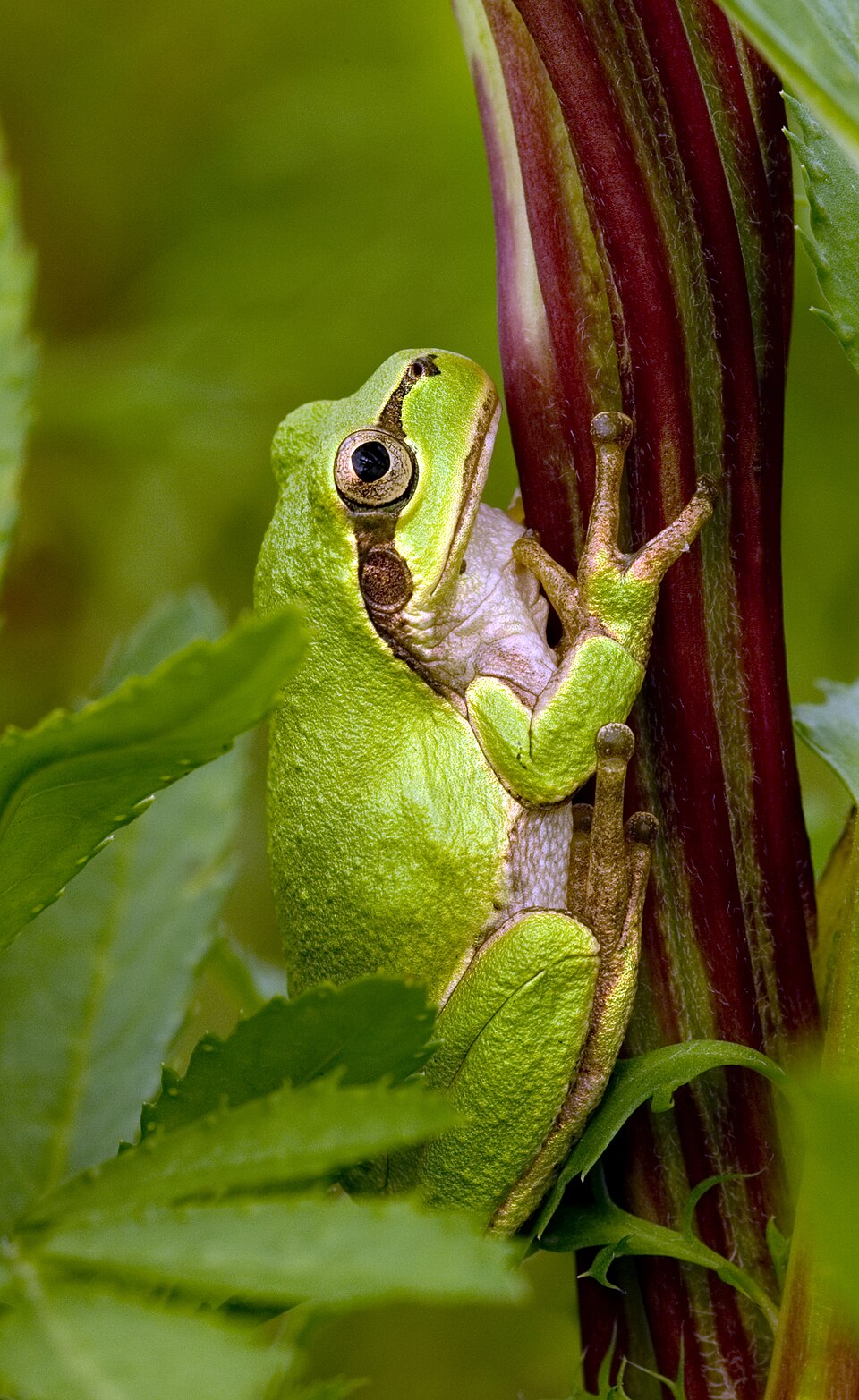
Reference photograph
Reference photograph of a Japanese tree frog. Examine this individual's color and form alongside the identification descriptions in the text.
Source: 池田正樹 ( talk )masaki ikeda · Original material · Public domain
1. Classification, origins and habitat
The tree frog on this page means the East Asian Dryophytes japonicus, without grouping all animals called tree frogs in different countries into one species. Older material uses the scientific name Hyla japonica. Familiar in Korea around rice paddies and watersides, using grasses and shrubs, this amphibian's ecology cannot be replaced with its personality in traditional tales. Scientific names, calls and distribution evidence must also distinguish close Suweon tree frog relatives.
2. Appearance and identification
A small body, long hind legs and rounded, expanded toe tips can be observed. Although known as green, brown shades also occur with environment and condition, so do not consider only green frogs the same species. The stripe beside the eye, skin and body proportions also provide comparison material. The toe tips' adhesion is better understood as attachment using contact surfaces and moisture than as a simple suction-cup analogy.
3. Behavior and way of life
They eat small insects and other food, and breeding males inflate vocal sacs to signal. Saying that approaching rain makes them happy and sing oversimplifies breeding, communication, temperature and humidity conditions. Tadpoles grow in water; after metamorphosis, legs, breathing methods and used spaces change. An adult resting on grass is not an animal unrelated to water.
4. Observation, conservation and care
Maintaining the life cycle requires connecting aquatic egg and tadpole stages with terrestrial food and hiding spaces. Rice-paddy water management, surrounding vegetation and pesticides may have different effects, so consider the whole habitat. Observe frogs on their current leaves and stems instead of lifting them for photographs or rubbing their skin. Check scientific names and provenance together to avoid attaching another continent's red-eyed tree frog features to a Korean tree frog photograph.
Evidence and references
- National Institute of Biological Resources — Amphibian ecology: Japanese tree frog
Tree frog classification, distribution, habitat and life cycle
- Animal Diversity Web — Hyla japonica classification
Amphibian classification and close groups associated with this scientific name