
Mammals (Pigs)
Miniature pig
Miniature Pig
Classification and scientific name: Sus scrofa domesticus
Sources checked:
Coat color, ear shape and proportions of the snout and body differ between lines
Miniature pig is not an internationally uniform breed name referring to only one bloodline. Coat color, ear shape and proportions of the snout and body differ between lines.
Origins and distribution
Several domestic pig breeds and small lines
- Miniature pig
- Several domestic pig breeds and small lines
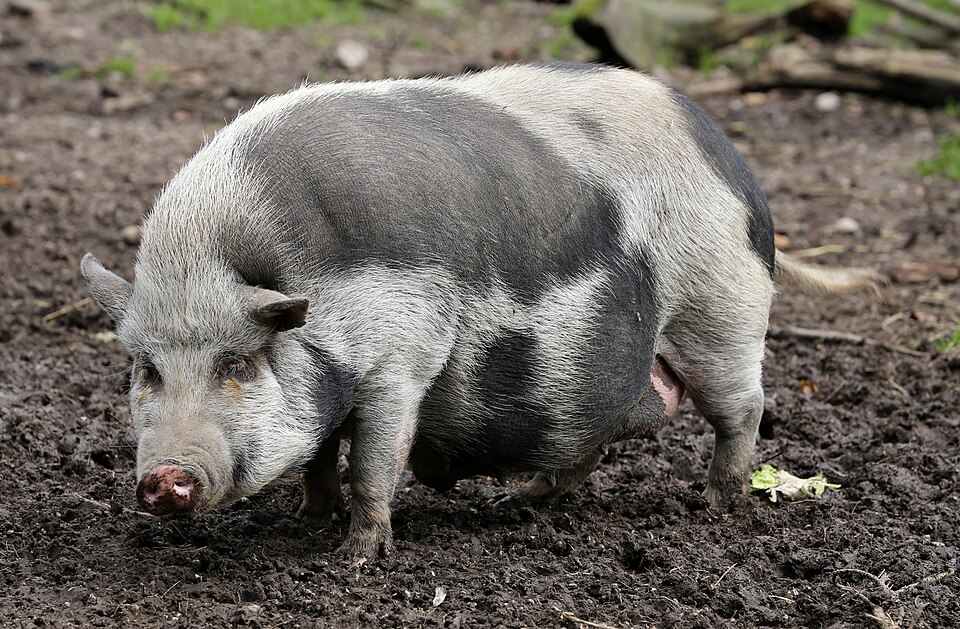
Reference photograph
This photograph of a potbellied pig illustrates one example of a small pig line. Miniature pig does not name a single breed or guarantee adult size.
Source: Rufus46 · Original material · CC BY-SA 3.0
1. Classification, origins and habitat
Miniature pig is not an internationally uniform breed name referring to only one bloodline. The term can group potbellied pigs, several small lines and crossbred populations by their perceived size. These are types of domestic pig, distinct from the pygmy hog, a small wild pig. Sales terms such as teacup are not registered names guaranteeing adult size.
Checking adult size ranges and actual lineage matters more than the label miniature. Several bloodlines can be sold under the same name, so do not infer intended uses or long-term care costs from a pet's appearance alone.
2. Appearance and identification
Coat color, ear shape and proportions of the snout and body differ between lines. Young pigs look small and round, but their bodies and heads become much larger as they grow. Do not assume a small photographed individual is an adult. Without parental size, age and lineage information, final weight is difficult to predict accurately. Keeping a pig small by starving it is inappropriate.
The representative photograph shows one example of a small domestic pig. Skin folds and belly shape vary with lineage, posture and body condition; a round belly does not automatically indicate healthy conformation. Check age at the time of photography when comparing young animals and adults.
3. Behavior and way of life
Pigs are social animals that push soil and objects with their snouts, investigate by smell and form relationships with other pigs. Becoming familiar with people or learning simple signals does not mean they have the same living requirements as dogs. Rooting and foraging should be understood as basic pig behaviors, rather than merely play or bad habits.
Even after becoming accustomed to indoor life, the need to sniff, dig and turn things over remains. Rather than describing an animal as stubborn solely because objects are damaged, checking whether it has enough activity space and exploratory materials helps explain its actual way of life.
4. Observation, conservation and care
Before adoption, prepare indoor and outdoor space for an adult, fencing, places to investigate the ground and suitable companionship arrangements. Do not base feeding solely on dog or cat food or human meals; pigs need nutrition suited to their age and body condition. Check hooves, skin and body condition, and confirm a long-term care plan with a veterinarian able to treat pigs.
Realistic plans are needed for relationships with other animals, noise, smell and space. Starvation to reduce size is not healthy care. If adult size cannot be accommodated, reassess conditions before deciding to adopt.
Evidence and references
- Merck Veterinary Manual — Miniature pig
Species-specific information on origins, appearance, uses or ecology
- Defra — Pig behavior and environmental welfare guidance
Domestic pigs' exploratory behavior, feed, shade and resting space. This is UK material, not guidance on Korean legislation.