
Mammals (Pigs)
Explore classification, origins, appearance, behavior, observation and care through the published animal profiles for mammals (pigs).
Browse categories
Small-Bodied Domestic Pigs
Even a small breed requires consideration of adult body size and the living space a pig needs.
Traditional Domestic Pig Breeds
Explore the origins and appearance of domestic pig breeds developed in different regions.
Domestic pigs used in pig production
Domestic pig breeds used in modern pig production and selective breeding.
Wild Pigs and Peccaries
Wild animals in the pig family and animals in the peccary family, distinguished from domestic pig breeds.
Published animal profiles
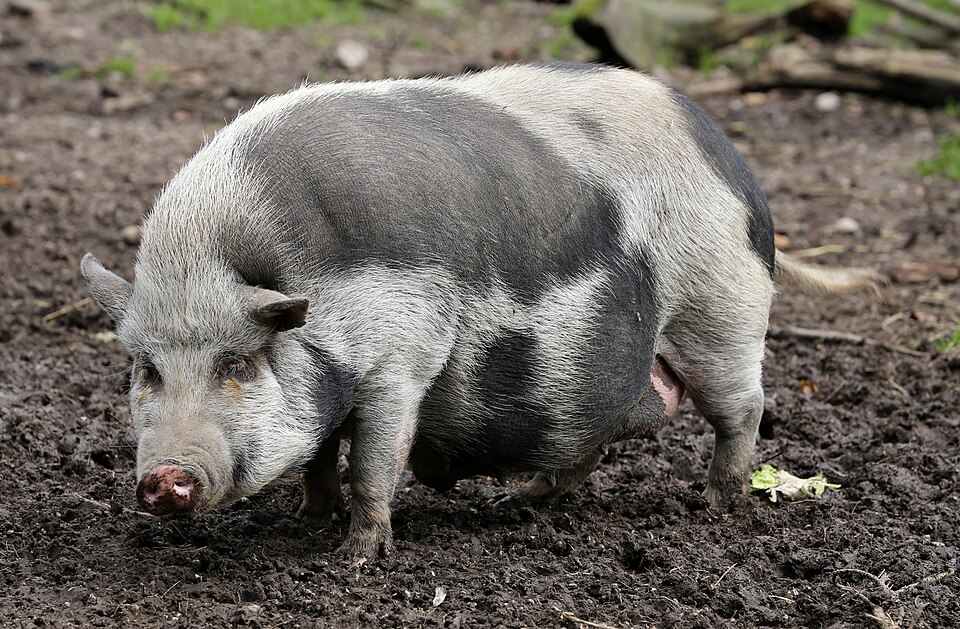
Miniature pig
Miniature pig is not an internationally uniform breed name referring to only one bloodline. Coat color, ear shape and proportions of the snout and body differ between lines.
Read the guide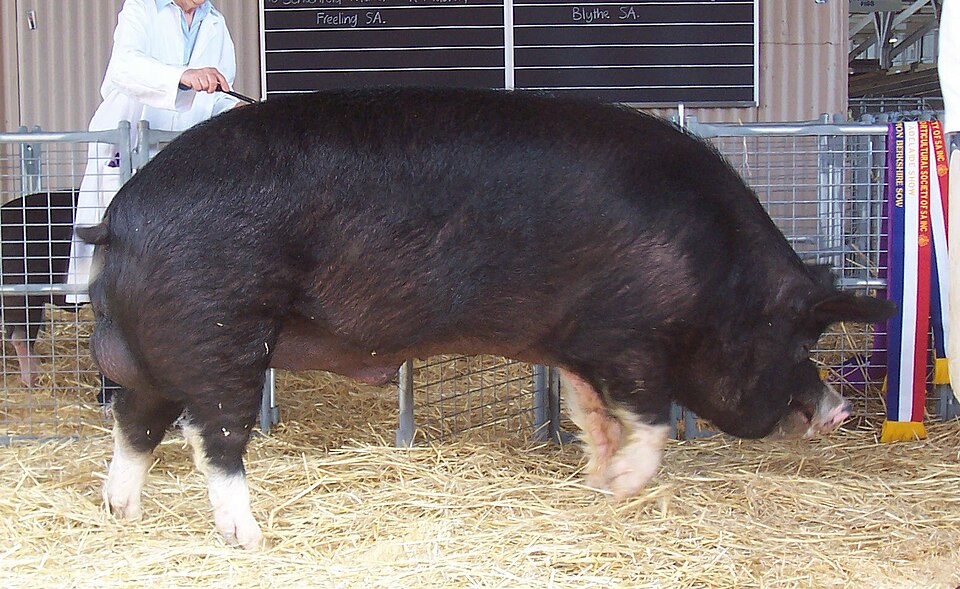
Berkshire
The Berkshire is a domestic pig breed developed in England's Berkshire region. A black body with white on the face, feet and tail tip, together with upright ears, is characteristic.
Read the guide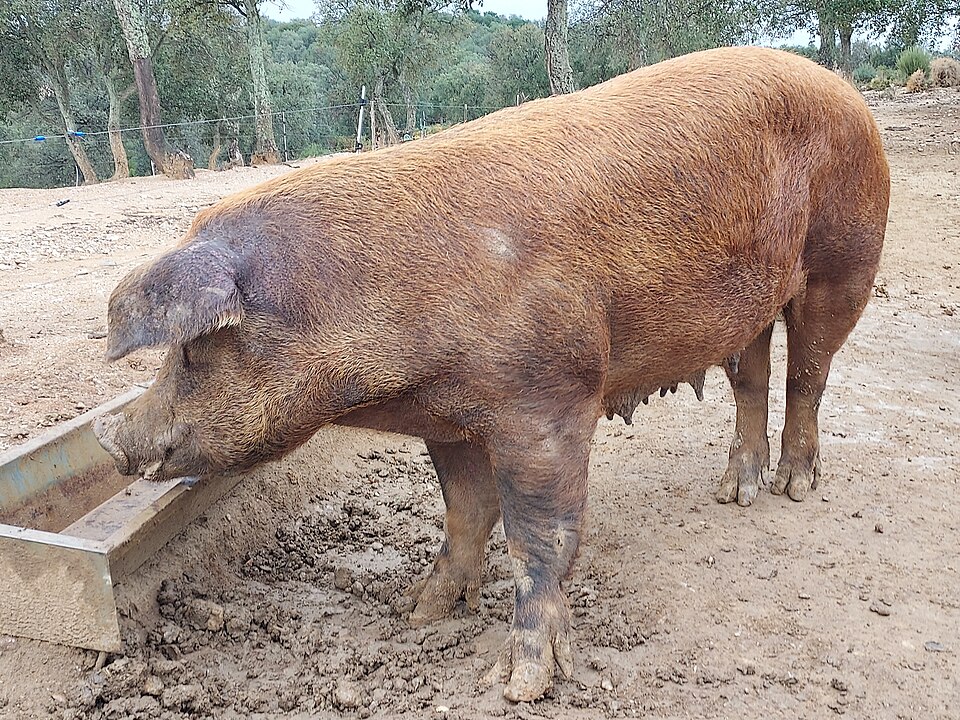
Duroc
The Duroc is a domestic pig breed developed from red pig lines in the United States. Coats range from light reddish brown to deep red-brown, and forward-drooping ears are characteristic.
Read the guide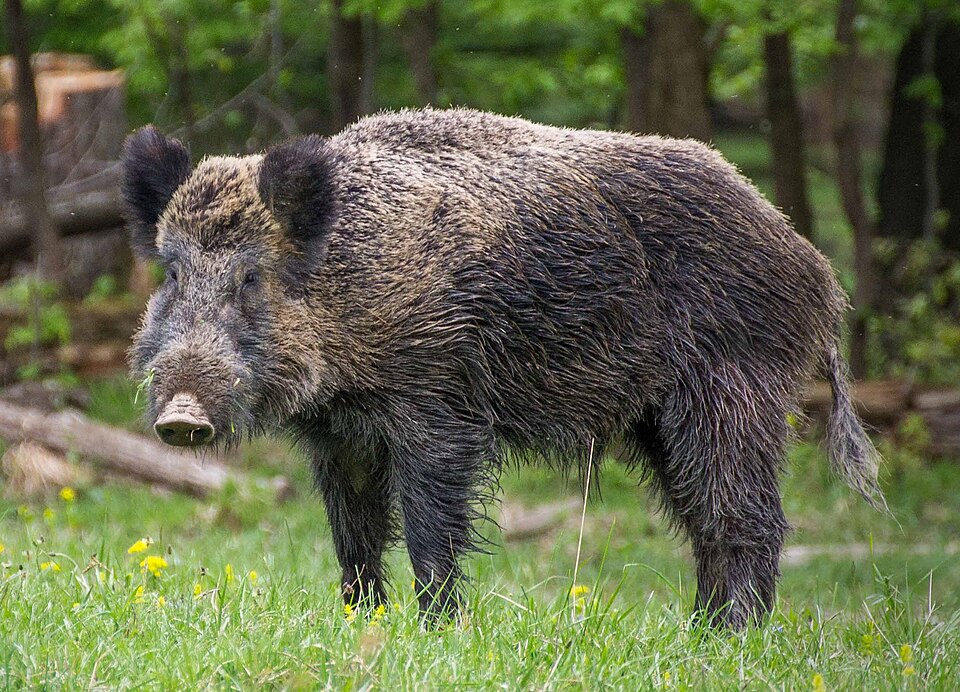
Wild boar
The wild boar is a wild species in the pig family, linked to the history of pig domestication. A long snout, coarse hair and a substantial neck and forequarters are characteristic.
Read the guide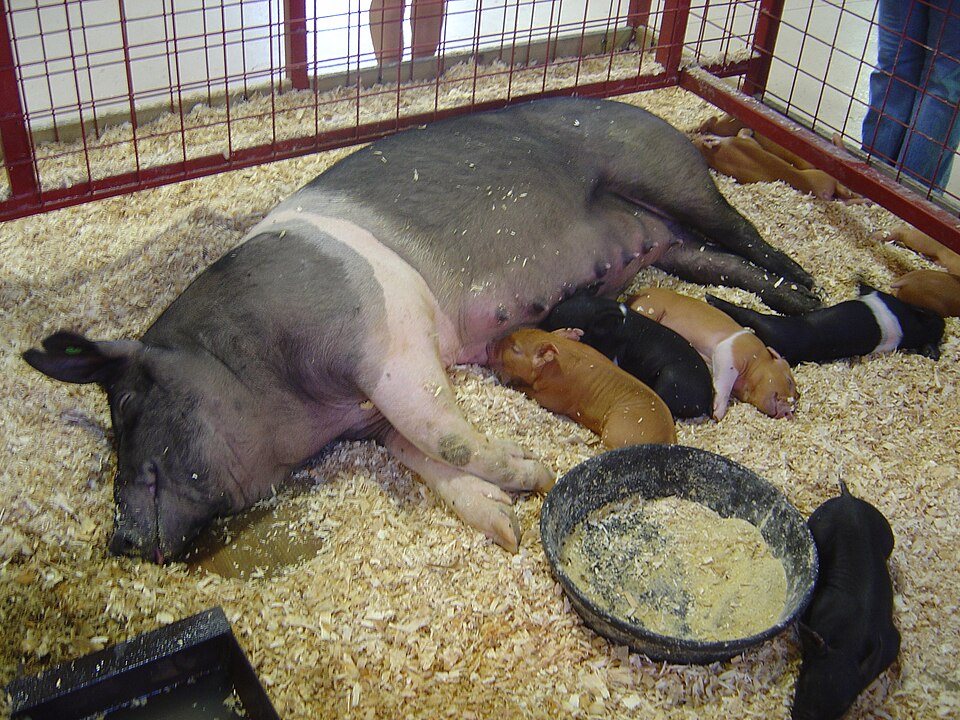
Hampshire
The Hampshire is a domestic pig breed registered and developed in the United States from lines introduced from Britain. A white belt across the shoulders and forelegs of a black body, with upright ears, is characteristic.
Read the guide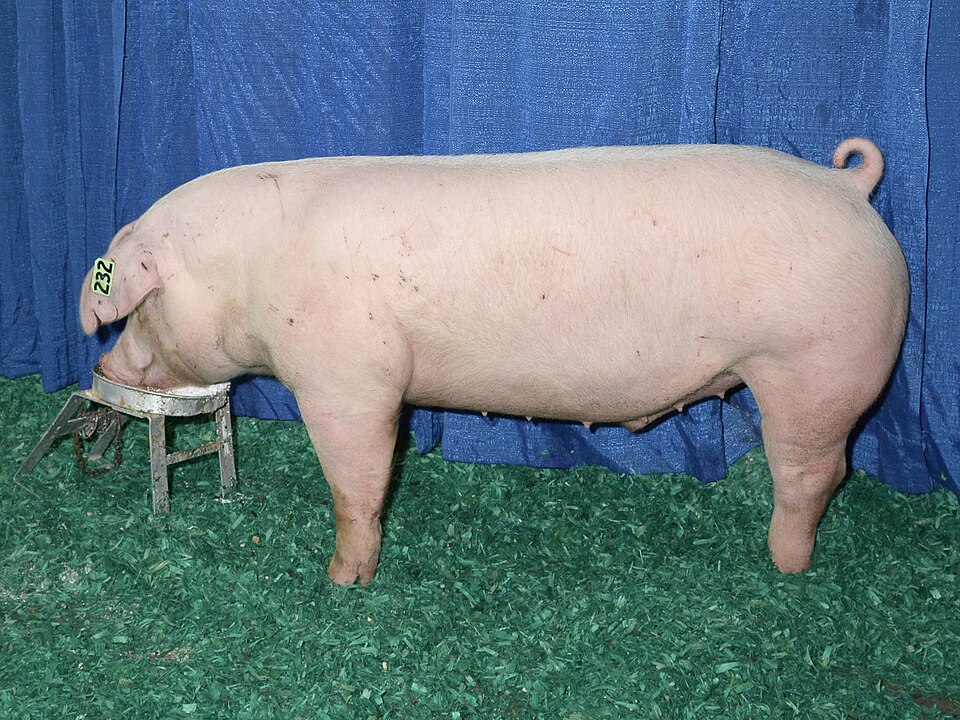
Landrace pig
Landrace is a domestic pig lineage with registered, selectively bred populations in several countries. Light skin, white hair, a long body and forward-drooping ears are characteristic.
Read the guide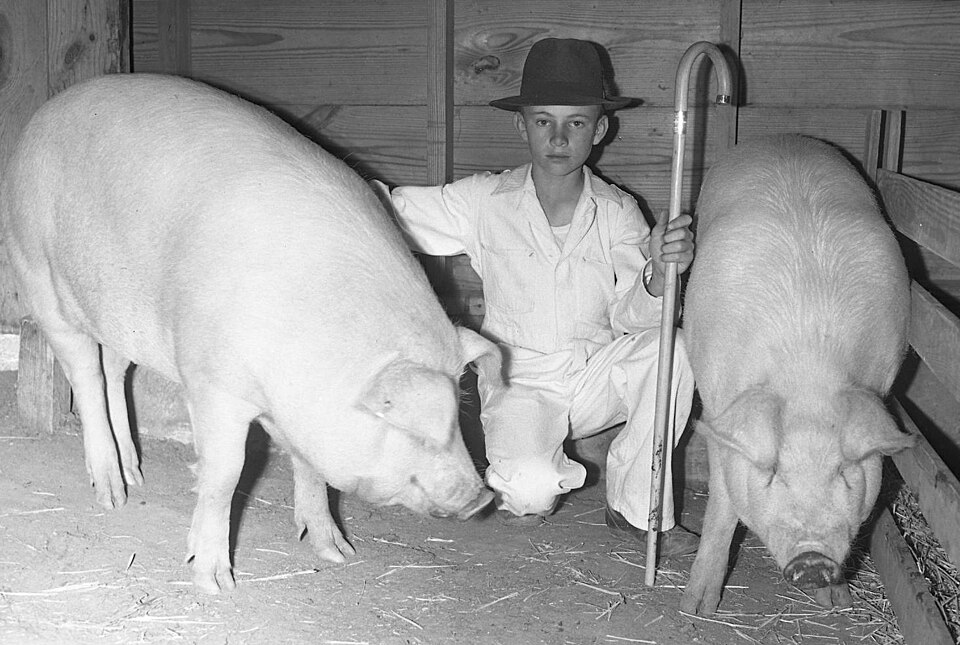
Chester White
The Chester White is a domestic pig breed developed in Pennsylvania, United States. It was selectively bred using several white pig lines. White hair and drooping ears are characteristic. Comparison with upright-eared Yorkshire lines helps reveal distinguishing features.
Read the guide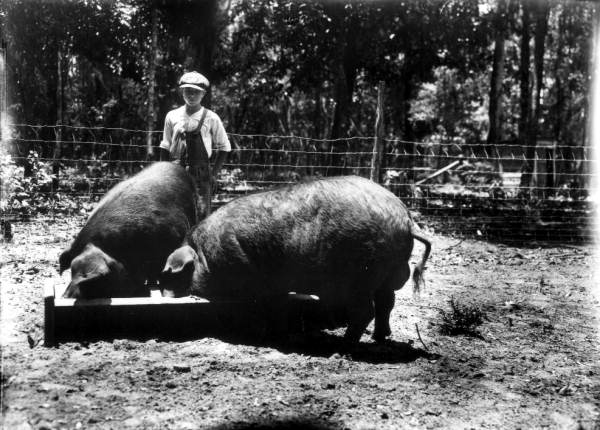
Poland China
The Poland China is a pig breed developed in Ohio, United States. Its name should not be taken to describe a single breed originating directly in Poland or China. A black body with white on the face, feet and tail tip, and drooping ears, is characteristic.
Read the guide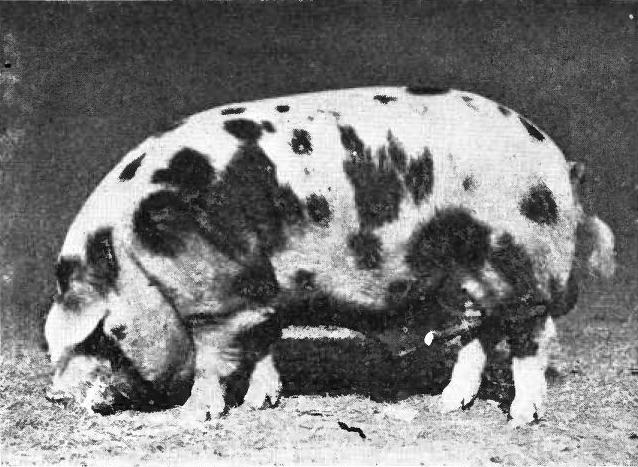
Spotted pig
The Spotted is an American spotted domestic pig breed. Its breeding history relates to several lines, including Poland China. Irregular black-and-white patches and drooping ears are characteristic.
Read the guide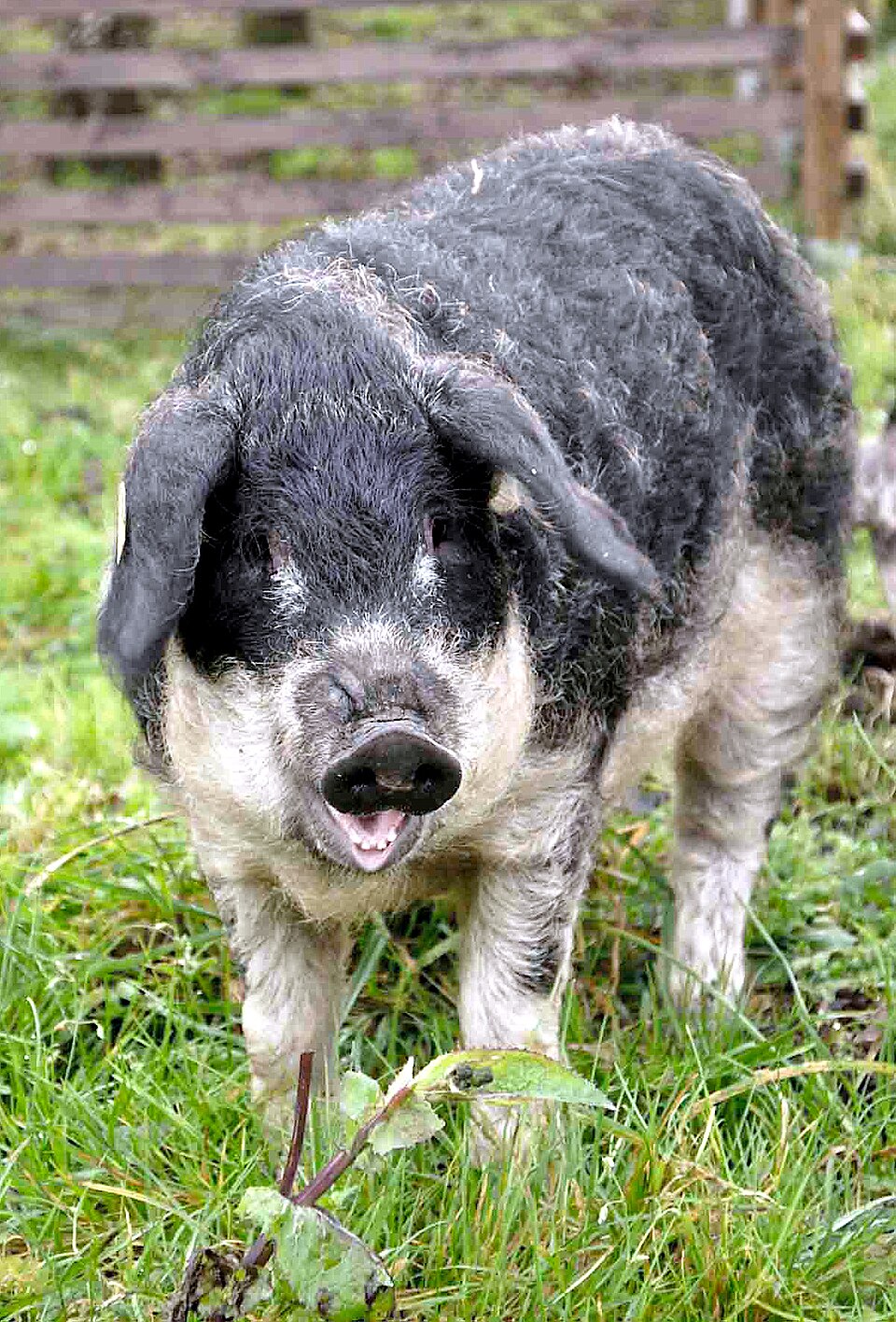
Mangalica
The Mangalica is a traditional domestic pig breed developed in Hungary. Its selection history differs from that of modern lean-meat breeds. Curly hair is characteristic, with lines of different coat colors and patterns. Despite a sheep-like appearance, it is a pig.
Read the guide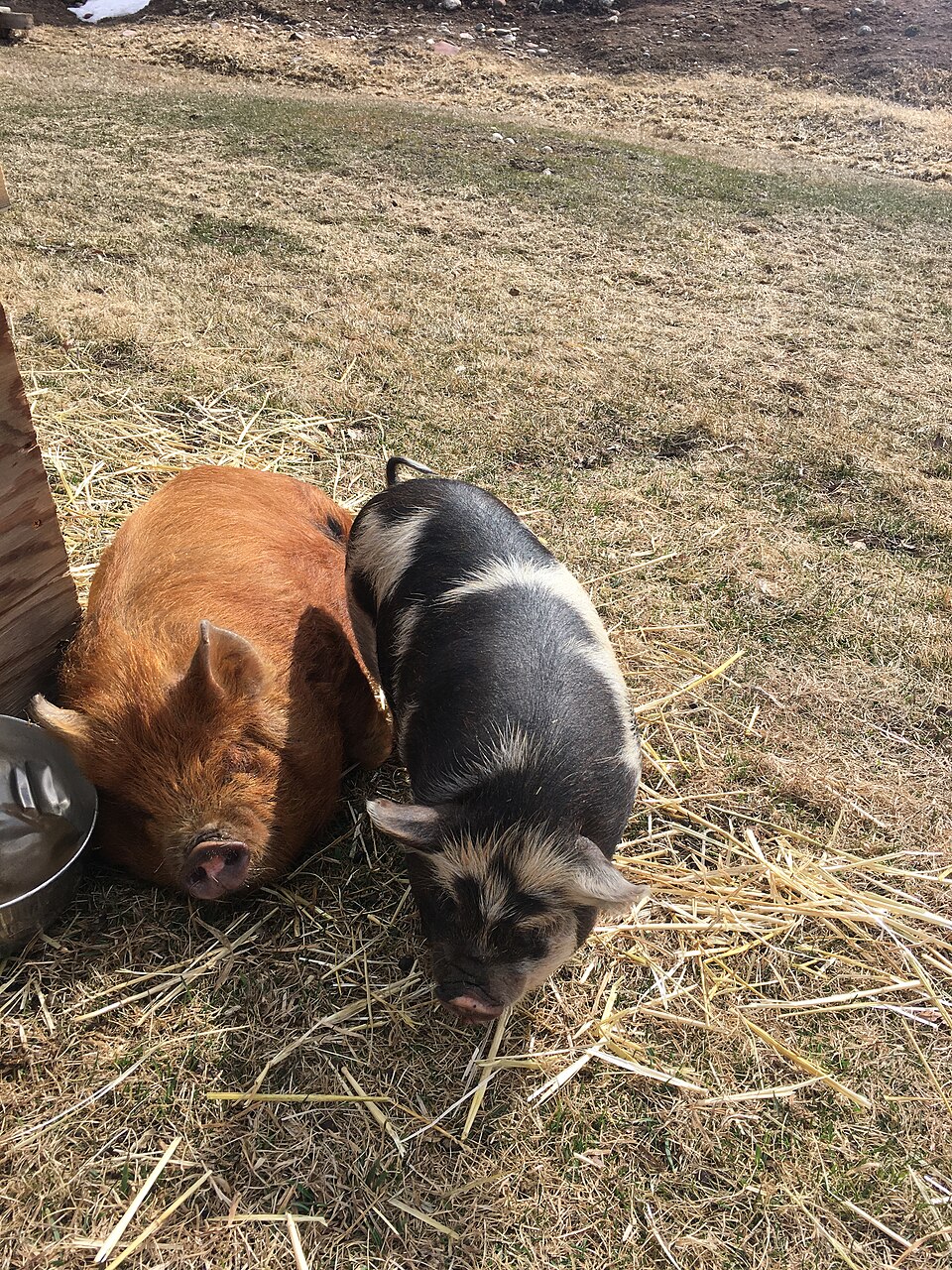
Kunekune
The Kunekune is a small-bodied domestic pig breed conserved in New Zealand. Its history is connected with Māori communities there. A short snout and varied coat colors occur, with some individuals having fleshy hanging projections beneath the jaw.
Read the guide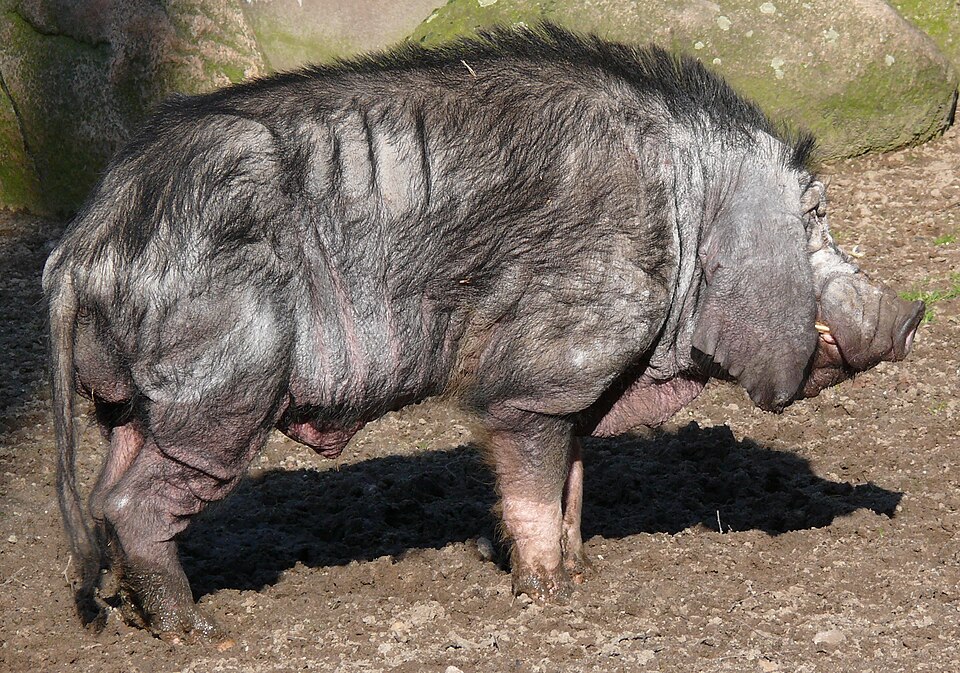
Meishan
The Meishan is a domestic pig breed associated with China's Taihu group. Its reproductive traits have led to research and use in other pig populations. Skin folds, large drooping ears and dark skin are conspicuous.
Read the guide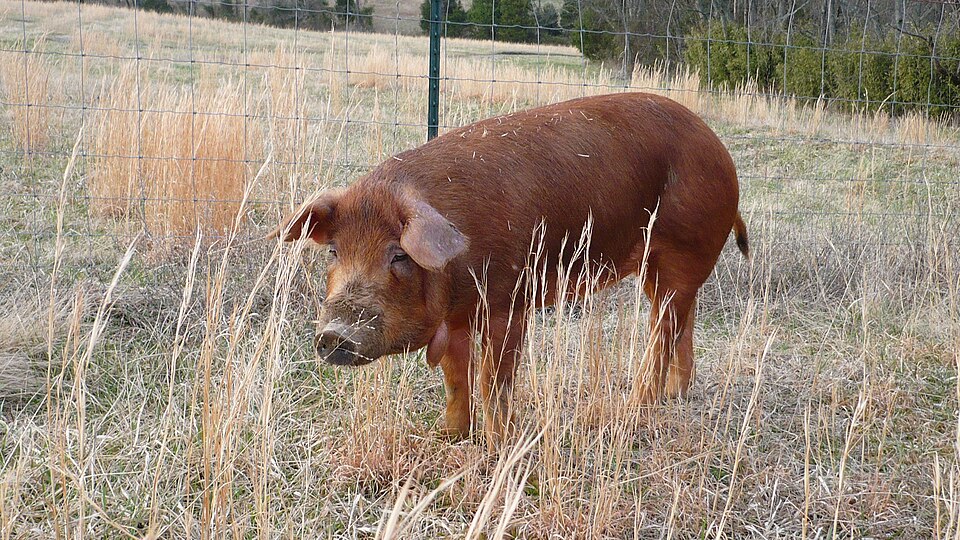
Red Wattle
The Red Wattle is a traditional domestic pig breed conserved in the United States. Its early origins are uncertain, so a single ancient origin should not be asserted. A red coat and a pair of hanging projections beneath the neck are characteristic. Wattle in the name refers to these projections.
Read the guide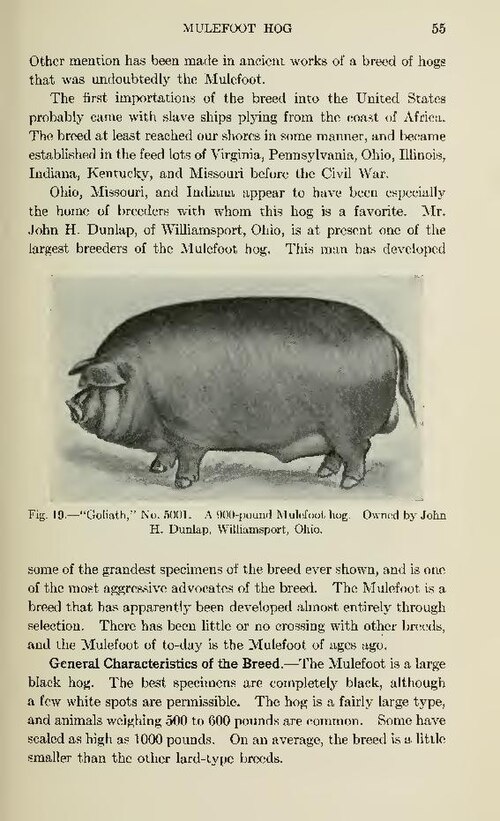
Mulefoot
The Mulefoot is a domestic pig breed conserved in the United States. Modern registration and pig-farming records are better known than its precise early origins. An undivided, fused-looking hoof is the principal distinguishing feature. Most have black coats and drooping ears.
Read the guide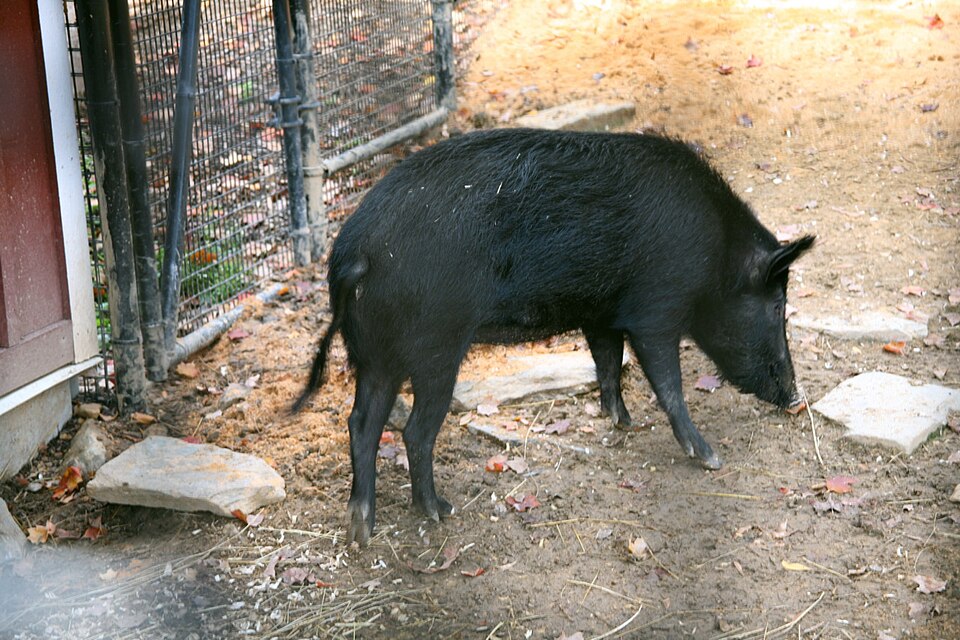
Ossabaw Island pig
Ossabaw Island pigs developed from domestic pig lines remaining on the island. They are known through research into adaptation to a limited island environment and livestock conservation. Size and coat color vary, with a selection history different from commercial meat pigs. Black and spotted appearances occur.
Read the guide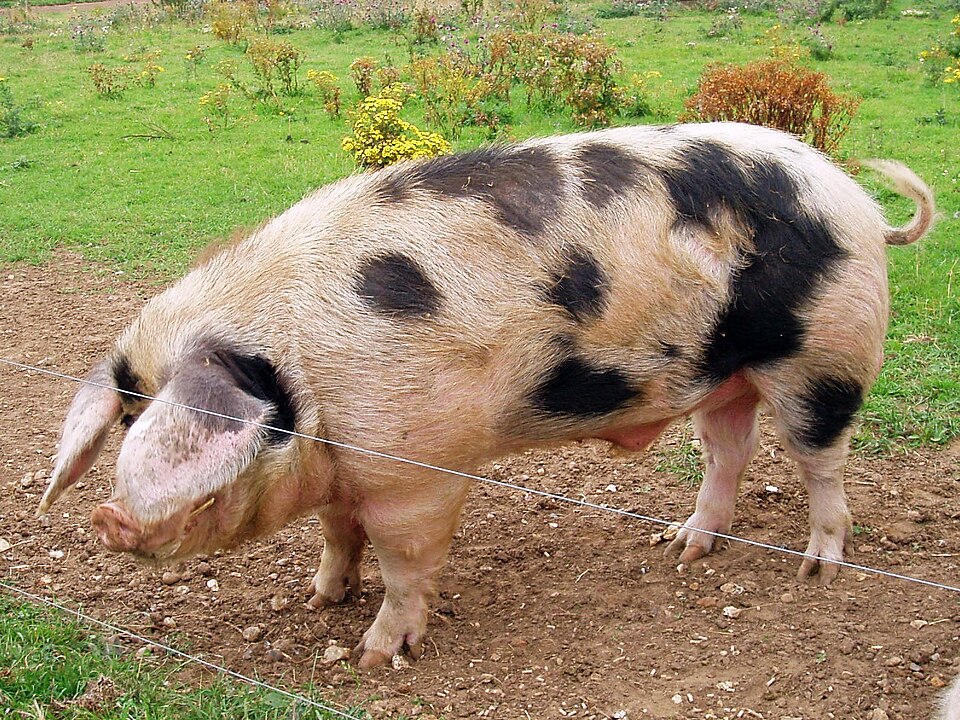
Gloucestershire Old Spots
The Gloucestershire Old Spots is a traditional British domestic pig breed. Its husbandry history is associated with farm environments such as orchards. Black spots on a white body and large drooping ears are characteristic. Spot positions differ individually.
Read the guide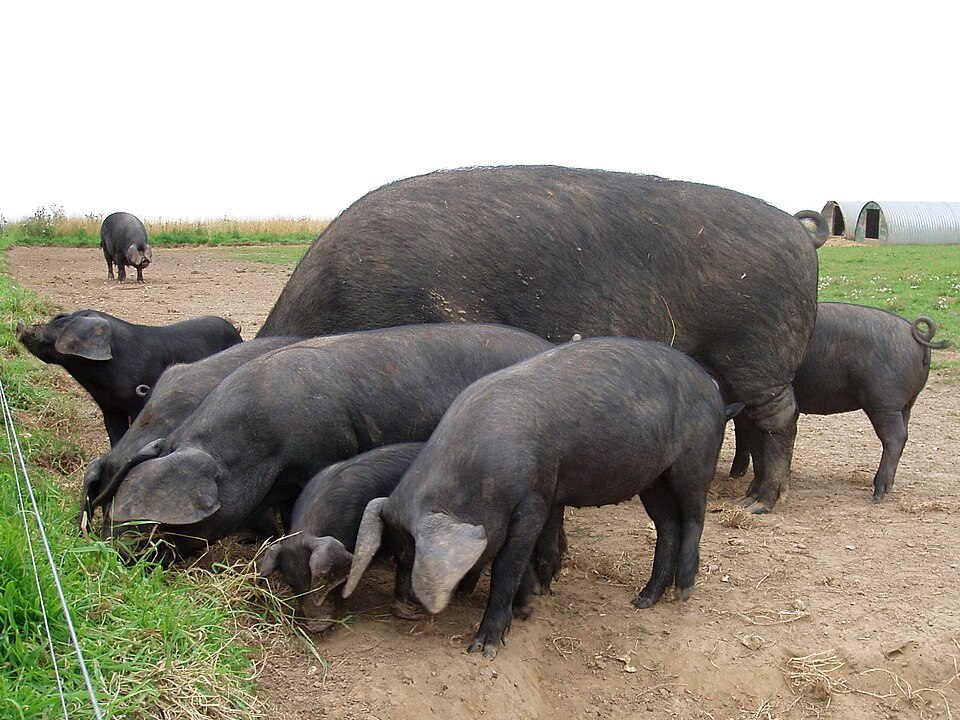
Large Black
The Large Black is a black domestic pig breed developed in Britain. It is conserved as traditional livestock and has a history connected to outdoor pig husbandry. The body and skin are black, and large drooping ears sometimes partly cover the eyes.
Read the guide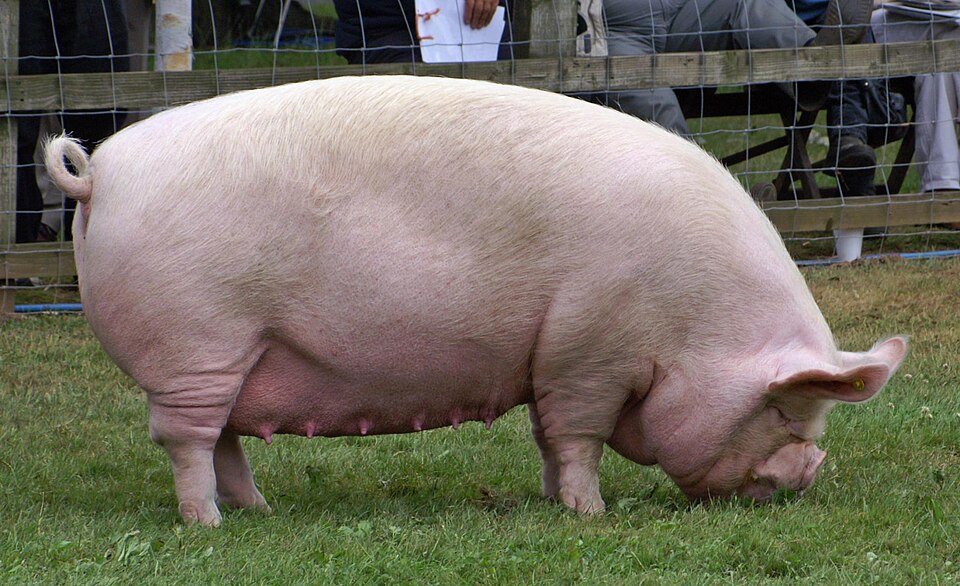
Middle White
The Middle White is a white domestic pig breed developed in Britain. It is a separate breed from the Large White. A short, upturned snout, white body and upright ears are characteristic.
Read the guide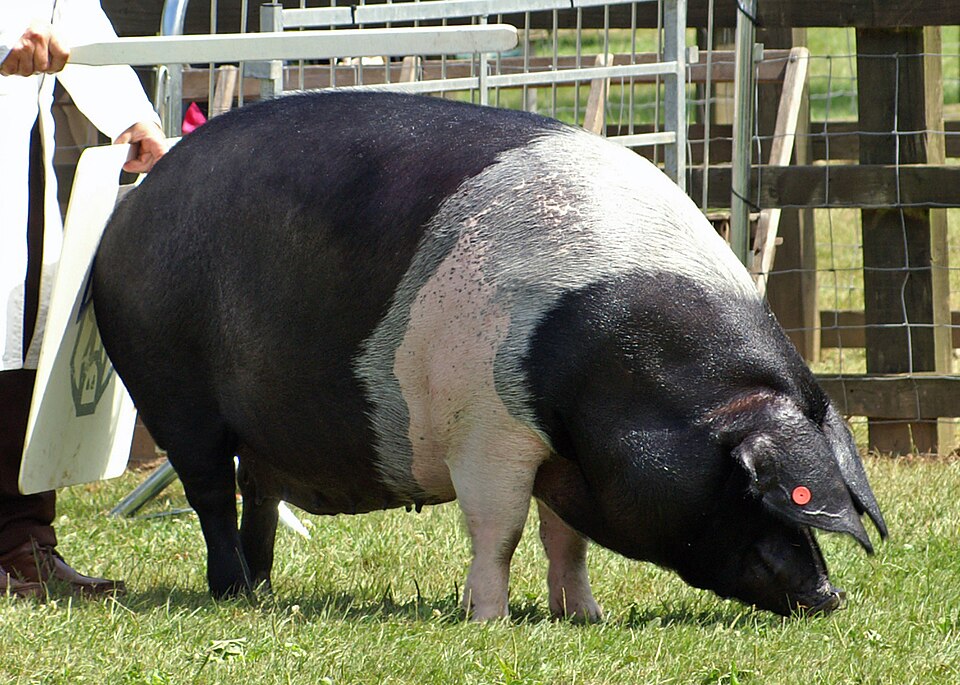
British Saddleback
The British Saddleback developed through combining Britain's Essex and Wessex Saddleback lines. A white belt crosses the shoulders and forelegs of the black body, and the ears droop.
Read the guide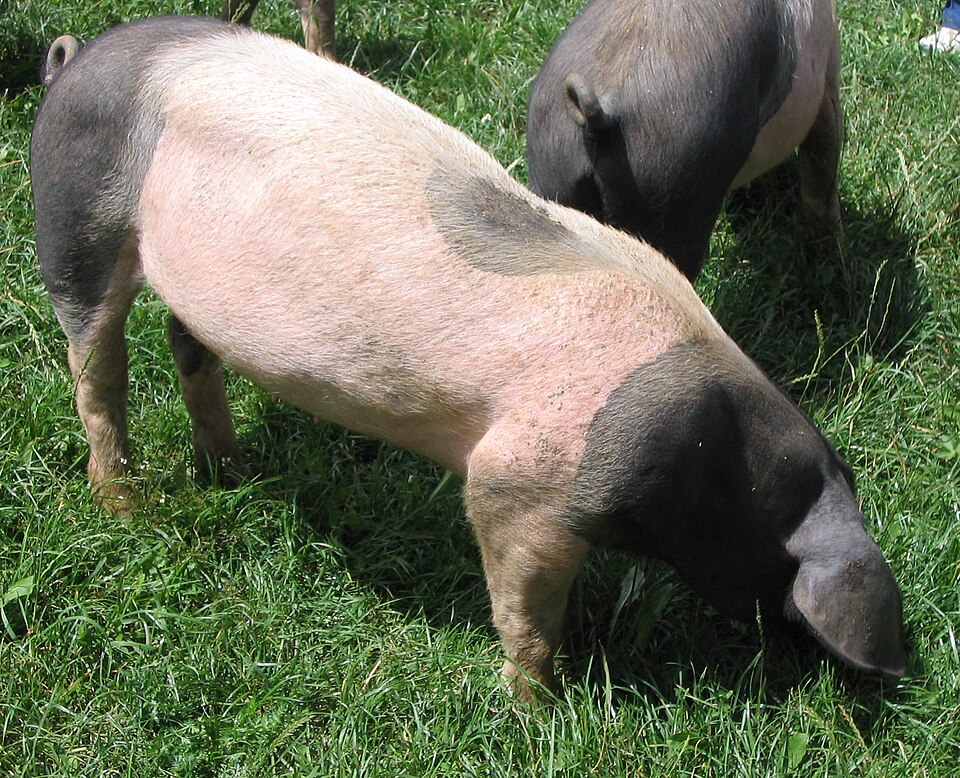
Swabian-Hall Pig
The Swabian-Hall is a traditional domestic pig breed from the Schwäbisch Hall region of Germany. It is connected with registration by regional breeding and conservation organizations. A typical pattern contrasts a black head and hindquarters with a light-colored middle.
Read the guide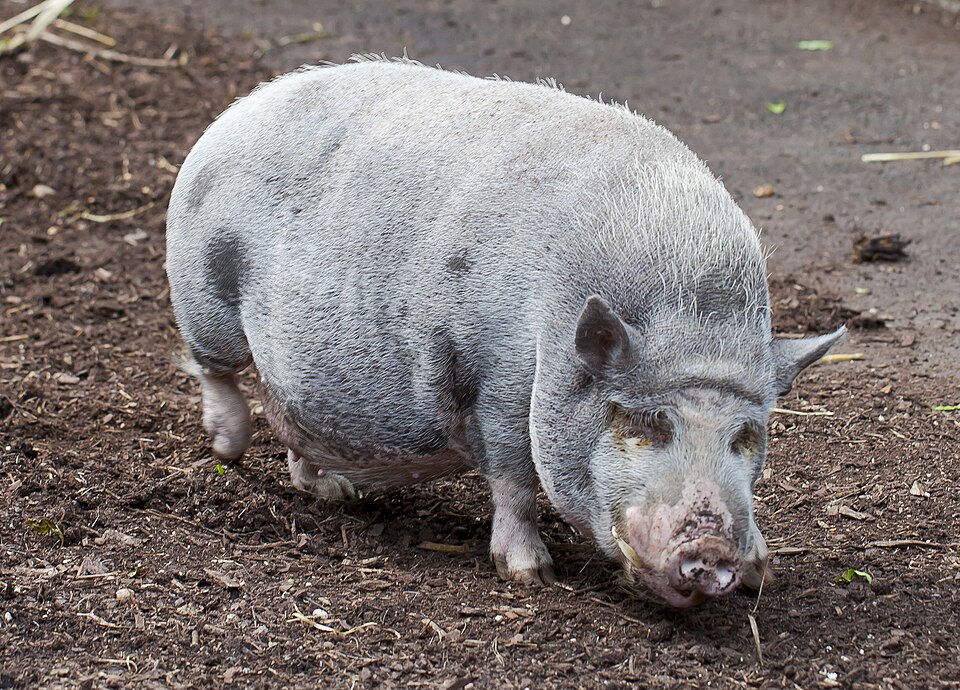
Turopolje
The Turopolje is a traditional Croatian domestic pig breed. Its history relates to husbandry in regional forests and damp environments. Dark spots on a light background and drooping ears are characteristic. Its conformation and breeding history differ from those of modern commercial pigs.
Read the guide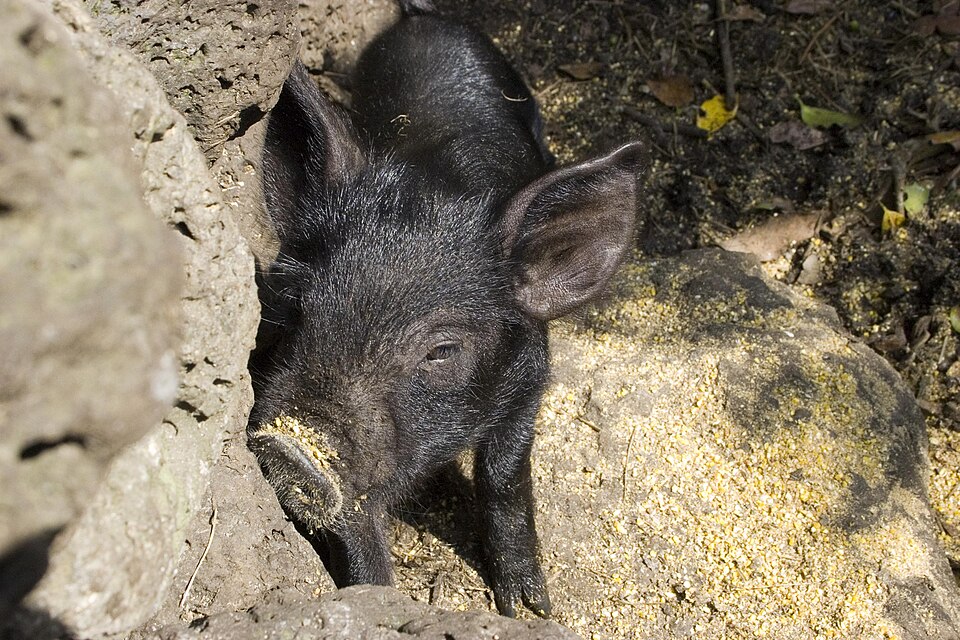
Jeju black pig
The Jeju native pig is a local genetic resource of domestic pigs conserved on Jeju. Do not equate its native bloodlines with every black-haired commercial crossbred pig. Black skin and hair are characteristic, with size and form differing from modern selectively bred pigs.
Read the guide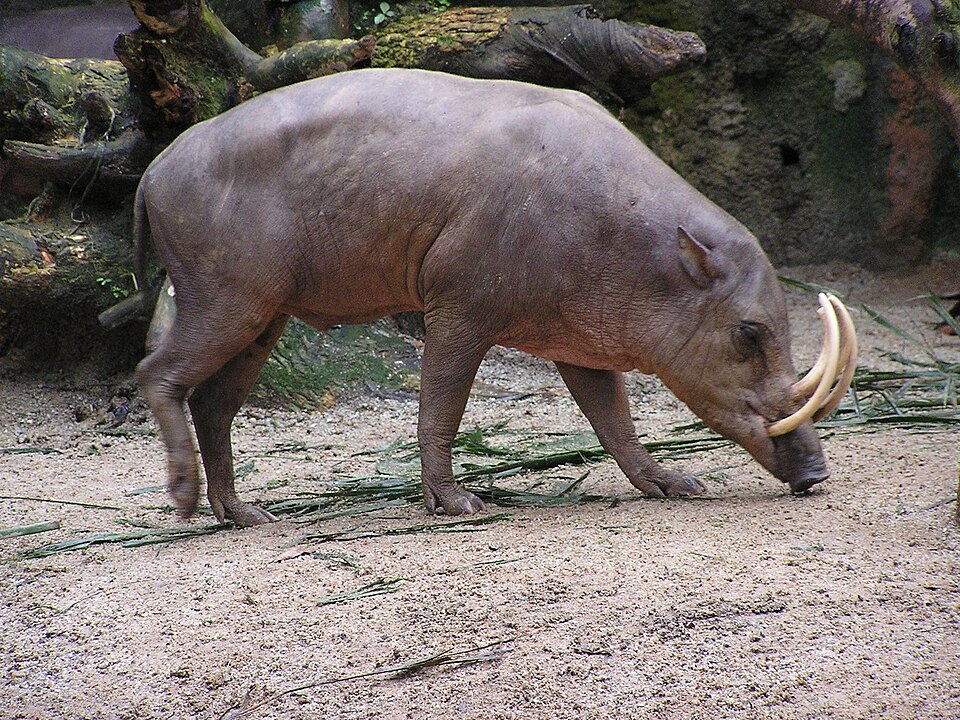
Babirusa
Babirusa refers to wild pigs of the genus Babyrousa on several Indonesian islands, with several species distinguished. Males have striking upper canine teeth that grow through the snout's skin, extend upward and curve backward.
Read the guide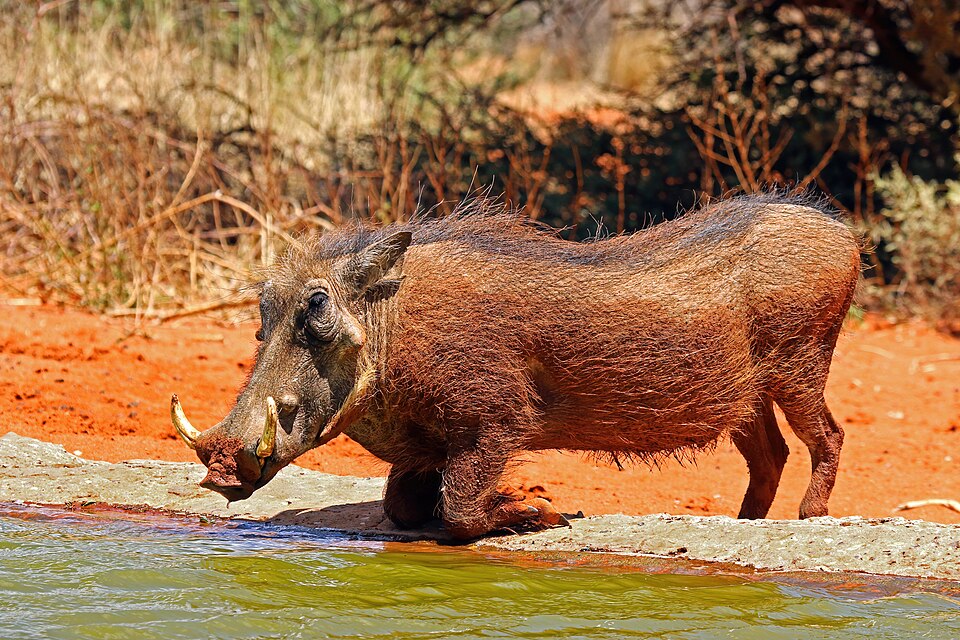
Common warthog
The common warthog is a wild member of the pig family living in African grasslands. It is not the same species as every other African wild pig. Facial projections, tusks and a mane along the body are characteristic. Despite the name, facial projections are not parasitic warts.
Read the guide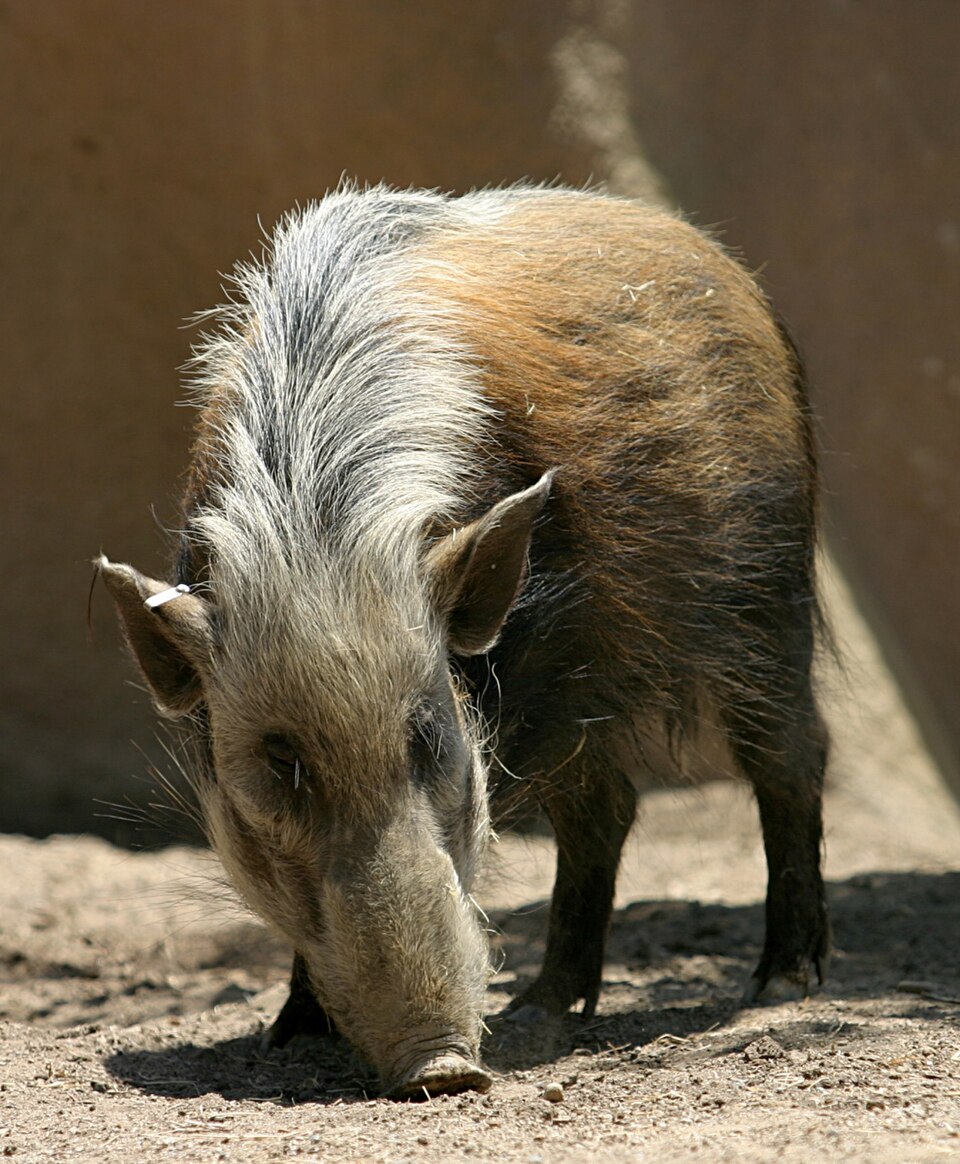
Bushpig
The bushpig is an African wild member of the pig family. It is related to the red river hog but recognized as a separate species. Coarse hair, a long snout and pale facial areas occur; coat color varies with age and region.
Read the guide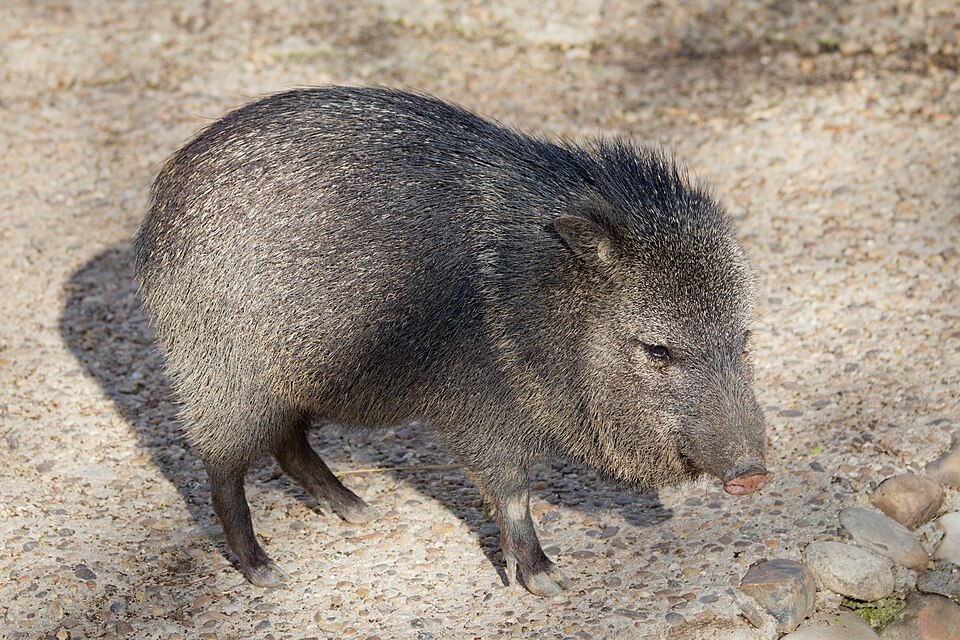
Collared peccary
The collared peccary belongs to the peccary family, not the pig family. It is a separate American lineage with a pig-like appearance; the scientific name Dicotyles tajacu is also used. Dark hair with a light band near the neck and shoulders gives the animal its name. The tail is shorter than a pig's.
Read the guide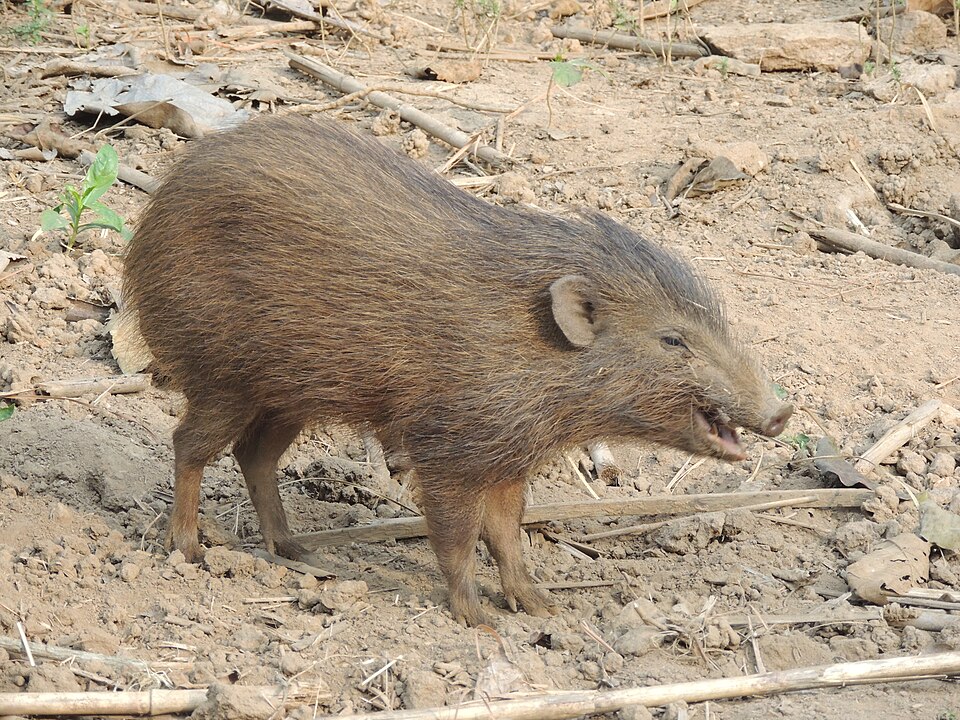
Pygmy hog
The pygmy hog is a small wild pig surviving in grasslands in Assam, India. Do not confuse a name such as pygmy black pig with a small domestic pig breed. A small body and dark hair make it inconspicuous among tall grasses. Its classification and ecology differ from those of a young domestic pig.
Read the guide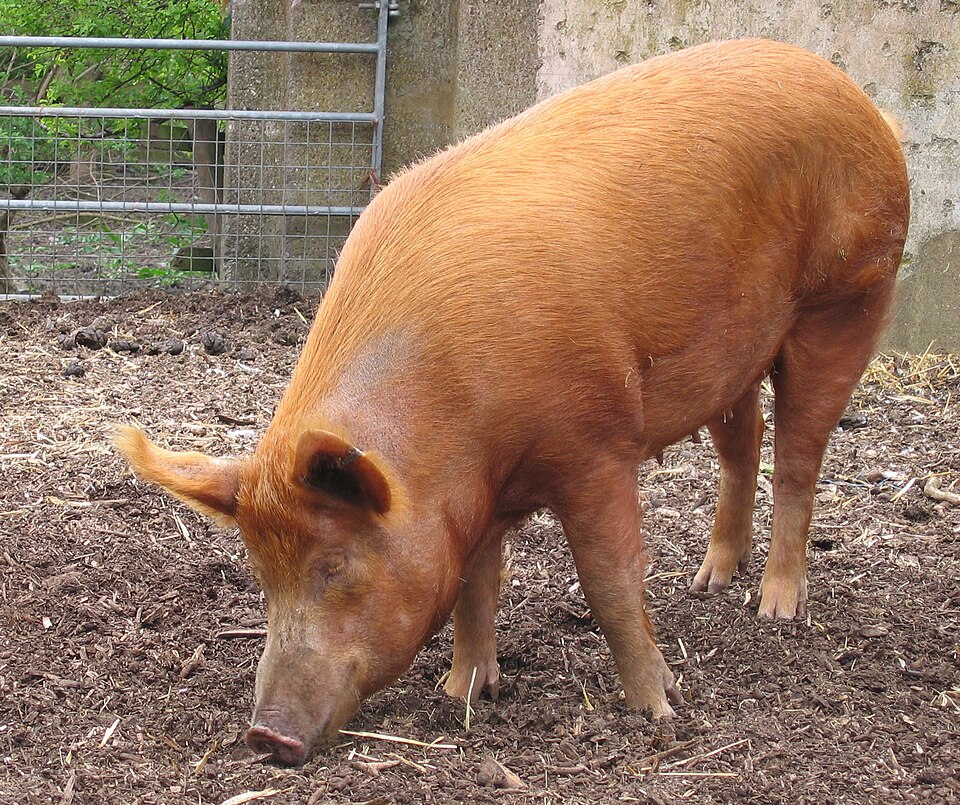
Tamworth pig
Tamworth Pig is another rendering of Tamworth, not a separate pig species. It is a traditional domestic pig breed developed in Britain. A reddish-brown coat, long snout and upright ears are characteristic. Ear shape allows comparison with the also-red Duroc.
Read the guide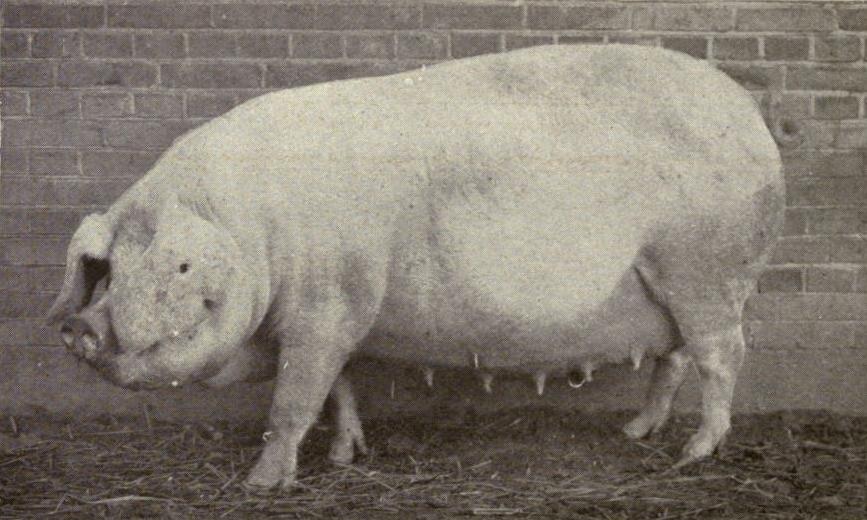
Danish Landrace
The Danish Landrace is a domestic pig line developed in Denmark. Do not group every country's registered Landrace population under identical standards. A white body, long trunk and forward-drooping ears are characteristic. Conformation varies with sex and growth stage.
Read the guide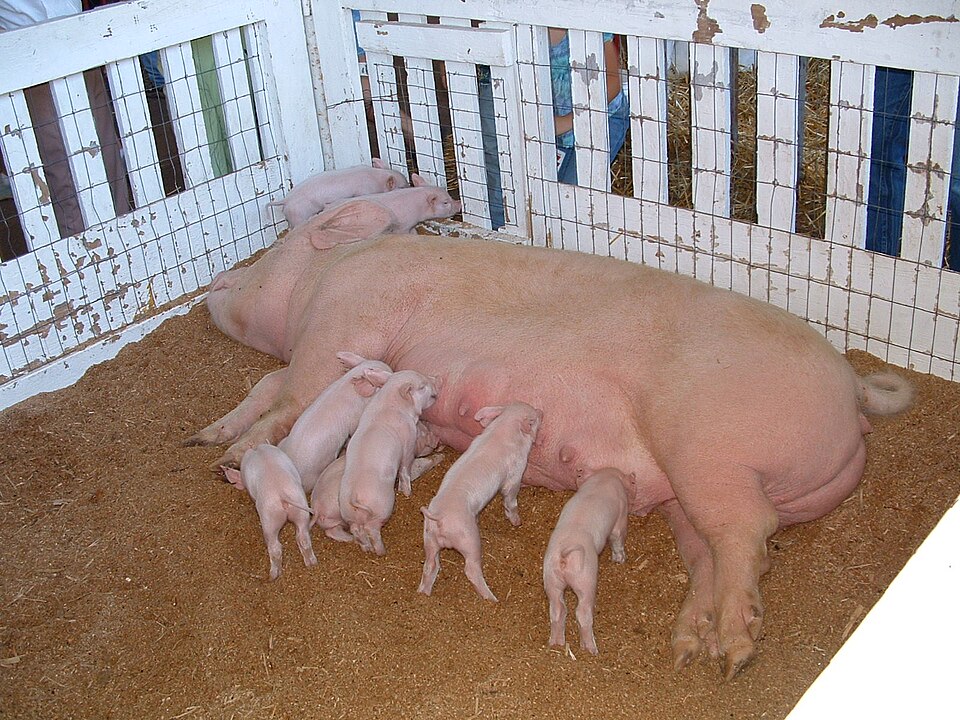
American Yorkshire
The American Yorkshire is a registered breed developed in the United States from British Large White ancestry. Distinguish regional registration names from foundation lines. A white body and upright ears are characteristic. Compare it with the white-bodied Landrace, which has drooping ears.
Read the guide