
Sweet basil
A mint-family herb with aromatic, opposite leaves and a wide range of cultivated varieties.
- Scientific name
- Ocimum basilicum
- Family
- Lamiaceae
- Other names
- Basil
- Reviewed
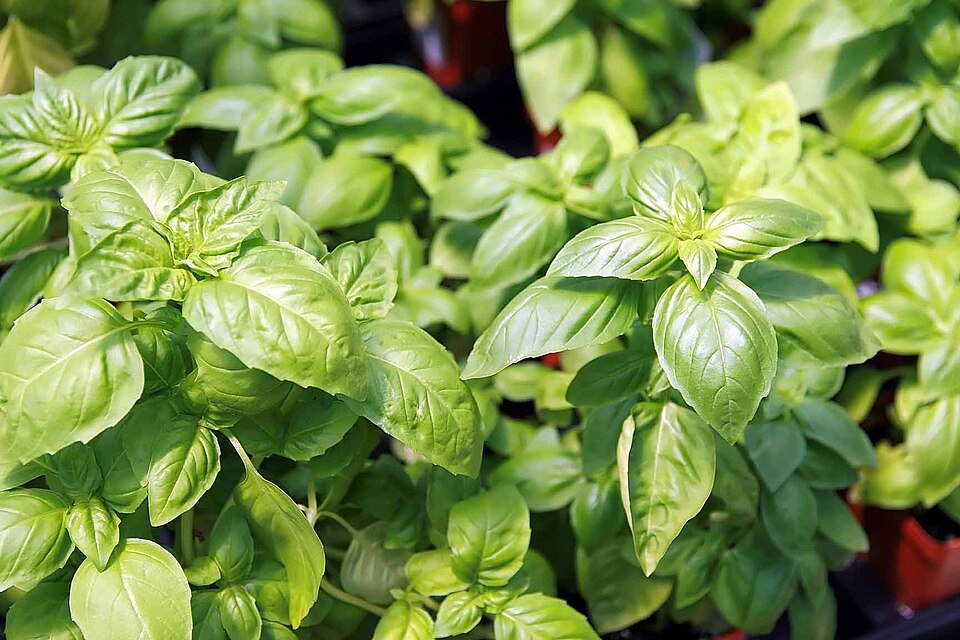
A reference photograph of sweet basil. Leaf color and form can vary with cultivar and growing conditions.
Photo credit: Photo by David J. Stang
License: CC BY-SA 4.0
The photograph was resized and converted to JPEG.
Names and classification
Basil is an herbaceous plant in the mint family; this entry covers Ocimum basilicum. Distinguish it from other basils such as holy basil, and do not establish species identity from a trade name alone.
Observable features
Leaves are opposite, and small flowers gather in inflorescences at stem tips. Leaf size, color and scent vary by cultivar, so neither green leaves nor a particular scent is the only identifying feature.
Distribution and habitat
Its natural range extends from tropical and subtropical Asia to northern Australia, and it is cultivated in many countries. Sensitive to frost, it is usually grown like a warm-season annual crop in temperate regions.
Ecology and life cycle
It branches under warm growing conditions, and insects visit its flowers. Pinching for leaf harvest and leaving flowers for observation serve different cultivation goals.
Cultivation and care
Provide sunlight and well-drained soil, watering according to soil moisture. Monitor ventilation and leaf condition, and plant outdoors after the last local frost.
Observation and use precautions
Distinguish basil grown for food from ornamentals with unknown pesticide treatments. Do not eat plants merely because they smell similar, or use this article as guidance for ingesting essential oils or extracts.