
Fish
Archerfish
Archerfish
Classification and scientific name: Toxotes jaculatrix
Sources checked:
Archerfish target prey above the surface with water jets
Toxotes includes several archerfish species; this page describes Toxotes jaculatrix.
Origins and distribution
South and Southeast Asian coasts and surrounding regions
- Brackish water
- Mangroves
- Water jets
- Insects
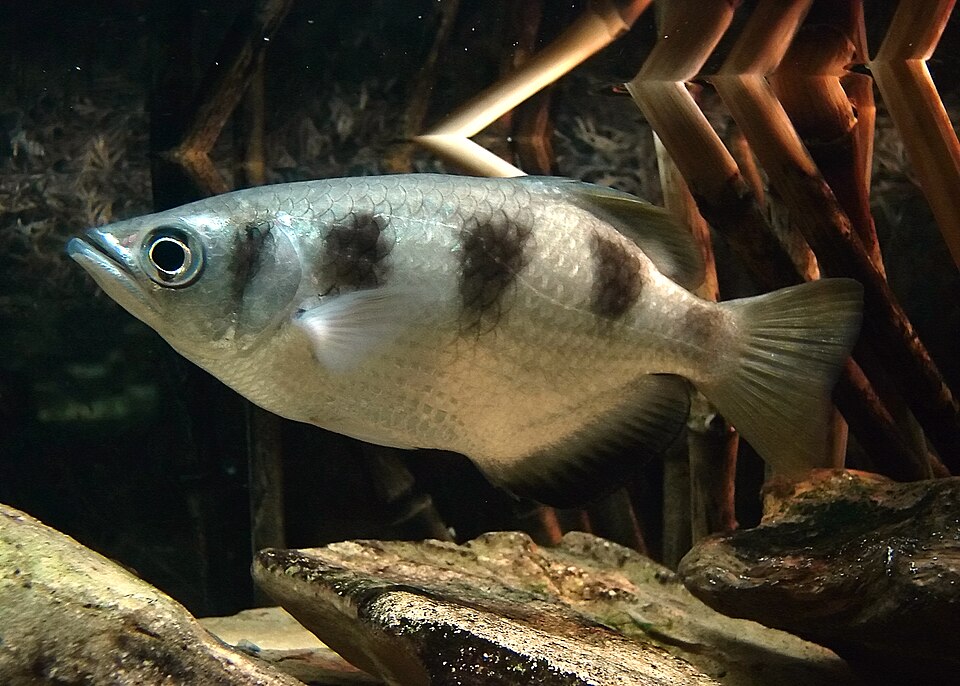
Reference photograph
Reference photograph of an archerfish. Compare its colours and form with the identification details in the text.
Source: Chrumps · Original material: Toxotes_jaculatrix.jpg · CC BY-SA 3.0
1. Classification, origins and habitat
Archerfish names several Toxotes species; this page describes Toxotes jaculatrix. It lives around South and Southeast Asia, including estuaries, mangroves and coastal brackish waters. Salinity varies by place and life stage, so do not portray all archerfish as identical freshwater aquarium fish. Surface insects and waterside vegetation connect with feeding. Focusing only on remarkable jets can overlook the relationship between water and terrestrial plants. Distinguish ranges and form of other similarly striped Toxotes species and check photographic names.
2. Appearance and identification
A deep laterally compressed body, upturned mouth and dark marks on pale flanks are characteristic. Large eyes and a near-surface posture relate to watching prey above. Mark numbers and sizes help comparisons but cannot readily establish identity from one cropped area. Mouth structures and water-expelling movements serve feeding jets. A forward-tilted photograph does not always show the instant before shooting. Distinguish another fish splashing at the surface from this targeted capture. Light and refraction can alter apparent proportions.
3. Behavior and way of life
Archerfish are famous for knocking insects above water down with jets and then eating them. This precise use of prey positions across the water-air boundary is not the method for every meal. Small aquatic animals and fallen food are also used. Competition, prey position and height affect behaviour. Learning and experience can matter in repeated observations; do not claim perfect accuracy at any distance from the outset. Low branches and leaves are habitats for insects and concealed life, not stages for placing food.
4. Observation, conservation and care
Understand salinity, water quality, surface space, vegetation and food together. Do not copy generic freshwater figures without identifying the species. Captive animals need space and food appropriate to species and growth and stable conditions; repeated show stimulation differs from normal exploration. Do not break mangrove branches or forcibly lure wild animals. Captions should identify Toxotes jaculatrix and actual behaviour, without declaring a photograph wrong solely for lacking a visible jet. Consistency among form, feeding and estuarine habitat matters.
Evidence and references
- FishBase — Toxotes jaculatrix
Species classification, distribution, habitat and form
- Animal Diversity Web — Toxotes jaculatrix
Archerfish distribution, prey capture, appearance and brackish habitats