
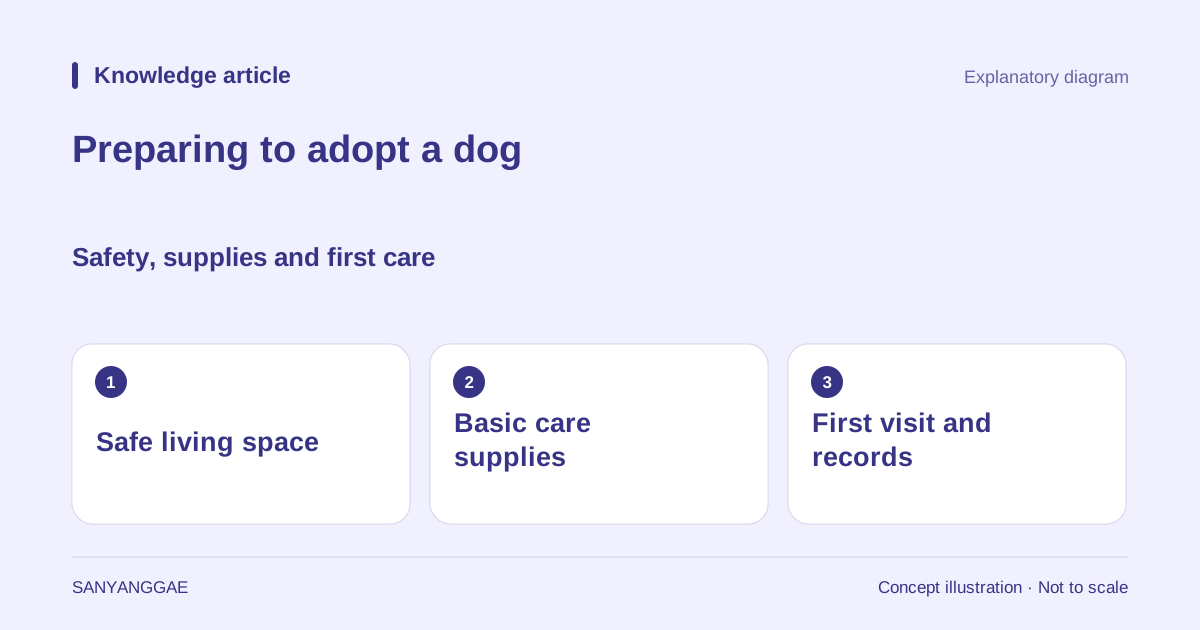
Preparing to adopt a dog is less about buying attractive supplies all at once than about making ongoing care possible. Preparations vary with a puppy or adult dog’s previous life, rescue history and health. Checking family schedules and the layout of your home first can reduce confusion after adoption. Use the checklist to identify gaps in safety, rest, feeding, toileting and veterinary care, rather than as a shopping list recommending identical products for every dog.
1. Put family time and responsibilities into the actual schedule
Decide who handles meals, walks, cleaning up and veterinary visits. A promise that everyone will help can leave gaps when morning departures and evening commitments overlap. Make realistic alternatives for weekdays, weekends, illness and days away. Where possible, learn beforehand about the dog’s age, existing routine and experience of being alone.
Make family rules specific: do not wake a resting dog, let children follow and grab it, or give human food without permission. Choose agreements everyone can follow. If one person invites the dog onto the sofa and another scolds it for climbing up, situations become unpredictable. Agree on permitted places and alternative resting spaces. Discuss the needs of family members who fear dogs or have allergies or other practical constraints before adoption.
2. Check household hazards from the dog’s level
Inspect floors and low shelves for access to cables, small objects, medicines, cleaning products and rubbish. Food is not necessarily safe on a table: reach depends on size and jumping ability. Check windows, entrances, balconies and stairs for escape and fall risks; do not rely on insect screens alone. Prevent access before trying to train the dog to resist dangerous objects.
Provide stable footing on slippery routes without assuming a particular mat thickness prevents every joint disorder. Watch actual use for slipping coverings and chewed edges. Ask your veterinarian about toxic houseplants or foods if needed. Instead of planning to induce vomiting at home or use human medicines for first aid, prepare clinic contacts, a travel route and a way to bring product information if something is swallowed.
3. Choose basic supplies for safety, cleaning and actual use
Start with the main diet, bowls, clean water, a resting place, a well-fitting collar or harness, travel equipment, toileting supplies and safe toys. Find out what the dog already eats where possible, and discuss suitability for age and health at the first appointment. Changing food, treats and supplements simultaneously makes digestive changes harder to trace. Check whether bowls and bedding are easy to clean and dry and whether the animal can actually reach them and rest.
Assess toys by size, material, detachable parts and swallowing risks rather than colour or fashion. Supervise initial chewing and stop using damaged toys. Check carrier size, secure fastening and ventilation, and associate it with comfortable experiences rather than simply closing the door and expecting endurance. Continually checking safety in use matters more than buying many items. Observe and adjust the sleeping arrangements the dog prefers.
4. Offer quiet exploration and a choice to rest on the first day
On arrival, allow slow exploration of a safe space instead of inviting many visitors or opening every room at once. If the dog does not approach, leave space rather than reaching to hug it. Initial quietness does not reveal its entire future personality. Tiredness, unfamiliarity and caution can inhibit behaviour, which may change as surroundings become familiar. Do not set a fixed number of days for complete adjustment.
Provide predictable opportunities to toilet, eat and rest; do not later show the dog an accident and scold it. With children or other animals, arrange supervision, safe distances and separable spaces. Avoid restraining animals and bringing them together to make them sniff each other. If the existing dog blocks the new dog’s sleeping-area entrance, another bed may be insufficient. Adjust the layout to provide real ways to avoid one another and move away.
5. Review previous records and the care plan at the first appointment
Bring available vaccination, parasite-control, illness, medication and feeding records from the previous carer or adoption organisation. Explain incomplete records so the plan matches the current situation. Consider age, health, vaccination history and living conditions rather than applying one dose count and vaccine list to every dog. Ask how to begin walks and meetings with other animals and what makes socialisation experiences safe.
Notes on changes already seen at home, including appetite, toileting, coughing, skin and gait, help the consultation. Review the current diet, weight and body condition, oral care and preventive plans. Identify emergency contacts and night-time travel routes. Check current local official guidance separately for administrative requirements such as registration. The first appointment creates baseline information and a care plan for future comparisons, rather than completing every procedure at once.
6. Update the checklist with brief records during the first week
Share short notes on amounts eaten, toileting, rest, play and reactions to unfamiliar situations. “Paced and barked by the entrance after the doorbell rang” is more useful for deciding changes than “does not listen”. Record conditions too: who passes during rest and whether the water bowl is easy to reach. There is no need to follow constantly to film or time every behaviour.
Before repeatedly changing bedding for a dog waking at night, consider toileting opportunities, pain, noise and resting space. Seek veterinary care for inability to eat, repeated vomiting or severe lethargy instead of dismissing ongoing changes as adjustment. If the plan is difficult to carry out, revise family roles and support. Good preparation is not perfect adherence to the original list: it is continual improvement of safety and comfort in response to the new family member’s actual behaviour and health.