
Fish
Angelfish
Angelfish
Classification and scientific name: Pterophyllum scalare
Sources checked:
A tall-bodied freshwater angelfish moves among aquatic plants
Angelfish is used for freshwater Pterophyllum and marine fish of a separate family.
Origins and distribution
South American fresh waters, including the Amazon basin
- Fresh water
- Cichlid
- Tall body
- Egg care
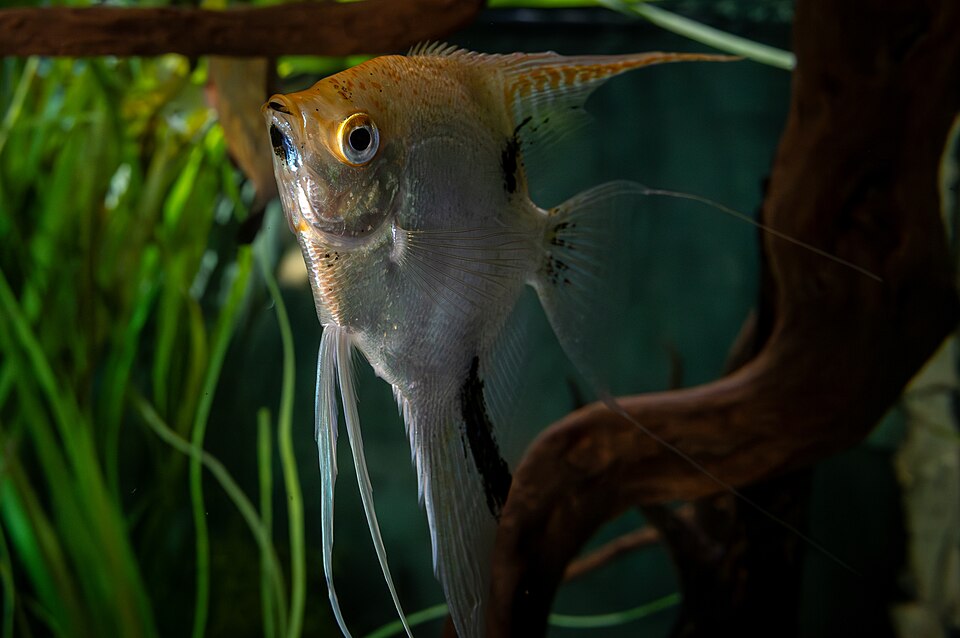
Reference photograph
Reference photograph of an angelfish. Compare its colours and form with the identification details in the text.
Source: Mattia Nocciola · Original material: Pterophyllum_scalare_Natural_History_Museum_University_of_Pisa.jpg · CC BY-SA 4.0
Modification notice from the source: Cropped 15 % horizontally, 15 % vertically, 28 % areawise using CropTool with precise mode.
1. Classification, origins and habitat
The English name angelfish covers freshwater Pterophyllum and marine fish belonging to a separate family. This page describes freshwater Pterophyllum scalare. It uses vegetation, roots and cover in South American waters including the Amazon. Do not combine the build and range of the related altum angelfish with this species. Captive selection produced colours and fin forms beyond silver stripes. Ornamental varieties should not become the only wild appearance. Distinguishing the shared freshwater and marine name through scientific identity begins accurate matching of information and images.
2. Appearance and identification
The body is very tall and laterally compressed, with extended dorsal and anal fins. Slender pelvic fins and vertical stripes are representative, but captive mutations can reduce stripes or create other patterns. Long veil fins are not standard in every wild animal. A tall body can relate to movement through narrow spaces, without tank height alone providing enough room. Distinguish small juveniles from adult size and height. Colour alone cannot establish sex or exact variety; do not substitute rounder, differently patterned marine angelfish photographs.
3. Behavior and way of life
These cichlids use small aquatic animals and other foods and move around vegetation. They can eat small fish, so a soft wing-like appearance does not establish safe combination with every aquarium fish. Pairs may clean egg-laying surfaces and care for eggs and young. Defence around them can intensify during breeding. Relationships among tank mates depend on size, individuals and shelter. Following human feeding can result from learning rather than an affectionate temperament. Consider feeding and breeding state together.
4. Observation, conservation and care
Keeping should account for adult height, swimming width, stable freshwater quality, filtration and cover. Long thin fins can be affected by sharp ornaments and bites from other fish. Check specific diet and health management for exact species and condition. Releasing pets into rivers or ponds is not returning them to their original nature and can affect native organisms. Captions should specify freshwater angelfish and established captive colours without mixing marine salinity and reef ecology. Linking the tall body with plants and roots clarifies form and ecology.
Evidence and references
- FishBase — Pterophyllum scalare
Species classification, distribution, habitat and form
- Animal Diversity Web — Pterophyllum scalare
Freshwater angelfish classification, anatomy and breeding