
Dog Breeds
Great Dane
Great Dane
Classification and scientific name: Canis lupus familiaris
Sources checked:
Very long legs, great height at the withers, a deep chest, long head and short coat are characteristic
Although its name evokes Denmark, the Great Dane developed from Germany's history of large hunting and guarding dogs. Very long legs, great height at the withers, a deep chest, long head and short coat are characteristic.
Origins and distribution
Germany
- Great Dane
- Germany
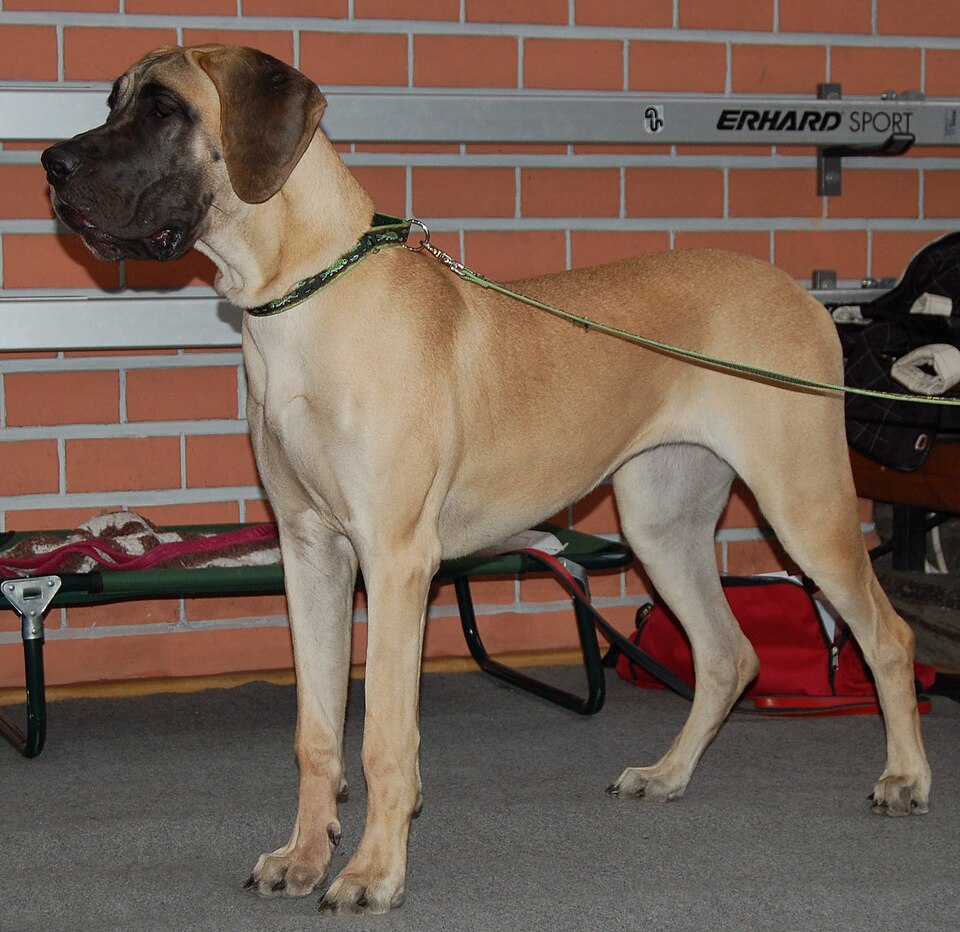
Reference photograph
Reference photograph of a Great Dane. Examine this individual's color and form alongside the identification descriptions in the text.
Source: Lilly M · Original material · CC BY-SA 2.5
1. Classification, origins and habitat
Although its name evokes Denmark, the Great Dane developed from Germany's history of large hunting and guarding dogs. Distinguish changing uses from large hunting dogs to present selection for companionship. Record-height individuals are known, but maximum records are not the average of every adult. Name, origin and an actual individual's size are different pieces of information.
2. Appearance and identification
Very long legs, great height at the withers, a deep chest, long head and short coat are characteristic. Colors and patterns include fawn, brindle, black, blue and harlequin. Photographs with upright ears may reflect surgery; natural ears hang. Do not predict health or temperament from photographic color or present ear shape as essential grooming.
Even with the same large body, solid, brindle and irregular harlequin markings on white can make individuals appear to be different breeds. Both natural and surgically altered ears are familiar, so ear direction alone does not establish breed. A photograph beside a small person emphasizes height but does not show actual weight or health. Observe the balance of deep chest, long legs and head while checking adult-versus-puppy and sex differences and the camera angle.
3. Behavior and way of life
Descriptions often mention individuals living close to people and resting calmly, but excitement and movement in a large body are real safety issues. Use short reward-based sessions to teach waiting without jumping at people and lead walking. Children and small animals can be pushed unintentionally, so room to withdraw and supervision are needed. Prioritize individual experiences and reactions over breed reputation.
4. Observation, conservation and care
Prepare space for an adult body to turn and lie down, as well as transport and access routes. During growth, check nutrition appropriate to build and gradual exercise rather than simply feeding excessively or imposing strenuous activity to accelerate growth. Consider feeding, condition, gait and health records together and secure comfortable rest. The skin beneath the short coat, paws and mouth also need care.
Evidence and references
- American Kennel Club — Great Dane
Breed origins, form, behavioral tendencies and grooming
- Defra — Living environment and welfare of companion dogs
General principles of living space, food, normal behavior, social relationships and responsible care