
Dog Breeds
Saint Bernard
Saint Bernard
Classification and scientific name: Canis lupus familiaris
Sources checked:
A large body, broad head, hanging ears and skin around the mouth, and white and reddish-brown markings are characteristic
The Saint Bernard is associated with large dogs used at hospices on Alpine mountain routes. A large body, broad head, hanging ears and skin around the mouth, and white and reddish-brown markings are characteristic.
Origins and distribution
Mountain passes and hospices in the Swiss and Italian Alps
- Saint Bernard
- Mountain passes and hospices in the Swiss and Italian Alps
Reference photograph
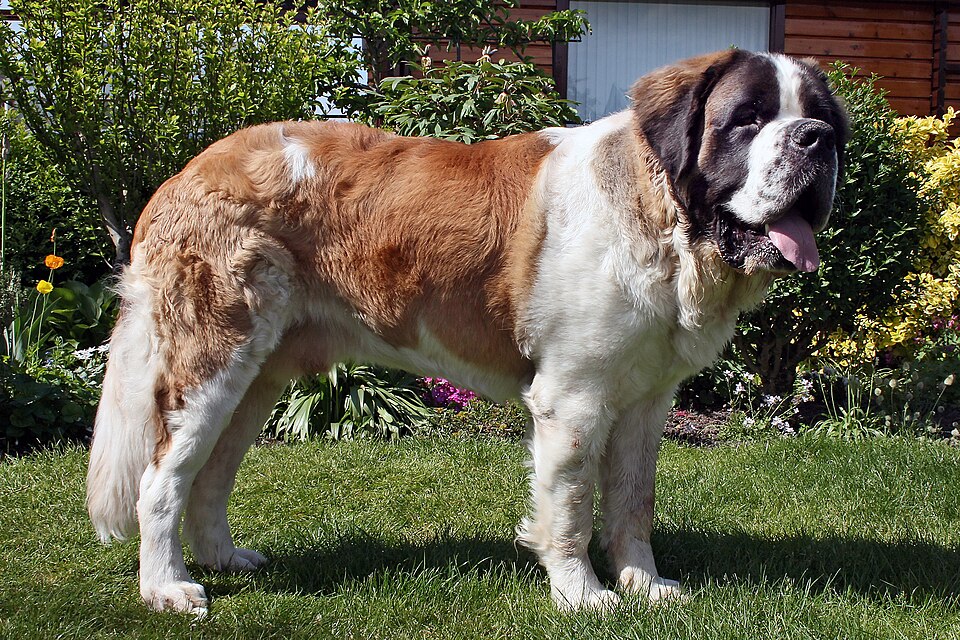
Reference photograph of a Saint Bernard. Examine this individual's color and form alongside the identification descriptions in the text.
Source: Blanky · Original material · CC BY-SA 3.0
1. Classification, origins and habitat
The Saint Bernard is associated with large dogs used at hospices on Alpine mountain routes. Distinguish historical route-finding and helping people from the professional tasks of rescue dogs today. The neck barrel is a famous symbol in paintings and popular culture, but this does not make it essential equipment used by every real rescue dog. Consider changes between hospice dogs and modern registered populations.
2. Appearance and identification
A large body, broad head, hanging ears and skin around the mouth, and white and reddish-brown markings are characteristic. Both short- and long-coated forms exist, so the breed is not limited to one coat length. Facial and body markings vary individually, and proportions differ between growing puppies and large adults. A close frontal view of a large face cannot establish the space an adult needs.
Short- and long-coated Saint Bernards are forms within the same breed, and reddish-brown and white markings on face and body are not uniform. Barrel ornaments symbolizing the hospice are cultural expressions, so do not add one to an animal photograph or describe it as compulsory rescue equipment. Viewing broad head and large body together reveals proportions missed in a facial close-up. Avoid confusing a record-breaking individual's weight with the breed's overall average.
3. Behavior and way of life
Even where individuals are calm and live alongside people, gentle giant does not guarantee safety in every encounter. Bodily weight and strength mean excited movements may push people. Reward calm greetings, waiting and lead walking, and have adults supervise contact with children. Rescue history does not mean every individual spontaneously performs lifesaving actions.
4. Observation, conservation and care
Provide spacious non-slip routes and resting areas appropriate to adult size. Do not force young large dogs to jump excessively or run long distances; adapt activity to growth. Check the mouth area, coat, paws and skin, and provide water, shade and ventilation in hot periods. Feeding, body condition, gait and health records of a large dog must be checked individually.
Evidence and references
- American Kennel Club — Saint Bernard
Breed origins, form, behavioral tendencies and grooming
- Defra — Living environment and welfare of companion dogs
General principles of living space, food, normal behavior, social relationships and responsible care