
Dog Breeds
Basenji
Basenji
Classification and scientific name: Canis lupus familiaris
Sources checked:
A short coat, compact body, upright ears, forehead wrinkles and tightly curled tail are characteristic
The Basenji developed into a modern registered breed from regional hunting-dog lines in Central Africa. A short coat, compact body, upright ears, forehead wrinkles and tightly curled tail are characteristic.
Origins and distribution
Central Africa
- Basenji
- Central Africa
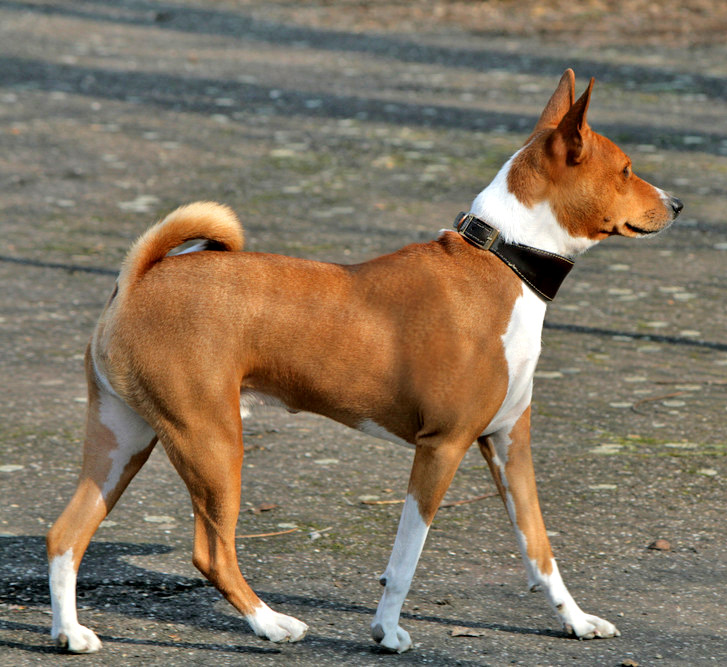
Reference photograph
Reference photograph of a Basenji. Examine this individual's color and form alongside the identification descriptions in the text.
Source: fugzu · Original material · CC BY 2.0
1. Classification, origins and habitat
The Basenji developed into a modern registered breed from regional hunting-dog lines in Central Africa. An ancient-looking dog is not a wild species separate from domestic dogs. Its use in forest hunting can be understood separately from companion life today. Do not compress regional origins and the formation date of the present registered population into a single simplified story.
2. Appearance and identification
A short coat, compact body, upright ears, forehead wrinkles and tightly curled tail are characteristic. Colors include red-and-white, black-and-white, tricolor and brindle. Forehead wrinkles vary with posture and ear position and do not mean a permanently worried expression. Examine the balance of an adult's legs and body together in a full-body photograph.
Fine forehead wrinkles, upright ears and a tail curled close to the back together help identify the Basenji. How visible the wrinkles are depends on ear and gaze posture, not constant worry or sadness. Appearance includes black, tricolor and brindle as well as red-and-white. Do not exaggerate the barkless nickname into a remarkable ability of head structure; understand it as a domestic dog communicating through various vocalizations and body language.
3. Behavior and way of life
It is known for yodel-like sounds different from ordinary barking, but it is not a dog that makes no sound at all. It may explore scents and movement and make independent decisions. Relative quietness does not remove the need for education and socialization; manage outdoor activities and meetings with other animals safely, considering possible pursuit.
4. Observation, conservation and care
Provide movement and exploration suited to stamina on a secure lead and within fencing, using rewards to teach recall and waiting. Simple short-coat grooming does not remove the need to check skin, paws, mouth and body condition. Monitor warmth and rest in cold weather, and prepare experiences of being alone so that the individual can adapt comfortably. Do not use the barkless nickname as a guarantee of silence.
Evidence and references
- American Kennel Club — Basenji
Breed origins, form, behavioral tendencies and grooming
- Defra — Living environment and welfare of companion dogs
General principles of living space, food, normal behavior, social relationships and responsible care