
Dog Breeds
Border Collie
Border Collie
Classification and scientific name: Canis lupus familiaris
Sources checked:
A balanced medium-sized body, relatively long agile legs and a double coat of varying lengths are seen.
The Border Collie is a herding dog selected primarily for its ability to work sheep in Britain’s border region. A balanced medium-sized body, relatively long agile legs and a double coat of varying lengths are seen.
Origins and distribution
Sheep-farming areas on the Scottish–English border
- Border Collie
- Sheep-farming areas on the Scottish–English border
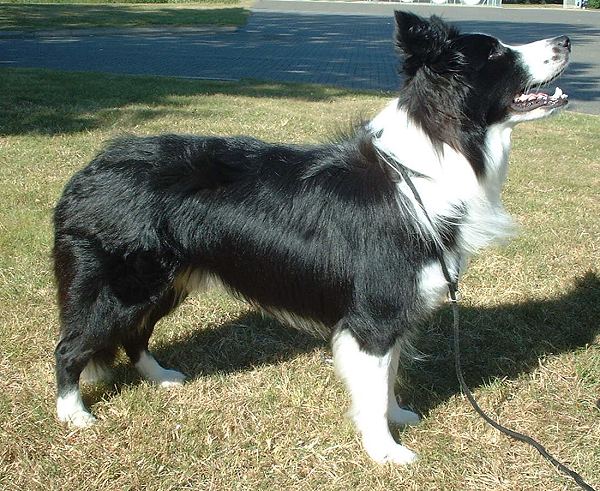
Reference photograph
Reference photograph of Border Collie. Compare the color and form of the individual shown with the identification notes in the text.
Source: Sannse · Original material · CC BY-SA 3.0
1. Classification, origins and habitat
The Border Collie is a herding dog selected primarily for its ability to work sheep in Britain’s border region. Historically, responsiveness to movement and human directions mattered more than one particular coat color. Working, show and sporting lines may have different selection goals, so one breed name should not imply identical living requirements.
2. Appearance and identification
A balanced medium-sized body, relatively long agile legs and a double coat of varying lengths are seen. Although black and white dominates many representative photographs, brown, blue-toned and other colors and patterns occur. Ears may stand or fold at the tips, and a low crouch is a moment of behavior, not a permanent body shape.
A lowered head while watching sheep is common in working photographs of Border Collies, but it is a situational behavior, not evidence that the neck or back is structurally always low. Individuals have short dense or long coats, varied colors and different ear shapes. Common black-and-white coloring alone cannot establish the same breed as another herding dog. Comparing a low working posture with full-body front and side views helps separate behavior from inherited conformation.
3. Behavior and way of life
Many individuals focus on moving targets and readily work with people on tasks. Claims of being the most intelligent breed must not be interpreted as a guarantee that training is unnecessary. Constantly adding more tasks is not the only answer; rest and arousal regulation must also be learned. Treat attempts to herd cars, bicycles or children as real safety issues.
4. Observation, conservation and care
Divide time between walks, scent exploration, suitable mental tasks and rest. Observe movement and recovery rather than throwing a ball endlessly. Groom the coat and paws, check fencing and leashes, and arrange the environment to prevent chasing the movements of people and other animals. Exercise plans must fit growth stage and health.
Evidence and references
- American Kennel Club — Border Collie
Breed origins, form, behavioral tendencies and grooming
- Defra — Living environment and welfare of dogs
General principles for living space, food, normal behavior, social relationships and responsible care