
Dog Breeds
Boston Terrier
Boston Terrier
Classification and scientific name: Canis lupus familiaris
Sources checked:
A short muzzle, square head, upright ears, short coat and white markings stand out
The Boston Terrier is a companion breed developed from bulldog and terrier lines in Boston in the United States. A short muzzle, square head, upright ears, short coat and white markings stand out.
Origins and distribution
Boston, United States
- Boston Terrier
- Boston, United States
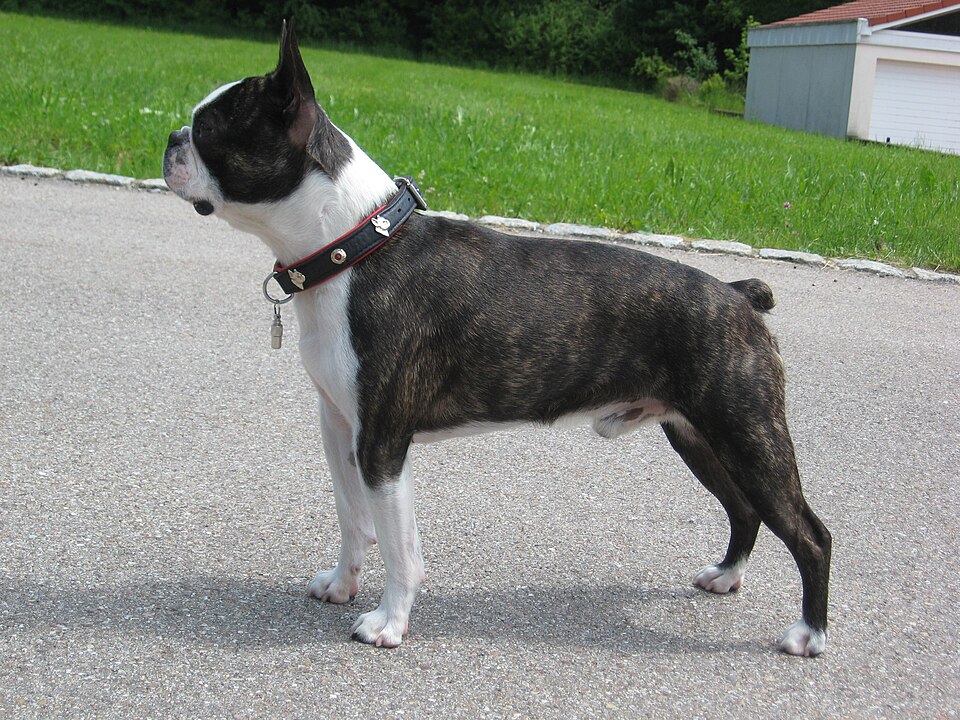
Reference photograph
Reference photograph of a Boston Terrier. Examine this individual's color and form alongside the identification descriptions in the text.
Source: Andreas Schlaugat · Original material · CC BY 3.0
1. Classification, origins and habitat
The Boston Terrier is a companion breed developed from bulldog and terrier lines in Boston in the United States. Terrier in the name does not mean it has the same roles and living requirements as every hunting terrier. Its black-and-white appearance earned the nickname tuxedo, and modern selection for companionship can be read separately from the history of its founding lines.
2. Appearance and identification
A short muzzle, square head, upright ears, short coat and white markings stand out. White areas occur with brindle and seal as well as black. Although it may resemble a French Bulldog, head, ear and body proportions and breed history differ. Large eyes and a short nose are structures whose effect on everyday comfort matters, not just facial expression.
The contrast between white and dark fur resembles a shirt and jacket, giving rise to the tuxedo nickname. However, white areas do not have identical positions or extent on every individual. Comparing ears and head-to-body proportions side by side can reveal differences from the similar French Bulldog. Do not identify either breed solely by coat color or expression; knowing that brindle and dark seal also occur alongside black helps explain differences between photographs.
3. Behavior and way of life
Many individuals join people in play and investigate new surroundings, but sociability varies with experience and the individual. Do not overstimulate a dog to make it repeat entertaining behavior. Offer short reward-based training and walks and scent exploration suited to its stamina; during meetings with other dogs, observe whether the other animal is comfortable too.
4. Observation, conservation and care
Pay particular attention to breathing and recovery during hot weather and vigorous activity, and provide shade, water and rest. Even a short coat requires checks of the skin, paws, mouth and eye area. Do not dismiss snoring and harsh breathing as merely amusing breed noises; consult a veterinarian if there is discomfort. Consider the exposed eyes when dealing with rough vegetation or vigorous contact.
Evidence and references
- American Kennel Club — Boston Terrier
Breed origins, form, behavioral tendencies and grooming
- Defra — Living environment and welfare of companion dogs
General principles of living space, food, normal behavior, social relationships and responsible care