
Dog Breeds
Bull Terrier
Bull Terrier
Classification and scientific name: Canis lupus familiaris
Sources checked:
A long egg-shaped head with a curved profile, small upright ears, triangular-looking eyes and a muscular body are characteristic
The Bull Terrier developed in Britain from bulldog and terrier lines. A long egg-shaped head with a curved profile, small upright ears, triangular-looking eyes and a muscular body are characteristic.
Origins and distribution
United Kingdom
- Bull Terrier
- United Kingdom
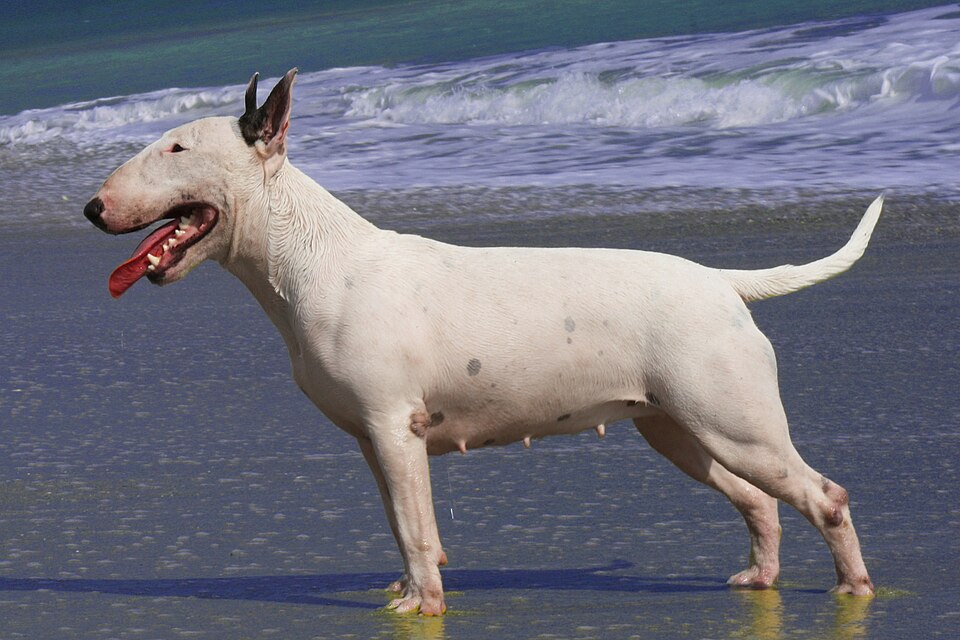
Reference photograph
Reference photograph of a Bull Terrier. Examine this individual's color and form alongside the identification descriptions in the text.
Source: Pixabay User TC-TORRES · Original material · CC0
1. Classification, origins and habitat
The Bull Terrier developed in Britain from bulldog and terrier lines. History associated with dog fighting should be distinguished from present-day selection for companionship; past uses do not determine every individual's current temperament. Standard and Miniature Bull Terriers may be separated in registration and build, so check the precise name.
2. Appearance and identification
A long egg-shaped head with a curved profile, small upright ears, triangular-looking eyes and a muscular body are characteristic. Brindle and various colored markings occur alongside white. Rather than presenting the distinctive face as comical, observe the continuous curve of head and muzzle. Coat color in a photograph cannot distinguish Miniature from Standard.
Compared with other terriers, the curved profile from forehead to nose tip and small triangular eyes are distinctive identification clues. A photograph taken only from the front may not show the long head's curve well. Both white individuals and individuals with colored markings occur, and the Miniature size distinction cannot be judged by coat color. Describe the unusual face as an observable physical feature rather than evidence of an aggressive or comical personality.
3. Behavior and way of life
Some individuals are strong and eager to play, making arousal control and safe interactions important things to learn. A breed name neither guarantees aggression nor establishes absolute safety. Observe actual reactions to other dogs and small animals, and provide space to withdraw. Use safe toys and reward-based training instead of indiscriminately encouraging chewing on hard objects.
4. Observation, conservation and care
Even with a short coat, regularly examine skin, paws, mouth and body condition. Prioritize comfortable movement and rest over grooming intended to maintain the appearance of a white coat. Prepare a lead and safe space appropriate to the strong body, and teach taking breaks from vigorous play. Breed-related health information needs to be checked against actual tests and individual records.
Evidence and references
- American Kennel Club — Bull Terrier
Breed origins, form, behavioral tendencies and grooming
- Defra — Living environment and welfare of companion dogs
General principles of living space, food, normal behavior, social relationships and responsible care