
Dog Breeds
Jindo
Jindo
Classification and scientific name: Canis lupus familiaris
Sources checked:
Upright triangular ears, a firm body, a thick double coat and a raised tail are characteristic
The Jindo is a conserved and registered breed based on the indigenous dog population of Jindo in the Republic of Korea. Upright triangular ears, a firm body, a thick double coat and a raised tail are characteristic.
Origins and distribution
Jindo, Republic of Korea
- Korean Jindo Dog
- Jindo, Republic of Korea
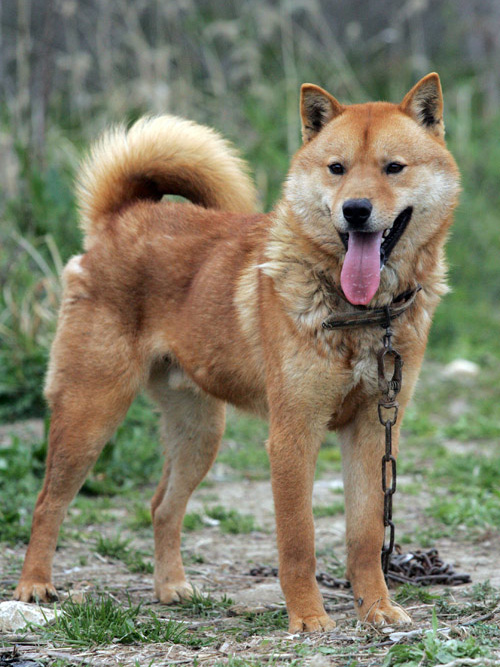
Reference photograph
Reference photograph of a Jindo. Examine this individual's color and form alongside the identification descriptions in the text.
Source: Herocosmos · Original material · CC BY-SA 4.0
1. Classification, origins and habitat
The Jindo is a conserved and registered breed based on the indigenous dog population of Jindo in the Republic of Korea. Its local history of hunting, guarding and companionship can be understood separately from life as a companion dog today. This does not mean that every dog born on Jindo, or every Korean dog with upright ears and a curled tail, is a registered Jindo; pedigree and appearance need to be checked together.
2. Appearance and identification
Upright triangular ears, a firm body, a thick double coat and a raised tail are characteristic. Several recognized colors and patterns occur besides white and yellow. Facial and tail shapes differ between individuals, so a single photograph should not be treated as the sole standard. When comparing similar East Asian spitz-type dogs, also consider origin and registration information.
Although the image of a white Jindo is familiar, coats also include yellow, dark colors and brindle. Not all white-coated East Asian dogs are Jindos, and upright ears and curled tails occur in other breeds too. From the front, look at the head and ears; from the side, examine the chest, legs and tail together. A single appearance photograph cannot establish purebred status or birthplace, so when naming an animal, distinguish the source information about that individual from conservation and registration records.
3. Behavior and way of life
Descriptions include attentiveness to surroundings, independent judgment and exploration, alongside bonds with people. The word loyalty does not guarantee easy adaptation to new environments or consistently good relations with unfamiliar animals. Understand the hunting and guarding history while observing actual reactions, and establish everyday habits through safe introductions and reward-based training.
4. Observation, conservation and care
Provide ample scent exploration and walking with secure fencing and a lead, managing escapes and pursuit of small animals. Gently groom the winter undercoat and shedding coat, and gradually introduce having the paws, mouth and body touched. Famous homing stories alone are no reason to expect a dog released off lead to return. Both conservation value and the present individual's comfortable everyday life deserve consideration.
Evidence and references
- American Kennel Club — Korean Jindo Dog
Breed origins, form, behavioral tendencies and grooming
- Defra — Living environment and welfare of companion dogs
General principles of living space, food, normal behavior, social relationships and responsible care