
Dog Breeds
Miniature Schnauzer
Miniature Schnauzer
Classification and scientific name: Canis lupus familiaris
Sources checked:
A harsh outer coat, pronounced beard and eyebrows, and a compact, square-looking body are characteristic
This entry focuses on the Miniature Schnauzer to match the main photograph. A harsh outer coat, pronounced beard and eyebrows, and a compact, square-looking body are characteristic.
Origins and distribution
Germany
- Miniature Schnauzer
- Germany
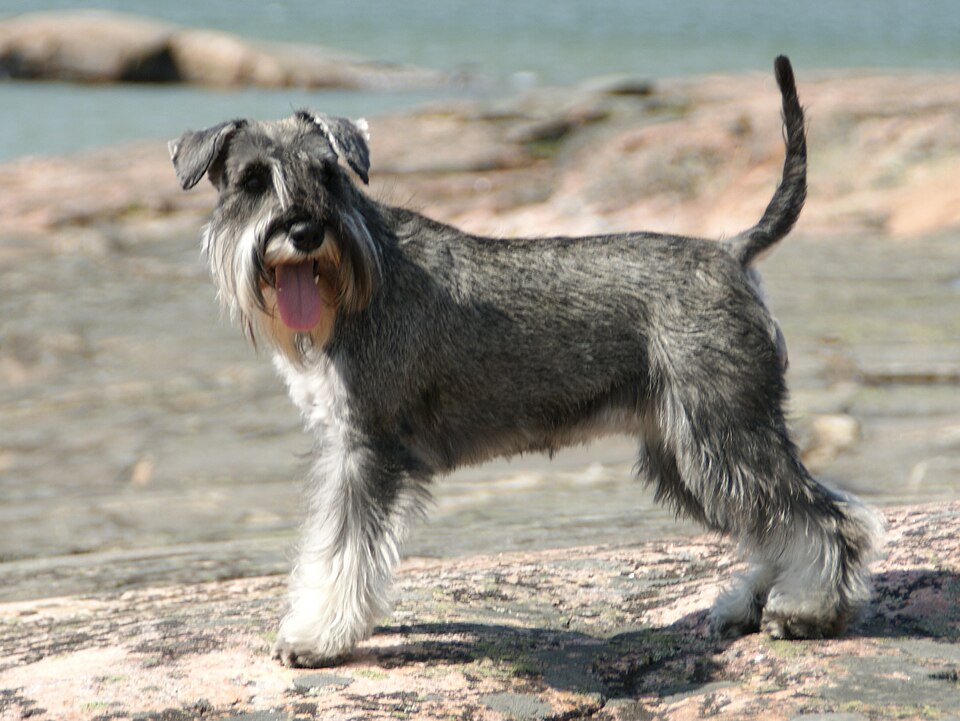
Reference photograph
Reference photograph of a Miniature Schnauzer. Examine this individual's color and form alongside the identification descriptions in the text.
Source: Canarian · Original material · CC BY-SA 3.0
1. Classification, origins and habitat
This entry focuses on the Miniature Schnauzer to match the main photograph. It developed through selection involving German Standard Schnauzer lines and smaller dogs, linking its role in dealing with small farm rodents with its history as a companion. Its size and registration differ from the Standard and Giant, so not all Schnauzers are presented as having one build.
2. Appearance and identification
A harsh outer coat, pronounced beard and eyebrows, and a compact, square-looking body are characteristic. Colors include salt-and-pepper, black-and-silver and black. Grooming can shape the beard and leg hair, so their lengths are not identical. Ears and tails may differ in natural form and surgical history, and no single shape is presented as compulsory.
The beard and eyebrows help make a Schnauzer recognizable, but ordinary grooming length and style can greatly change its appearance. Standard, Miniature and Giant Schnauzers differ in registration and build, so similar beards do not mean dogs of identical size. Salt-and-pepper is an appearance created by mixed light and dark hairs, distinct from staining by soil or gray lighting. If a photograph specifies the size variety, consider that information alongside the whole animal.
3. Behavior and way of life
Many individuals take an interest in their surroundings, react to movements and sounds, and learn tasks with people. Terrier-like exploration and pursuit may occur, so manage encounters with small animals. Do not turn alertness into a fixed description of aggression toward everyone. Use rewards to teach lead walking and settling, and provide time to rest independently.
4. Observation, conservation and care
Check for food caught in the beard and around the mouth, and adapt harsh-coat grooming to the individual and its lifestyle. Do not force uncomfortable grooming for appearance; gradually introduce handling of the paws and mouth area. Small dogs also need sufficient walking, scent exploration and appropriate play. Manage feeding and activity according to age, body condition and health records.
Evidence and references
- American Kennel Club — Miniature Schnauzer
Breed origins, form, behavioral tendencies and grooming
- Defra — Living environment and welfare of companion dogs
General principles of living space, food, normal behavior, social relationships and responsible care