
Reptiles
American alligator
American Alligator
Classification and scientific name: Alligator mississippiensis
Sources checked:
A broad-snouted alligator of southeastern wetlands protects nests and young
The American alligator belongs to Alligatoridae within Crocodilia, a lineage distinct from Crocodylus species such as the Nile crocodile.
Origins and distribution
Southeastern United States
- Alligator mississippiensis
- Southeastern United States
- Observing species-specific ecology
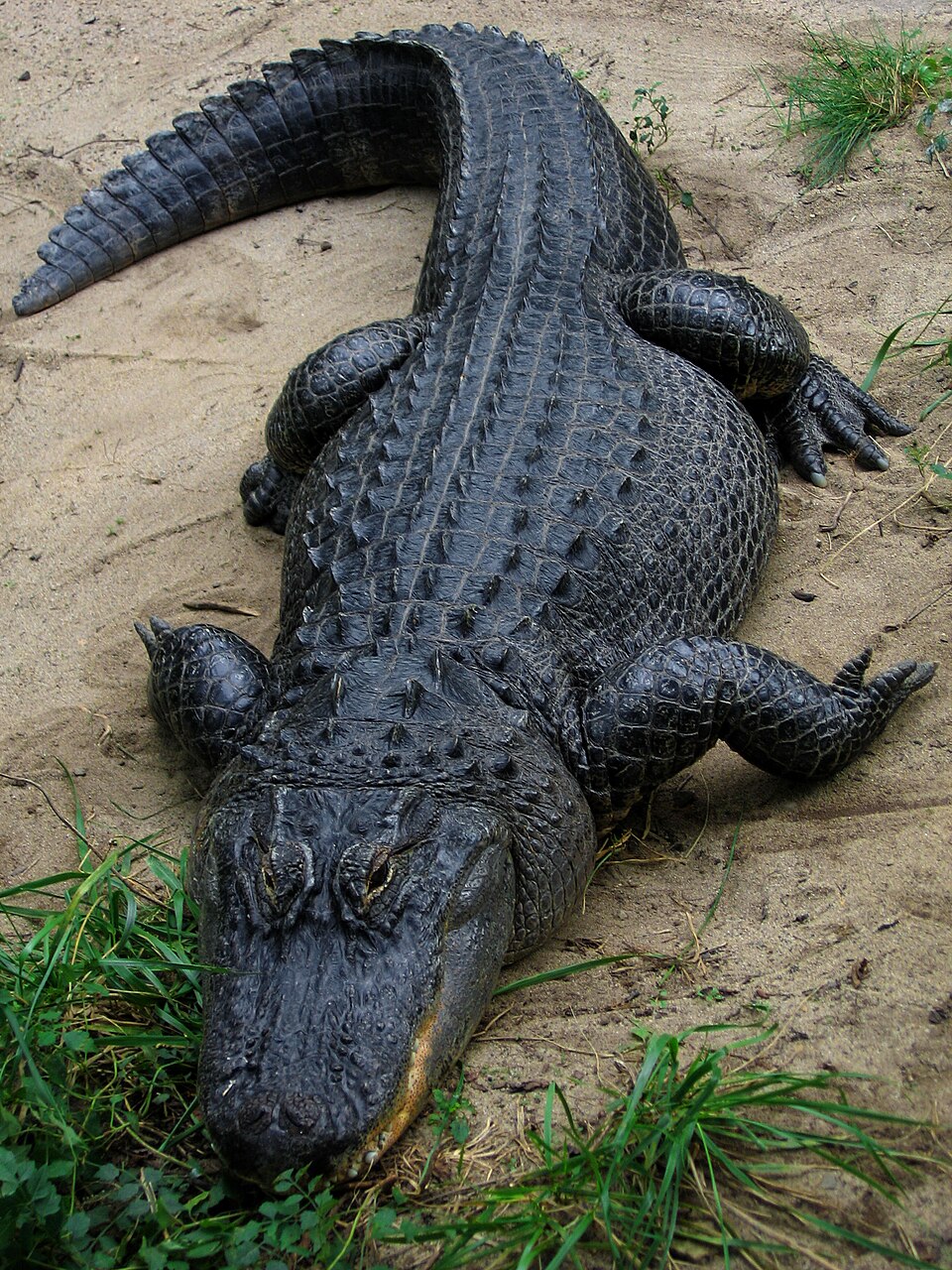
Reference photograph
Reference photograph of an American alligator. Compare its colours and form with the identification details in the text.
Source: User:Postdlf · Original material: American_Alligator.jpg · CC BY-SA 3.0
1. Classification, origins and habitat
The American alligator belongs to the family Alligatoridae within Crocodilia. Its lineage differs from Crocodylus species such as the Nile crocodile.
It is a representative alligatorid of southeastern United States freshwater wetlands. Although sharing a genus with the Chinese alligator, it is a separate species and also differs from Nile crocodile lineages. American wildlife-management and habitat-conservation history provide background for understanding it. A large adult photograph cannot explain ecology at every growth stage.
2. Appearance and identification
A broad rounded snout, strong tail and tough skin are characteristic. Compare head shape with other crocodilians.
The broad rounded snout, high-set eyes and nostrils, and powerful tail connect with keeping the body low at the water surface. Consider hard bony skin structures together with the tail used underwater. Visible teeth in a closed mouth should not become a field-identification trick requiring close approach. Young animals differ from adults in pattern and proportions.
3. Behavior and way of life
American alligators eat small animals and various vertebrates beside water. Mothers' protection of nests and young is also observed.
Small and large individuals can use different food ranges. Female nest and young protection is known, but should not be simplified into a human-like family always living together. Basking, swimming and prey capture vary with conditions. Floating still in water does not make close approach acceptable.
4. Observation, conservation and care
Freshwater wetlands and watersides matter. Explain this large wild reptile through ecological observation following viewing distances and local management guidance.
Water levels, vegetation and land for nests are important. Feeding can teach associations between people and food and must be distinguished from ecological observation. Follow managed-area guidance and keep ample distance beside water. This page provides large wild crocodilian ecology rather than recommending home keeping.
Evidence and references
- Animal Diversity Web — University of Michigan — Alligator mississippiensis
Classification, origin, appearance and ecology
- The Reptile Database — Alligator mississippiensis
Scientific names, synonyms, distribution and related taxonomic research