
Reptiles
Blue-tongued skink
Blue-tongued Skink
Classification and scientific name: Tiliqua scincoides
Sources checked:
A ground-dwelling lizard with short legs, a thick body and a blue tongue
Blue-tongued skink is used for several Tiliqua species; this page focuses on Tiliqua scincoides.
Origins and distribution
Australia and surrounding areas
- Tiliqua scincoides
- Australia and surrounding areas
- Observing species-specific ecology
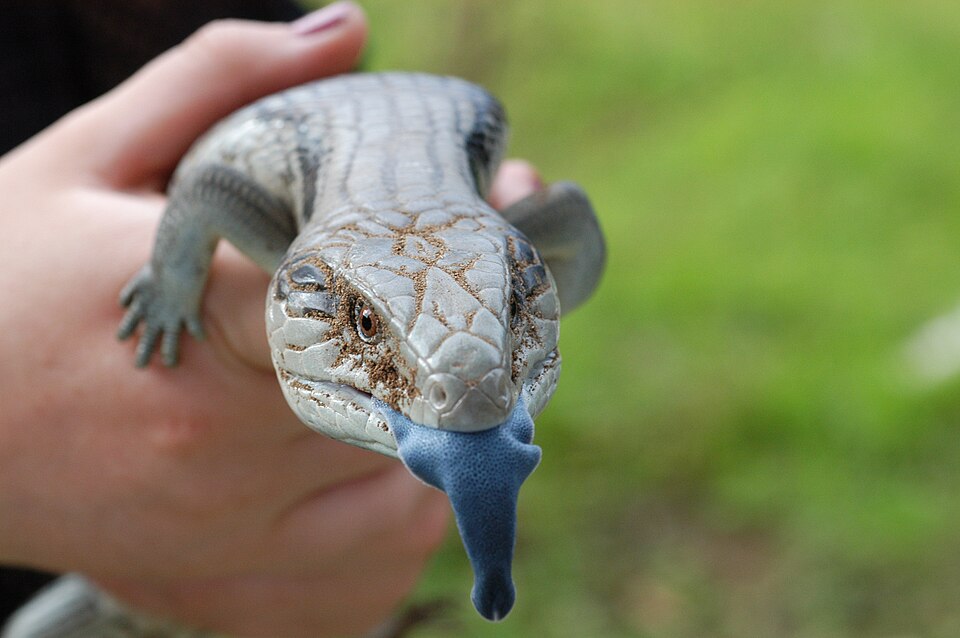
Reference photograph
Reference photograph of a blue-tongued skink. Compare its colours and form with the identification details in the text.
Source: Doug Beckers · Original material: Tiliqua_scincoides_tongue.jpg · CC BY-SA 2.0
1. Classification, origins and habitat
Blue-tongued skink is a name used for several species of Tiliqua. This entry focuses on Tiliqua scincoides.
It is a skink known from various Australian environments, while blue-tongue also names close relatives. Do not combine the distribution and subspecies of Tiliqua scincoides with information on other Indonesian Tiliqua species. Checking scientific names before trade names helps match images and environmental descriptions.
2. Appearance and identification
A thick body, short legs, large scales and a blue tongue are characteristic. Similarly named species can differ in range and pattern.
Observe large body scales, short limbs and a thick tail as proportions of one body. Short legs do not make it a snake; toes and joints are present. The blue tongue is an organ inside the mouth rather than a permanently exposed ornament. Remembering that an open-mouth photograph is not the appearance at every moment helps distinguish defence from ordinary behaviour.
3. Behavior and way of life
Blue-tongued skinks are omnivorous, using plants and small animals. When threatened, they may open the mouth and display the tongue.
They use small animals and plant foods on the ground and explore chemical information. Exposing the tongue and inflating the body can relate to threat. Captive footage of an animal resting on a person does not establish an inherently touch-loving temperament. Feeding, rest and defence occur in different behavioural contexts.
4. Observation, conservation and care
Ground shelters and temperature conditions the animal can choose are important. Do not mix management requirements of species from different regions under the same blue-tongue name.
Shelter under leaf litter or logs and choices between sunshine and shade matter. Combining humidity and temperature for several species under blue-tongue can misrepresent native environments. Rather than repeatedly provoking the tongue to appear, observe naturally moving legs and body proportions. A small youngster's size should not determine adult living-space requirements.
Evidence and references
- Animal Diversity Web — University of Michigan — Tiliqua scincoides
Classification, origin, appearance and ecology
- The Reptile Database — Tiliqua scincoides
Scientific names, synonyms, distribution and related taxonomic research