
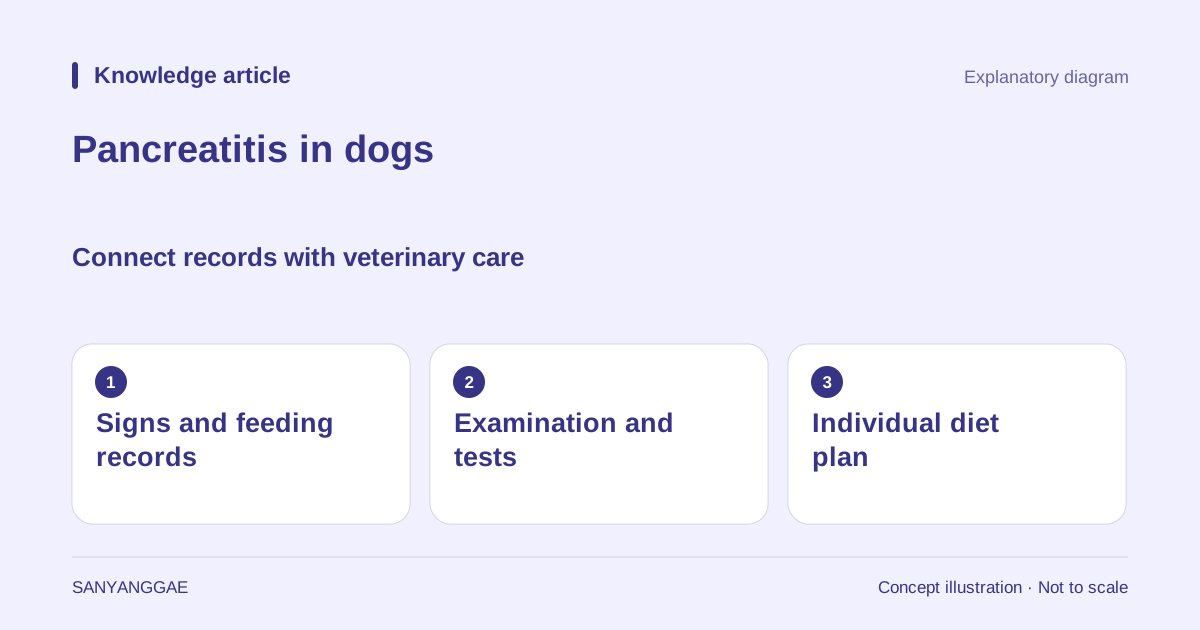
Canine pancreatitis ranges from signs resembling indigestion to severe disease affecting the whole body. Vomiting or poor appetite do not always mean pancreatitis; a previously diagnosed dog may have a different cause this time. Carers can accurately describe onset and changes and understand feeding and monitoring plans after veterinary care. This guide helps read results and prepare questions, rather than prescribing treatment to start at home.
1. Why pancreatic inflammation produces varied signs
The pancreas makes digestive enzymes and helps regulate blood sugar. Abnormal enzyme activation, tissue damage and inflammation interact in pancreatitis and may affect nearby tissues and the whole body. Everyday signs include nausea, low energy and appetite changes as well as abdominal pain. “Acute” describes onset, not mild severity.
Fatty food or rummaging in rubbish can be risk factors, but not every patient has one identifiable cause. Lipid metabolism, concurrent illness and medicines also need assessment. Concluding that yesterday’s treat caused it can omit important information. Record unusual foods, the usual diet and medication changes together; leave cause determination to the combined clinical assessment.
2. Gather a timeline before the visit
Record the first vomiting time, food before and after, subsequent acceptance of water and food, and changes in toileting and activity. Short notes of times and patterns compare more readily than “vomited a lot”. Check packaging, product names or main ingredients of human foods. Report other unwell animals and possible ingestion of food or foreign objects. This helps assess causes beyond pancreatitis too.
Lowered forelegs and raised hindquarters may accompany abdominal discomfort but are not diagnostic alone. Repeated vomiting, severe lethargy, collapse or obvious pain require veterinary care instead of waiting to compare postures. Bring prescription packaging or a medication list if names are difficult. Do not deliberately feed or fast to test a reaction before the visit; ask the clinic about precautions before travelling.
3. Why blood tests and ultrasound are considered together
Veterinarians combine history and examination with blood tests, pancreas-specific lipase and imaging. General blood work helps identify dehydration, inflammation and other organ problems; pancreas tests add information on pancreatic injury. Similar names can conceal different measurements and criteria. Do not apply online tables to results from another laboratory or with different units.
An uncertain test or unclear ultrasound does not justify ignoring signs. Conversely, elevated values cannot explain every cause of current vomiting through the pancreas alone. Ask what the test supports, how other causes were assessed and what repeat testing will track. Report mismatches between numerical trends and eating or activity changes.
4. Understand treatment and nutrition plans
Treatment addresses hydration, pain, nausea and nutrition according to severity and complications. A shared diagnosis does not dictate identical hospitalisation decisions. If home care is appropriate, clarify monitoring, when to call about inability to eat, and return timing. Do not independently change prescriptions or add human painkillers even when improvement appears.
Past experience may suggest prolonged fasting always rests the pancreas, but nutrition must fit the present condition. Food choice, start time and continuation depend on vomiting, nutritional status and other illnesses. Do not immediately substitute another dog’s recovery food or supplements. Rather than a universal recipe, clarify practical execution of the clinic’s plan and the contact sequence if food is refused or vomiting returns.
5. Read low-fat labels carefully
Even with a low-fat recommendation after discharge, do not select by front-label claims alone. Fat percentages in dry and wet foods with different moisture contents are not directly comparable; fat per calorie and nutritional balance also matter. Show your current product to the veterinarian to check individual targets. One fat number or protein restriction cannot fit every patient. Concurrent diseases may require balancing dietary goals.
Include everything eaten: treats, pill-hiding foods, table bites and separate family feeding, not only the staple diet. An unchanged main food plus weekend leftovers would be missed by weekday-only records. Share a list of permitted products and items needing clinic advice. A long-term staple of chicken and rice or another simple combination does not guarantee complete nutrition.
6. Link recovery records with reassessment decisions
Instead of just ticking “ate”, record amounts offered and eaten and vomiting afterwards. Continue comparable weight measurements and toileting and activity records without calling every daily fluctuation relapse. Show the worst day alongside recent condition to clarify recovery. Improved numbers do not justify ignoring food refusal, nor does one loose stool establish treatment failure.
If a dog briefly plays after discharge but still will not eat, report the lack of ongoing nutrition separately rather than saying only that energy improved. Ask whether worsening signs should wait until the planned recheck. Long-term care relies on consistent food and medicines, assessment of other illnesses and prompt communication, rather than promises that a particular treat or supplement prevents recurrence.