
Birds
Woodpecker
Woodpecker
Classification and scientific name: Dryocopus pileatus
Sources checked:
Pileated woodpeckers excavate large trees while foraging
Woodpeckers comprise many species; this entry uses North America's Dryocopus pileatus as its representative.
Origins and distribution
North America
- North American woodpecker
- Red crest
- Tree hollows
- Insects
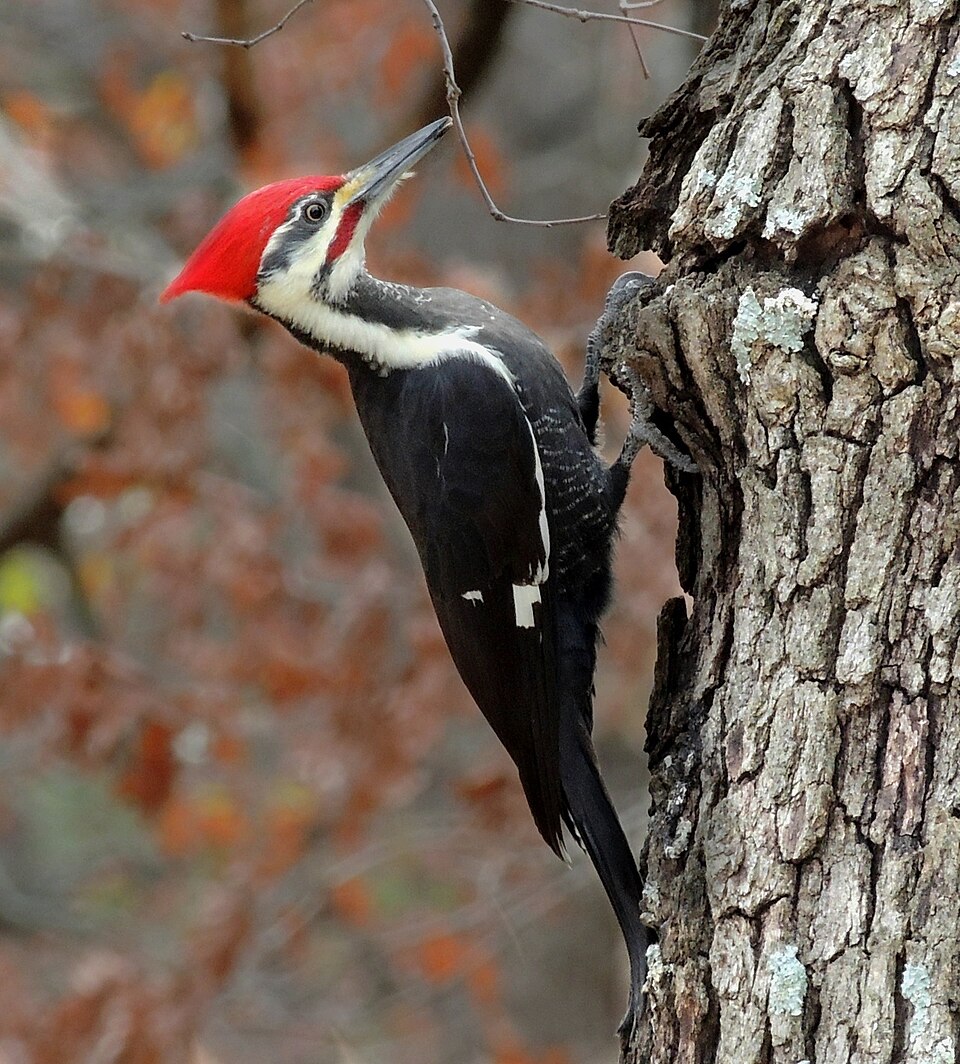
Reference photograph
Reference photograph of a woodpecker. Compare the bird's colours and form with the identification details in the text.
Source: Joshlaymon · Original material: PileatedWoodpeckerFeedingonTree,_crop.jpg · CC BY-SA 3.0
1. Classification, origins and habitat
Woodpeckers comprise many species; this entry uses North America's Dryocopus pileatus as its representative. It is not the same species as Korea's great spotted or grey-headed woodpeckers. It uses forests with large trees and dead wood, as well as surrounding environments retaining old trees. Insects inside wood and nesting cavities are key resources. Resemblance to a cartoon character does not justify omitting the actual range or species name. A tree's death in a forest is not simply a loss; it can create new conditions for animals using food and cavities. Consider living trees and standing dead wood together to understand this bird's habitat.
2. Appearance and identification
A large red crest, black body, white facial and neck stripes, and a long strong bill are characteristic. Markings around the face and crest can vary with sex and age. The feet grip trunks and stiff tail feathers support the body. White wing areas become more conspicuous in flight, making the colour pattern look different from a perched photograph. Head structure relates to a life of striking wood, but avoid exaggerations claiming that no impact can damage its brain. A red crest alone does not identify every woodpecker as this species; consider body size, facial markings and photographic location together.
3. Behavior and way of life
Pileated woodpeckers excavate wood to find ants and other insects and also use plant foods such as fruit. Large rectangular excavations can be signs of feeding, but not every tree hole was made by this species. Drumming serves territorial and pair communication as well as sounds arising during foraging. The birds breed in tree cavities, with parents caring for chicks. Other birds and mammals may use the cavities later, connecting the woodpecker's life with other forest animals. Rather than treating a bird striking one tree as an indiscriminate tree-damaging pest, consider relationships among food, nests and surrounding organisms.
4. Observation, conservation and care
Understand conservation and management in terms of large trees, dead wood that can safely remain, and forest connectivity. Managing a hazardous tree near structures is not the same decision as removing all dead trees. Observers should not play drumming to lure birds closer or put cameras into nesting cavities. Captions should explain that this North American species is the representative, reducing the misconception that the same bird is commonly encountered in Korea. Connecting trunk-gripping feet, the supporting tail and feeding holes makes the bird's actual body and life clearer than describing only a red crest and sound.
Evidence and references
- Animal Diversity Web — Dryocopus pileatus
Classification, distribution, appearance, feeding and breeding behaviour
- Cornell Lab — Pileated woodpecker
Identification, excavation, food, breeding and ecological relationships