
Dog Breeds
Dogue de Bordeaux
Dogue de Bordeaux
Classification and scientific name: Canis lupus familiaris
Sources checked:
A broad, large head, facial wrinkles, a relatively short muzzle, drooping lips and a solid body are characteristic
The Dogue de Bordeaux developed from large mastiff-type dog lines in and around Bordeaux, France. A broad, large head, facial wrinkles, a relatively short muzzle, drooping lips and a solid body are characteristic.
Origins and distribution
Bordeaux and surrounding areas, France
- Dogue de Bordeaux
- Bordeaux and surrounding areas, France
Reference photograph
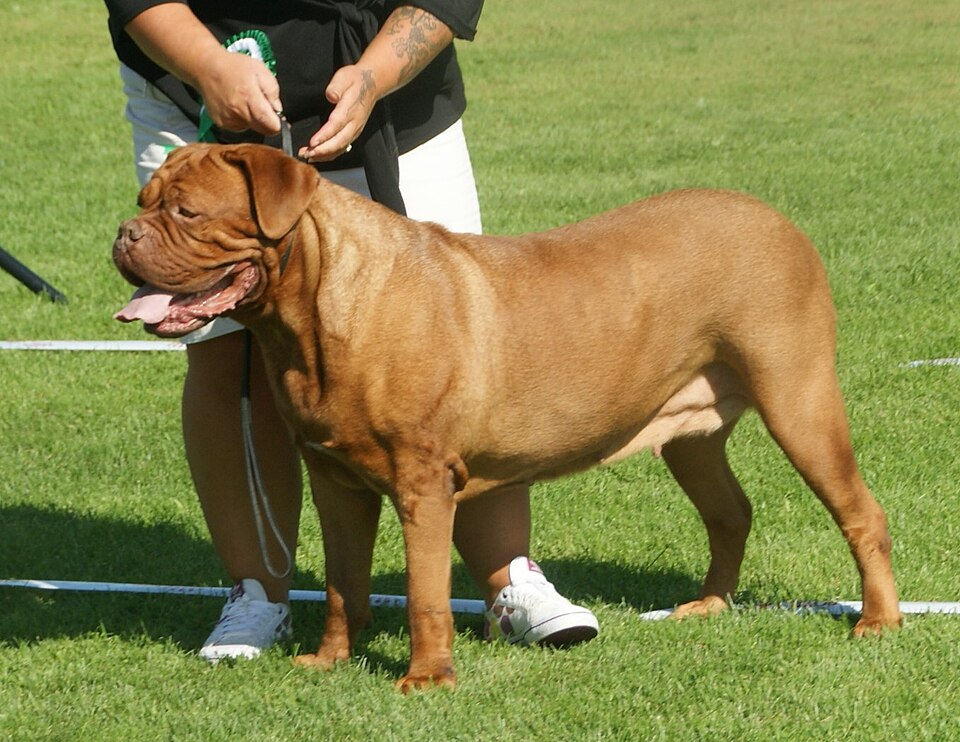
Reference photograph of a Dogue de Bordeaux. Examine this individual’s color and form alongside the identification descriptions in the text.
Source: Canarian · Original material · CC BY-SA 4.0
1. Classification, origins and habitat
The Dogue de Bordeaux developed from large mastiff-type dog lines in and around Bordeaux, France. Its history of farm work, guarding and other tasks can be read separately from modern selection for companionship. Old stories of strength and courage are not evidence guaranteeing a present-day individual’s aggression or health. It is a registered breed distinct from other mastiffs with similar faces.
2. Appearance and identification
A broad, large head, facial wrinkles, a relatively short muzzle, drooping lips and a solid body are characteristic. Short fur in shades from fawn to reddish brown is typical, while facial color and white markings vary between individuals. A large head and wrinkles should be considered alongside ease of breathing, skin comfort and movement, as well as their appeal as breed features. A front-facing photograph alone cannot establish body proportions.
The short reddish-brown coat, broad head and facial wrinkles stand out even from a distance, but wrinkle depth and facial color are affected by the individual, posture and light. When comparing it with other mastiff-type dogs, consider body length and the shapes of the legs and ears together with the head. Enlarging a broad face in a close-up can emphasize wrinkles and head size beyond their actual proportions. A dignified face or an angry-looking expression does not establish emotion; skin and breathing comfort should also be considered.
3. Behavior and way of life
Some individuals may rest close to people while keeping an eye on their surroundings. A calm impression or reputation for loyalty does not make every interaction safe, so introduce reward-based training and socialization from an early age. Safe greetings, lead walking and waiting are important for a dog of this strength, and unfamiliar people and animals should have space to withdraw. Do not deliberately encourage exaggerated guarding reactions.
4. Observation, conservation and care
Provide non-slip flooring, wide passageways and transport space in which an adult can move and rest comfortably. Check facial folds, the mouth area, skin and feet, as well as breathing and recovery in hot weather. Do not force a growing large dog to carry heavy loads or jump repeatedly; adjust feeding and exercise to its actual body condition. Breed-related health should be assessed through examinations and individual records rather than appearance.
Evidence and references
- American Kennel Club — Dogue de Bordeaux
Breed origins, form, behavioral tendencies and grooming
- Defra — Living environment and welfare of companion dogs
General principles of living space, food, normal behavior, social relationships and responsible care