
Dog Breeds
Irish Wolfhound
Irish Wolfhound
Classification and scientific name: Canis lupus familiaris
Sources checked:
Tall, long legs, a deep chest, relatively long head and rough coat are characteristic
The Irish Wolfhound combines Ireland's history of large sighthounds with modern restoration and registration. Tall, long legs, a deep chest, relatively long head and rough coat are characteristic.
Origins and distribution
Ireland
- Irish Wolfhound
- Ireland
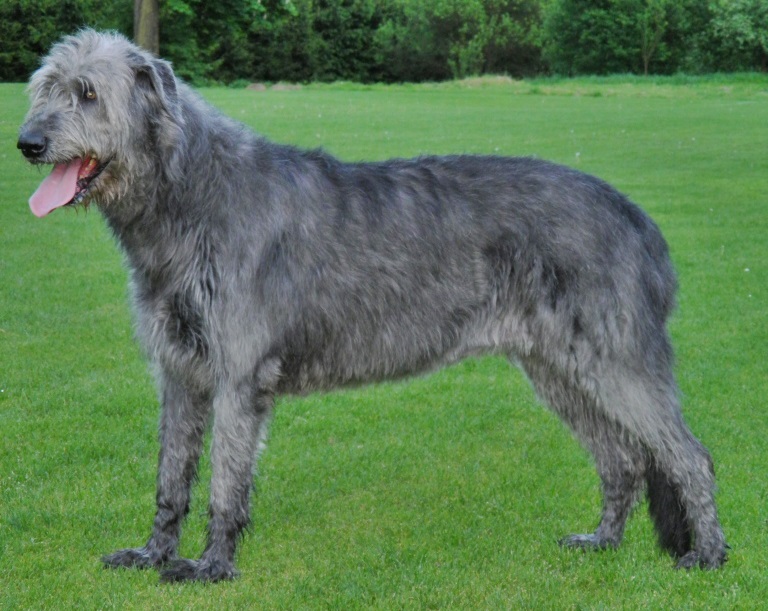
Reference photograph
Reference photograph of an Irish Wolfhound. Examine this individual's color and form alongside the identification descriptions in the text.
Source: Dux · Original material · CC BY-SA 3.0
1. Classification, origins and habitat
The Irish Wolfhound combines Ireland's history of large sighthounds with modern restoration and registration. Its name relates to wolf-hunting history, not a wild dog crossed with wolves. Do not simplify old recorded dogs and the modern breed into an entirely identical bloodline continuing without interruption. Consider great height together with its hunting context.
2. Appearance and identification
Tall, long legs, a deep chest, relatively long head and rough coat are characteristic. Colors range through gray, brindle, red and black. Rough facial hair and beard can create a soft impression, but the body has the structure of a large sighthound. Do not infer exact weight by comparing photographic height with a person; check sex and growth stage too.
The long legs, deep chest and tucked waist of a large sighthound can be observed beneath the rough coat's volume. Appearance may overlap with similar large rough-coated dogs such as the Deerhound, so check precise breed information. Wolf in the name refers to historical quarry, not wolf crossing. Do not turn exceptional height records into an overall average; also check the pictured growth stage, sex and camera angle.
3. Behavior and way of life
Descriptions of many individuals resting comfortably need to be understood alongside pursuit responses to moving objects. Quiet giant does not guarantee constant safety around unfamiliar small animals. Reward lead walking and calm meetings, and provide movement suited to stamina inside secure fencing. Arrange everyday routes so the large body does not impose a burden on people.
4. Observation, conservation and care
An adult needs spacious resting areas for turning and lying down and non-slip flooring. During rapid growth, adjust nutrition and exercise according to condition and gait, without forcing repeated high jumps or long sprints. Groom the rough coat and check skin, paws and mouth together with actual health records. Record height does not represent every individual in the breed.
Evidence and references
- American Kennel Club — Irish Wolfhound
Breed origins, form, behavioral tendencies and grooming
- Defra — Living environment and welfare of companion dogs
General principles of living space, food, normal behavior, social relationships and responsible care