
Dog Breeds
Komondor
Komondor
Classification and scientific name: Canis lupus familiaris
Sources checked:
A large body and abundant white coat that separates into thick cords during growth are characteristic
The Komondor developed from large guardian-dog lines that stayed beside livestock flocks in Hungary. A large body and abundant white coat that separates into thick cords during growth are characteristic.
Origins and distribution
Livestock-guardian lines of Hungary
- Komondor
- Livestock-guardian lines of Hungary
Reference photograph
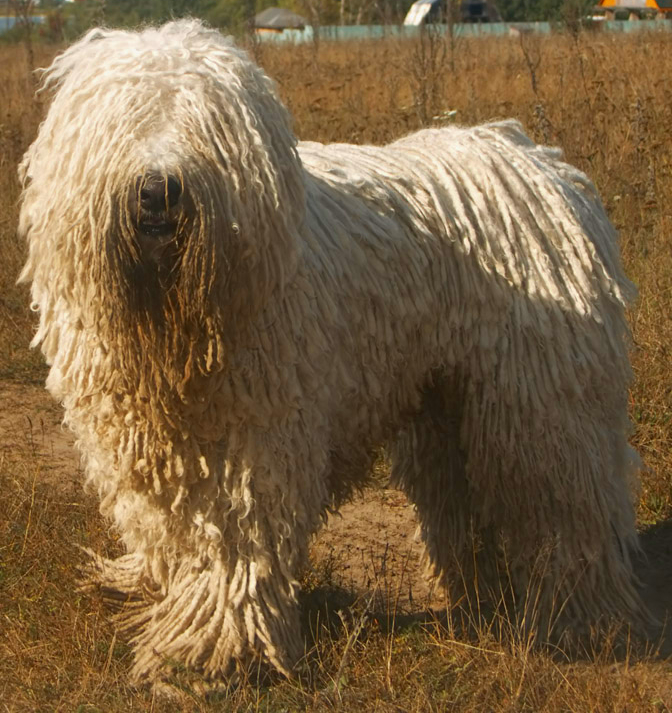
Reference photograph of a Komondor. Examine this individual's color and form alongside the identification descriptions in the text.
Source: Nikki68 at Russian Wikipedia · Original material · CC BY 2.5
1. Classification, origins and habitat
The Komondor developed from large guardian-dog lines that stayed beside livestock flocks in Hungary. A herding dog moving sheep and a guardian independently watching the surroundings have different roles. Understand the modern registered individual's distinctive coat alongside historical work; a giant-mop nickname alone is not an appropriate explanation of its living needs.
2. Appearance and identification
A large body and abundant white coat that separates into thick cords during growth are characteristic. Puppies look fluffier because long adult cords are not yet complete. Distinguish natural coat characteristics from human care separating tangles. Fur covering face and paws does not change the actual locations of eyes and legs, and size and ancestry differ from a white Puli.
Long hanging white cords characterize the adult coat, but not every puppy is born with the same corded form. Other breeds such as the Puli also have corded hair, so cords alone do not establish a Komondor identity. In photographs, avoid forced guesses about concealed faces and feet; check full-body views and source information together. Cord length and neatness reflect human care, not scores of innate temperament or learning ability.
3. Behavior and way of life
With tendencies to watch the flock and living space and make independent judgments, reactions to unfamiliar situations and people need careful management. Avoid deliberately provoking vigilance or using the large body as a threat. Use reward-based training and safe socialization to teach rules for coming and going, and provide space to withdraw. Consider the amusing coat appearance together with a guardian's real living requirements.
4. Observation, conservation and care
Rather than indiscriminately brushing cords like ordinary long hair, learn specialized care of separated hair and skin. Check drying and cleanliness after wetting and look for retained foreign material. Large adults need secure fencing, routes and resting space, plus shade and water during hot periods. Prioritize comfortable seeing, walking and resting over maintaining appearance.
Evidence and references
- American Kennel Club — Komondor
Breed origins, form, behavioral tendencies and grooming
- Defra — Living environment and welfare of companion dogs
General principles of living space, food, normal behavior, social relationships and responsible care