
Dog Breeds
Bernese Mountain Dog
Bernese Mountain Dog
Classification and scientific name: Canis lupus familiaris
Sources checked:
A long black coat with tan and white markings, large body, broad head and hanging ears are characteristic
The Bernese Mountain Dog developed from farm-dog lines in Switzerland's Bern region that performed varied tasks including livestock management, guarding and hauling. A long black coat with tan and white markings, large body, broad head and hanging ears are characteristic.
Origins and distribution
Bern region, Switzerland
- Bernese Mountain Dog
- Bern region, Switzerland
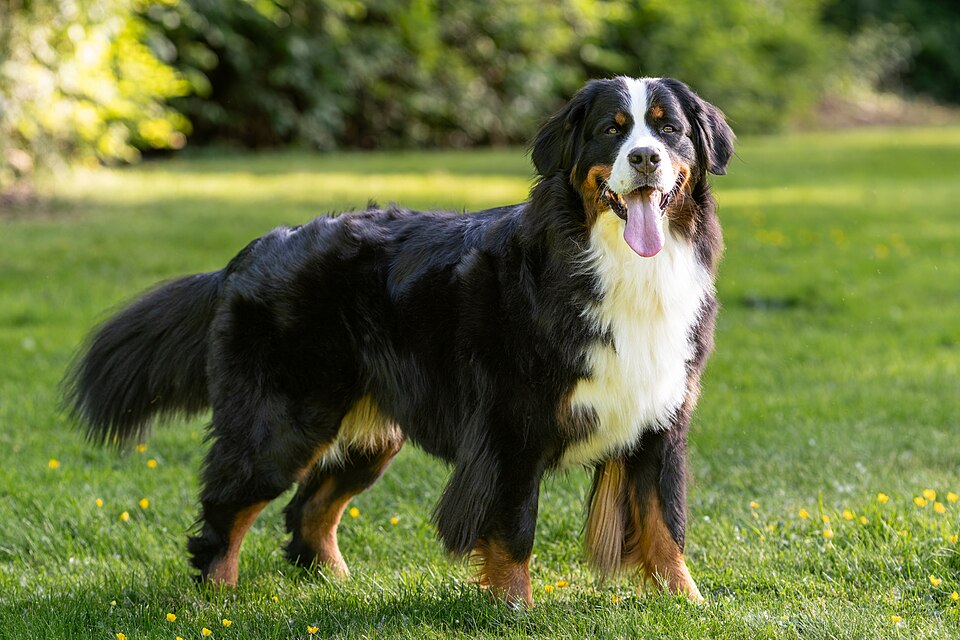
Reference photograph
Reference photograph of a Bernese Mountain Dog. Examine this individual's color and form alongside the identification descriptions in the text.
Source: FriendlyToaster · Original material · CC BY 4.0
1. Classification, origins and habitat
The Bernese Mountain Dog developed from farm-dog lines in Switzerland's Bern region that performed varied tasks including livestock management, guarding and hauling. One of the Swiss mountain-dog group, it shares similar tricolor markings with other Sennenhund breeds but is not the same breed. The modern companion image can be read alongside its history as a versatile agricultural working dog.
2. Appearance and identification
A long black coat with tan and white markings, large body, broad head and hanging ears are characteristic. The width of the facial white stripe and chest white varies individually. Differences such as coat length distinguish the similarly tricolored Greater Swiss Mountain Dog. Separate abundant fur from actual body condition, and consider differences in build with sex and age.
Other Swiss mountain dogs share black, tan and white, so tricolor alone does not establish a Bernese identity. Considering the Bernese's long coat, neck and leg feathering and overall proportions helps comparison with the short-coated Greater Swiss Mountain Dog. White areas down the center of the face and chest markings differ individually. Do not describe large adults and small puppies as having the same build, and consider actual condition beneath the coat.
3. Behavior and way of life
Working and living with people does not mean the calm-giant image guarantees safety in every contact. An excited large body can push people or small animals, so use rewards to teach calm encounters and lead walking. Walking, scent exploration and suitable play are needed, and time alone should also be prepared so the individual can adapt comfortably.
4. Observation, conservation and care
Check tangles in the long coat and undercoat and inspect the skin; adjust activity times, shade and water in hot periods. Do not force growing large dogs to carry heavy loads or jump repeatedly. Provide non-slip routes and resting space suited to adult size, checking body condition, gait and actual health-test records together. Breed reputation and individual health require separate consideration.
Evidence and references
- American Kennel Club — Bernese Mountain Dog
Breed origins, form, behavioral tendencies and grooming
- Defra — Living environment and welfare of companion dogs
General principles of living space, food, normal behavior, social relationships and responsible care