
Dog Breeds
German Shepherd
German Shepherd
Classification and scientific name: Canis lupus familiaris
Sources checked:
A wedge-shaped head, upright ears, long muzzle, firm body and double coat are characteristic
The German Shepherd was selected for working ability and form from various German herding dogs. A wedge-shaped head, upright ears, long muzzle, firm body and double coat are characteristic.
Origins and distribution
Germany
- German Shepherd Dog
- Germany
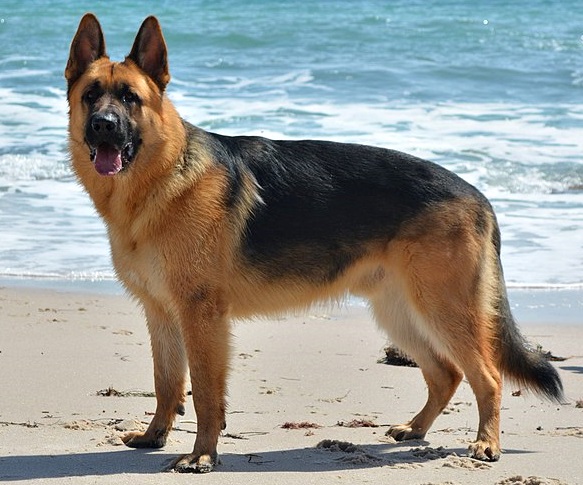
Reference photograph
Reference photograph of a German Shepherd. Examine this individual's color and form alongside the identification descriptions in the text.
Source: gomagoti · Original material · CC BY-SA 2.5
1. Classification, origins and habitat
The German Shepherd was selected for working ability and form from various German herding dogs. Uses expanded from herding to military, police, detection and assistance work. Polished behavior in working photographs results from training and does not mean every Shepherd can automatically perform the same tasks. Distinguish the selection priorities of working and show lines as well.
2. Appearance and identification
A wedge-shaped head, upright ears, long muzzle, firm body and double coat are characteristic. Colors and coat lengths vary, including sable and black as well as black-and-tan. A lowered-back show stance is not every individual's natural everyday gait. Distinguish a photograph's pose from actual bodily balance and movement, and do not treat an extreme slope as a standard of health.
A particular show stance places one hind leg farther back and can make the slope of the back look more pronounced. Do not use this to say that every Shepherd always stands or walks at the same angle. Individuals have short or long coats and various colors; ears may also look different as puppies grow. Comfort in actual movement is difficult to judge from a still photograph alone. Consider photographic documentation and natural movement alongside an impressive profile or working equipment.
3. Behavior and way of life
Many individuals respond to human directions and surrounding stimuli and are keen to learn and explore. A reputation for intelligence and loyalty does not mean training is unnecessary or aggression toward strangers is acceptable. Use safe socialization and reward-based training to introduce varied environments and teach rest too. Establish consistent everyday routes with their strength and quick movement in mind.
4. Observation, conservation and care
Adjust walking, scent tasks, training and rest to individual growth and condition. Being a famous working breed does not justify repeated strenuous jumps by young dogs. Groom the undercoat and check skin and paws, considering actual gait together with health-test records. During encounters with people and animals, monitor size and reactions rather than leaving unmanaged guarding behavior unchecked.
Evidence and references
- American Kennel Club — German Shepherd Dog
Breed origins, form, behavioral tendencies and grooming
- Defra — Living environment and welfare of companion dogs
General principles of living space, food, normal behavior, social relationships and responsible care