
Dog Breeds
Siberian Husky
Siberian Husky
Classification and scientific name: Canis lupus familiaris
Sources checked:
A thick double coat, upright ears, balanced medium-sized body and bushy tail are characteristic
The Siberian Husky developed from Northeast Asian sled-dog lines and became associated with modern registration and racing in North America and elsewhere. A thick double coat, upright ears, balanced medium-sized body and bushy tail are characteristic.
Origins and distribution
Sled-dog lines of Siberia in Northeast Asia
- Siberian Husky
- Sled-dog lines of Siberia in Northeast Asia
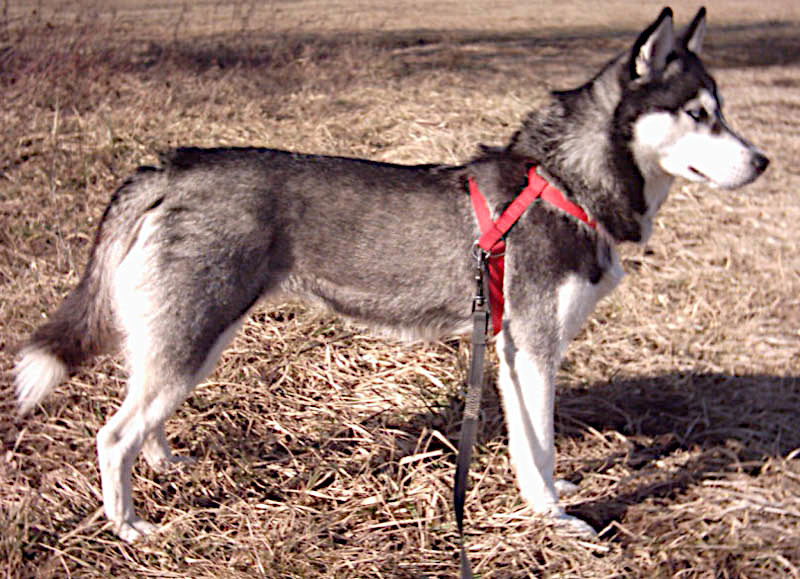
Reference photograph
Reference photograph of a Siberian Husky. Examine this individual's color and form alongside the identification descriptions in the text.
Source: xJaM ( talk · contribs ) · Original material · CC BY-SA 3.0
1. Classification, origins and habitat
The Siberian Husky developed from Northeast Asian sled-dog lines and became associated with modern registration and racing in North America and elsewhere. Its use in teams helping people travel in cold regions can be distinguished from companion life today. A wolf-like appearance does not make it a wild species separate from domestic dogs or mean that every individual is a wolf cross.
2. Appearance and identification
A thick double coat, upright ears, balanced medium-sized body and bushy tail are characteristic. Blue eyes are famous, but brown eyes and eyes of different colors also occur, and coat colors and facial markings vary widely. Despite similarities to the Malamute, consider build, head and tail together with registration history. The tail rises or lowers with posture.
Blue eyes are well known but are not compulsory, since brown eyes and differently colored eyes occur too. Facial markings change with growth and vary individually, and not every Husky is wolf-gray. When comparing Malamutes, consider the head, bone and substance of the body, rather than reaching a conclusion from size in a small photograph. It is also inaccurate to infer eyesight or temperament from eye color or automatically describe differently colored eyes as disease.
3. Behavior and way of life
Some individuals show a tendency toward running, exploration and moving with other dogs. They may respond with howling and varied sounds, but a name cannot guarantee quietness or friendliness. Prepare a lead and fencing with possible pursuit of small moving animals and escape in mind. Rest and learning matter alongside activity, rather than impulsively encouraging prolonged running.
4. Observation, conservation and care
Monitor undercoat shedding and skin, and adjust activity times, shade and water in hot periods. Northern origins are no reason to underestimate heat stress. A transport or sledding history does not mean every individual must pull heavy loads. Offer movement and scent exploration suited to stamina in a safe space, and introduce being alone gradually.
Evidence and references
- American Kennel Club — Siberian Husky
Breed origins, form, behavioral tendencies and grooming
- Defra — Living environment and welfare of companion dogs
General principles of living space, food, normal behavior, social relationships and responsible care