
Dog Breeds
Labrador Retriever
Labrador Retriever
Classification and scientific name: Canis lupus familiaris
Sources checked:
A short, dense double coat, broad head and thick, tapering otter-like tail are typical
The Labrador Retriever developed from waterside working dog lineages in Newfoundland, Canada, and selection as a gundog in Britain. A short, dense double coat, broad head and thick, tapering otter-like tail are typical.
Origins and distribution
Dog lineages from Newfoundland, Canada; registered and developed in Britain
- Labrador Retriever
- Dog lineages from Newfoundland, Canada; registered and developed in Britain
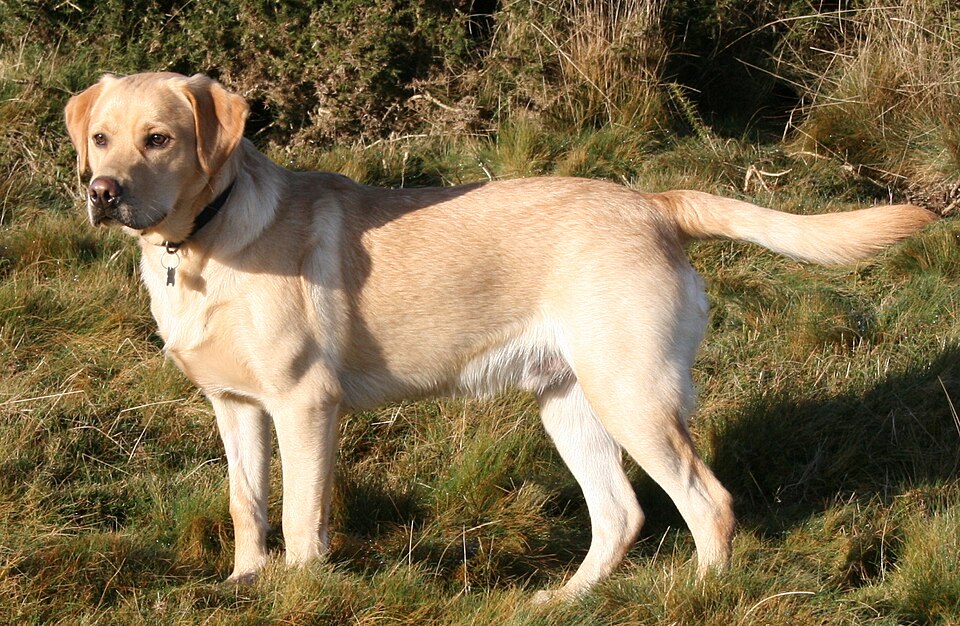
Reference photograph
Reference photograph of a Labrador Retriever. Examine this individual's color and form alongside the identification descriptions in the text.
Source: IDS.photos from Tiverton, UK · Original material · CC BY-SA 2.0
1. Classification, origins and habitat
The Labrador Retriever developed from waterside working dog lineages in Newfoundland, Canada, and selection as a gundog in Britain. The word Labrador in its name does not establish that present-day Canadian region as the whole of its origin. Roles expanded from retrieving birds to companionship, detection and assistance, but working ability results from individual selection and training.
2. Appearance and identification
A short, dense double coat, broad head and thick, tapering otter-like tail are typical. Black, yellow and chocolate coats occur. A yellow coat does not make it the same breed as a Golden Retriever; compare the presence of long feathering and the tail's shape. Working and show lines may differ in build and activity.
The description otter-like tail means a thick base tapering toward the tip, covered densely in short hair. The difference becomes clear beside a Golden's tail, which looks fan-like with its long hair. Black, yellow and chocolate are coat colors within the Labrador breed, not rankings of innate intelligence or temperament. Different impressions of the heads and bodies of working and show lines may reflect variation within the same registered breed, so read photographs alongside accurate individual information.
3. Behavior and way of life
Many individuals enthusiastically work with people, retrieve objects and explore scents. A friendly image does not guarantee getting along with everyone without training. Safely manage jumping up at people and taking things in the mouth, and teach waiting and dropping objects through rewards. A large body and excitement can overwhelm children or small animals.
4. Observation, conservation and care
Monitor appropriate body condition and consider food and training treats together within the daily ration. Even a short coat requires attention to shedding and the skin, paws and ears; check for discomfort and foreign material after swimming. A breed description saying they swim well does not justify entering cold or fast-flowing water. Distribute walking, exploration, play and rest according to current fitness.
Evidence and references
- American Kennel Club — Labrador Retriever
Breed origins, form, behavioral tendencies and grooming
- Defra — Living environment and welfare of companion dogs
General principles of living space, food, normal behavior, social relationships and responsible care