
Dog Breeds
Boxer
Boxer
Classification and scientific name: Canis lupus familiaris
Sources checked:
A short coat, muscular body, broad head and relatively short muzzle are characteristic
The Boxer developed into a modern breed from German dog lines associated with hunting and guarding. A short coat, muscular body, broad head and relatively short muzzle are characteristic.
Origins and distribution
Germany
- Boxer
- Germany
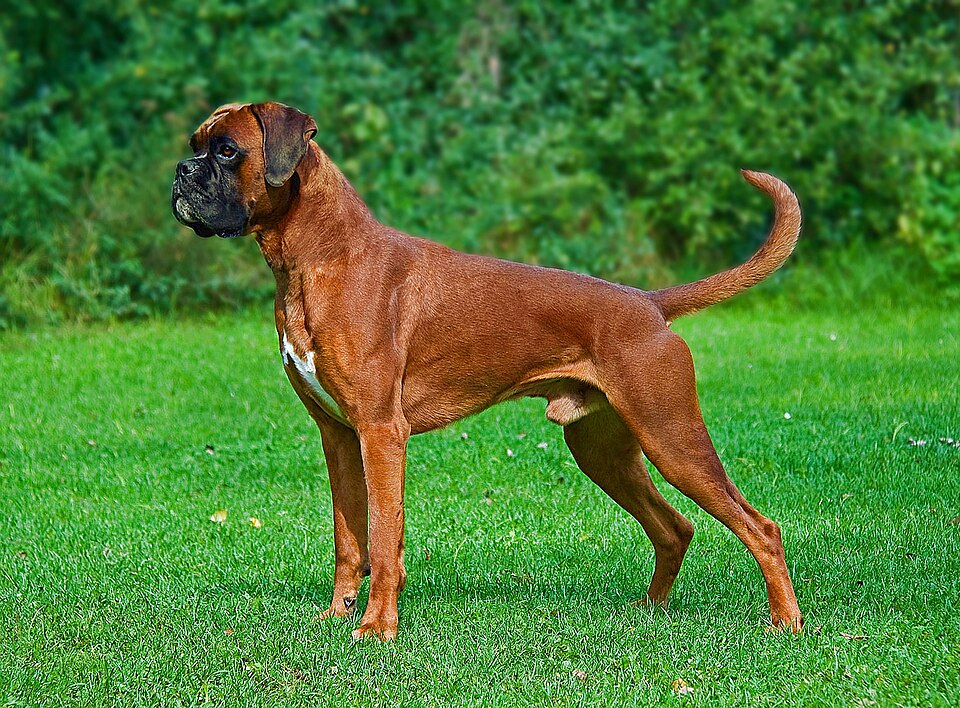
Reference photograph
Reference photograph of a Boxer. Examine this individual's color and form alongside the identification descriptions in the text.
Source: Mood210 · Original material · CC BY-SA 3.0
1. Classification, origins and habitat
The Boxer developed into a modern breed from German dog lines associated with hunting and guarding. Distinguish historical roles of large hunting dogs from present companion and sporting uses. The name does not establish boxing movements as an exact origin, and one forepaw-based play behavior should not be described as fixed behavior in every individual. It is a registered breed within domestic dogs.
2. Appearance and identification
A short coat, muscular body, broad head and relatively short muzzle are characteristic. White markings occur on fawn or brindle, and some individuals have much white. Natural form and surgical history can produce different ears and tails, so upright ears and a short tail in one photograph are not compulsory. Observe balance between body and legs together.
A Boxer with naturally hanging ears and a long tail may look different from familiar surgically altered images. Consider body muscle and balance and the broad, short muzzle separately from ear and tail shape. The extent of white markings on fawn or brindle varies, and some individuals have extensive white. A short coat reveals muscle outlines, but a photographic pose does not explain the entire body condition. A firm build is not synonymous with overweight or excessive muscle.
3. Behavior and way of life
Many individuals eagerly play and interact with people, requiring daily habits that handle strength and excitement safely. Descriptions of friendliness toward children do not authorize unsupervised contact. Use reward-based training to teach waiting and calm meetings, leaving the other party space to withdraw. Consider the need to rest alongside activity rather than describing a dog that always runs around.
4. Observation, conservation and care
Considering the short nose and bodily heat burden, adjust vigorous activity in hot weather and provide water, shade and recovery time. Check skin, paws and mouth even with a short coat, and consult actual examinations and records for health information. Do not present cosmetic ear or tail surgery as essential care. Strong-bodied dogs also need growth-appropriate exercise and comfortable resting space.
Evidence and references
- American Kennel Club — Boxer
Breed origins, form, behavioral tendencies and grooming
- Defra — Living environment and welfare of companion dogs
General principles of living space, food, normal behavior, social relationships and responsible care