
Dog Breeds
Dalmatian
Dalmatian
Classification and scientific name: Canis lupus familiaris
Sources checked:
A short white coat scattered with black or liver spots and balanced long legs are typical
The Dalmatian is linked to Europe's history of dogs traveling alongside carriages and people, and its name is associated with Dalmatia. A short white coat scattered with black or liver spots and balanced long legs are typical.
Origins and distribution
Dalmatia and Europe's carriage-dog history
- Dalmatian
- Dalmatia and Europe's carriage-dog history
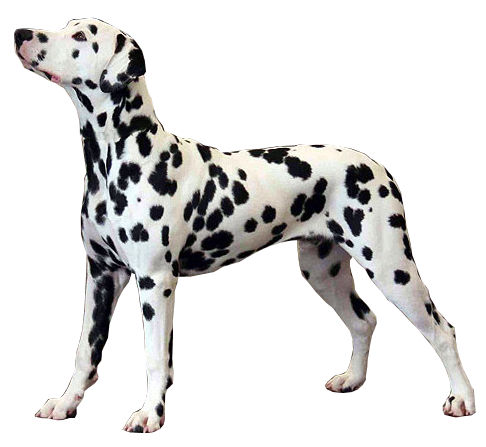
Reference photograph
Reference photograph of a Dalmatian. Examine this individual's color and form alongside the identification descriptions in the text.
Source: Desaix83 , d'après le travail de Le dalmatien · Original material · CC BY-SA 3.0
1. Classification, origins and habitat
The Dalmatian is linked to Europe's history of dogs traveling alongside carriages and people, and its name is associated with Dalmatia. Various accounts of old paintings and early origins make a single definitive account of every ancestor and use difficult. Carriage and firefighting symbolism and present companionship represent different contexts; film images should not be taken as an actual individual's temperament.
2. Appearance and identification
A short white coat scattered with black or liver spots and balanced long legs are typical. Spots may become more evident as puppies grow, and the arrangement and extent of markings differ individually. Whether ears are covered in spots and which facial markings occur can help identify an individual. The number of spots cannot determine health or temperament.
Spots form different arrangements on each individual, offering clues to recognizing the same dog in photographs. Both black and liver spots occur, and some markings become more apparent with age. Unlike cartoons, the spots are not all perfect circles or bilaterally symmetrical. Other dogs and crosses may have similar white-and-spotted coats, so check breed information from an accurate source. Spot numbers and sizes are not appropriate measures for scoring temperament, intelligence or health.
3. Behavior and way of life
Many individuals need opportunities for activity and exploration, reflecting a history involving prolonged travel. Do not underestimate exercise and learning needs because of the image of a pretty spotted companion. Use reward-based training with people to teach lead walking and arousal control, and provide rest too. Breed tendencies and actual individual attention and reactions vary with experience and environment.
4. Observation, conservation and care
Even a short coat requires attention to shedding, skin, paws and mouth; divide activity into walking, exploration and play suited to body condition. Breed-related hearing and health information must be checked through actual test records, rather than assumed from spots or eye appearance. Mischievous images in famous films do not explain real needs. Prepare daily life and feeding for the individual's age and health.
Evidence and references
- American Kennel Club — Dalmatian
Breed origins, form, behavioral tendencies and grooming
- Defra — Living environment and welfare of companion dogs
General principles of living space, food, normal behavior, social relationships and responsible care