
Dog Breeds
Doberman
Doberman
Classification and scientific name: Canis lupus familiaris
Sources checked:
A short smooth coat, long legs, firm balanced body and wedge-shaped head are characteristic
The Doberman developed in Germany from several dog lines for guarding and protecting people. A short smooth coat, long legs, firm balanced body and wedge-shaped head are characteristic.
Origins and distribution
Germany
- Doberman Pinscher
- Germany
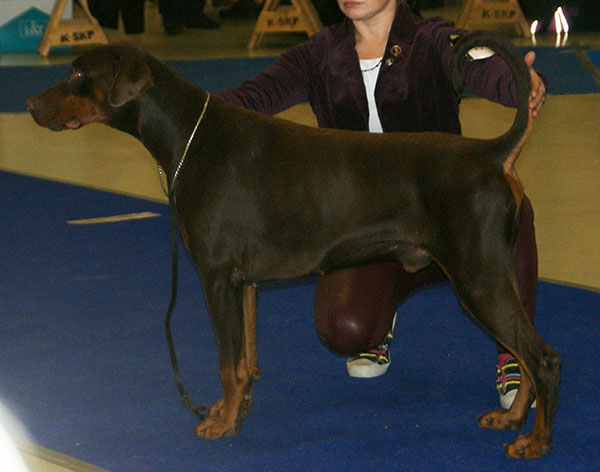
Reference photograph
Reference photograph of a Doberman. Examine this individual's color and form alongside the identification descriptions in the text.
Source: Canarian · Original material · CC BY-SA 4.0
1. Classification, origins and habitat
The Doberman developed in Germany from several dog lines for guarding and protecting people. Detailed crossing records are not all preserved, so do not assert an exact combination of ancestors. Today it is used for companionship, sports and work, but past purposes determine neither aggression nor safety in every individual.
2. Appearance and identification
A short smooth coat, long legs, firm balanced body and wedge-shaped head are characteristic. Black or brown with tan markings is typical. Although many familiar photographs show upright ears and a short tail, naturally hanging ears and a long tail also occur; surgical history is not a required breed shape. Observe the proportions of head and body together.
Hanging ears and a long tail are the Doberman's natural physical appearance and may seem different from the upright ears and short tails common in older photographs. The similarly colored Miniature Pinscher differs not only in size but also in its independent history of breed formation. Brown-based individuals occur alongside black-and-tan, and photographic lighting can alter apparent coat color. Do not determine purebred status solely from ears and tail or treat a threatening pose as the breed's inherent emotion.
3. Behavior and way of life
Many individuals are active, learn tasks with people and observe their surroundings. Describing a protective tendency does not encourage threatening strangers. Use comfortable socialization and reward-based training to teach waiting, settling and moving safely. Consider strength and quick reactions, and introduce encounters with people and animals according to individual responses.
4. Observation, conservation and care
Alternate activity and rest, providing exercise appropriate to growth stage. Even a short coat requires skin, paw and mouth care and checks of suitable body condition. For breed-related health information, consult actual examinations and individual records rather than a famous pedigree. Do not present cosmetic ear or tail surgery as essential grooming; describe natural body forms as they are.
Evidence and references
- American Kennel Club — Doberman Pinscher
Breed origins, form, behavioral tendencies and grooming
- Defra — Living environment and welfare of companion dogs
General principles of living space, food, normal behavior, social relationships and responsible care