
Dog Breeds
Samoyed
Samoyed
Classification and scientific name: Canis lupus familiaris
Sources checked:
An abundant double coat in white, cream or biscuit shades, small upright ears and a tail carried toward the back are characteristic
The Samoyed developed from working-dog lines that accompanied people of northern Siberia in travel and livestock management. An abundant double coat in white, cream or biscuit shades, small upright ears and a tail carried toward the back are characteristic.
Origins and distribution
Working-dog lines of northern Siberia
- Samoyed
- Working-dog lines of northern Siberia
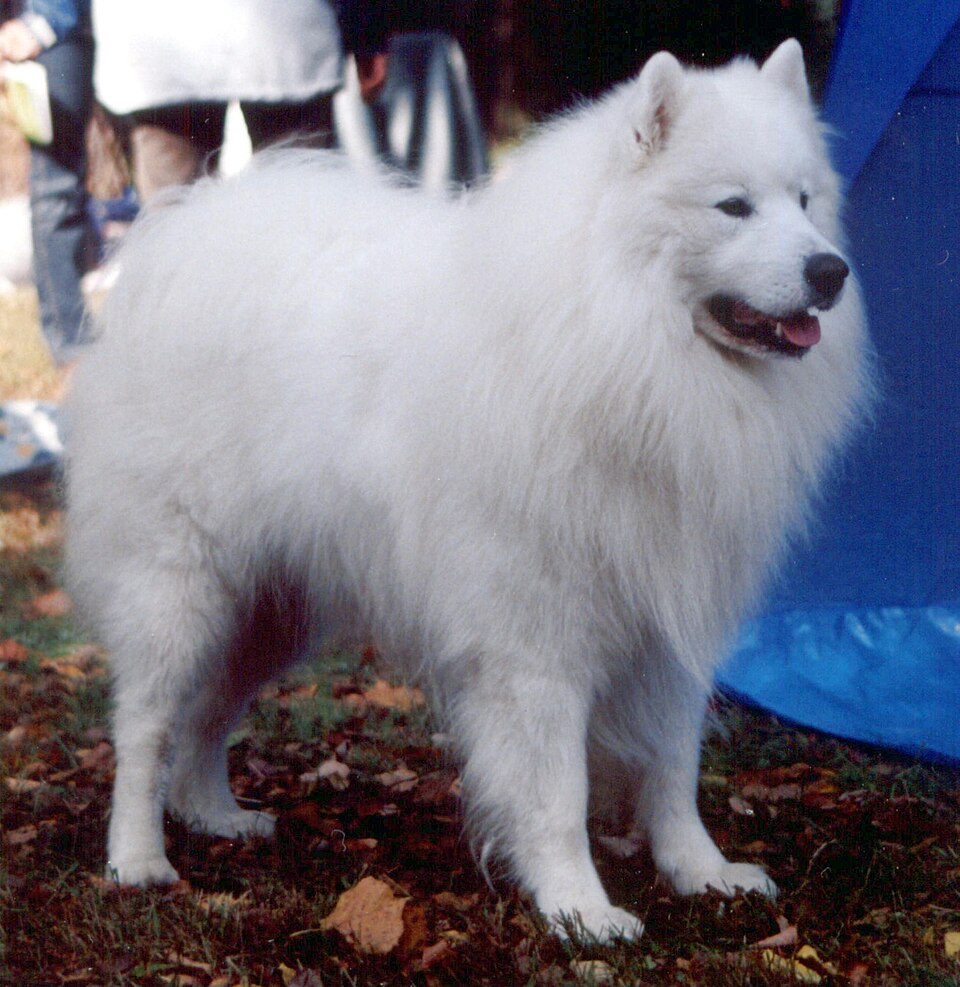
Reference photograph
Reference photograph of a Samoyed. Examine this individual's color and form alongside the identification descriptions in the text.
Source: No machine-readable author provided. Pleple2000 assumed (based on copyright claims). · Original material · CC BY-SA 3.0
1. Classification, origins and habitat
The Samoyed developed from working-dog lines that accompanied people of northern Siberia in travel and livestock management. Its history includes several roles, such as sledding and managing reindeer, and close life with people. Despite a polar-bear-like nickname, it is a domestic dog breed, and modern companion needs cannot be judged solely from a cold-region image.
2. Appearance and identification
An abundant double coat in white, cream or biscuit shades, small upright ears and a tail carried toward the back are characteristic. Upturned mouth corners create a smiling impression, but do not mean constant happiness or absence of discomfort. Thick fur conceals the real outline, so examining body and leg positions in a full view reveals structure better.
The mouth corners and dark lips create a smiling impression, but this is only one clue when reading behavior and feelings, not a sign of permanent happiness. Consider ear direction, bodily tension and attempts to move away together. Coats may include cream and biscuit as well as white, and abundant undercoat can hide actual body size. When comparing other spitz-type dogs such as the white American Eskimo Dog, examine size, body and registration information together.
3. Behavior and way of life
Many individuals enjoy activities with people and exploring their surroundings, so companion life also requires movement and interaction. A sociable reputation does not guarantee that anyone can safely hug the dog. Observe the context of barking and excitement and reward resting behavior. Provide room to withdraw when touch is unwanted, and consider relations with other dogs individually too.
4. Observation, conservation and care
Gently groom the thick undercoat and check for tangles near the skin or prolonged wetness. In hot periods, provide activity at cooler times, water and shade. Avoid the simplistic claim that shaving the coat solves all heat stress. Divide time among walking, scent exploration, suitable play and rest, adapting exercise for young dogs to their growth.
Evidence and references
- American Kennel Club — Samoyed
Breed origins, form, behavioral tendencies and grooming
- Defra — Living environment and welfare of companion dogs
General principles of living space, food, normal behavior, social relationships and responsible care