
Dog Breeds
Standard Poodle
Standard Poodle
Classification and scientific name: Canis lupus familiaris
Sources checked:
A dense coat that curls or can be grown in cords, a long muzzle and legs, and a balanced body are characteristic
The Standard Poodle is the Poodle's large size variety and is linked to the history of dogs retrieving game from water. A dense coat that curls or can be grown in cords, a long muzzle and legs, and a balanced body are characteristic.
Origins and distribution
Developed from German water retrievers, refined in France
- Standard Poodle
- Developed from German water retrievers, refined in France
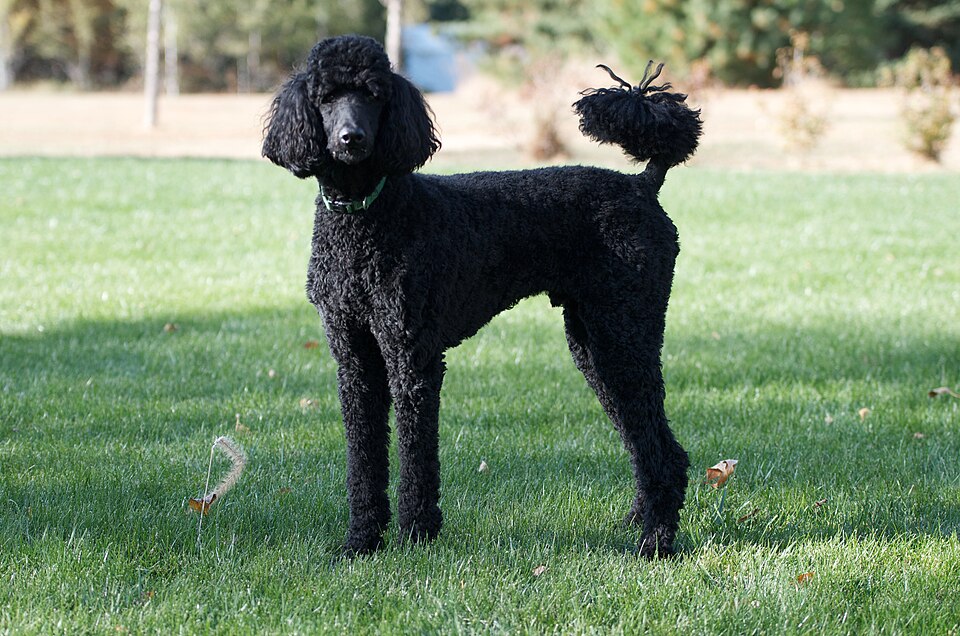
Reference photograph
Reference photograph of a Standard Poodle. Examine this individual's color and form alongside the identification descriptions in the text.
Source: Tim Wilson from Blaine, MN, USA · Original material · CC BY 2.0
1. Classification, origins and habitat
The Standard Poodle is the Poodle's large size variety and is linked to the history of dogs retrieving game from water. Although known as an emblematic French breed, its German hunting-dog origins should also be explained. It shares Poodle ancestry with the small Toy, but the present individual's build and activity needs should not be treated as identical to a Toy's. Check differences in size divisions between registration organizations too.
2. Appearance and identification
A dense coat that curls or can be grown in cords, a long muzzle and legs, and a balanced body are characteristic. Various solid colors occur, and special show grooming is a human-created shape. A short-trimmed coat reveals the athletic body structure more clearly. Distinguish a tendency to shed less from a guarantee that allergies never occur.
Elaborate show grooming creates a human-made outline by clipping some areas short and leaving hair on the legs, tail and chest. Comparison with a short, evenly groomed photograph reveals the same Poodle's long legs and chest and waist structure. Size names such as Toy and Miniature differ, but curly coats and basic form share features. Do not interpret the scissor-created outline in one photograph as innate body form or activity ability; consider actual size variety and registration information together.
3. Behavior and way of life
Many individuals eagerly learn tasks with people, retrieve objects and search for scents. The genius-dog nickname does not mean education is unnecessary; arousal control and resting also need to be learned. Consider size and activity levels when providing reward-based training, safe lead walking and appropriate play. Observe reactions to other animals individually.
4. Observation, conservation and care
Groom the coat, which can tangle near the skin, and make brushing and grooming comfortable learned experiences. Large dogs need walking, exploration and rest suited to growth and condition; prioritize skin and movement comfort over beautiful styling. Water activities also require checking individual experience, water temperature and current for safety. Manage feeding and activity according to actual age and health.
Evidence and references
- American Kennel Club — Standard Poodle
Breed origins, form, behavioral tendencies and grooming
- Defra — Living environment and welfare of companion dogs
General principles of living space, food, normal behavior, social relationships and responsible care