
Dog Breeds
Bichon Frise
Bichon Frise
Classification and scientific name: Canis lupus familiaris
Sources checked:
White curly hair and a soft undercoat create a full appearance, contrasting with dark eyes and nose
The Bichon Frise is associated with small companion-dog lines around the Mediterranean and developed into its modern breed in France and Belgium. White curly hair and a soft undercoat create a full appearance, contrasting with dark eyes and nose.
Origins and distribution
A companion dog developed in France and Belgium from Mediterranean ancestry
- Bichon Frise
- A companion dog developed in France and Belgium from Mediterranean ancestry
Reference photograph
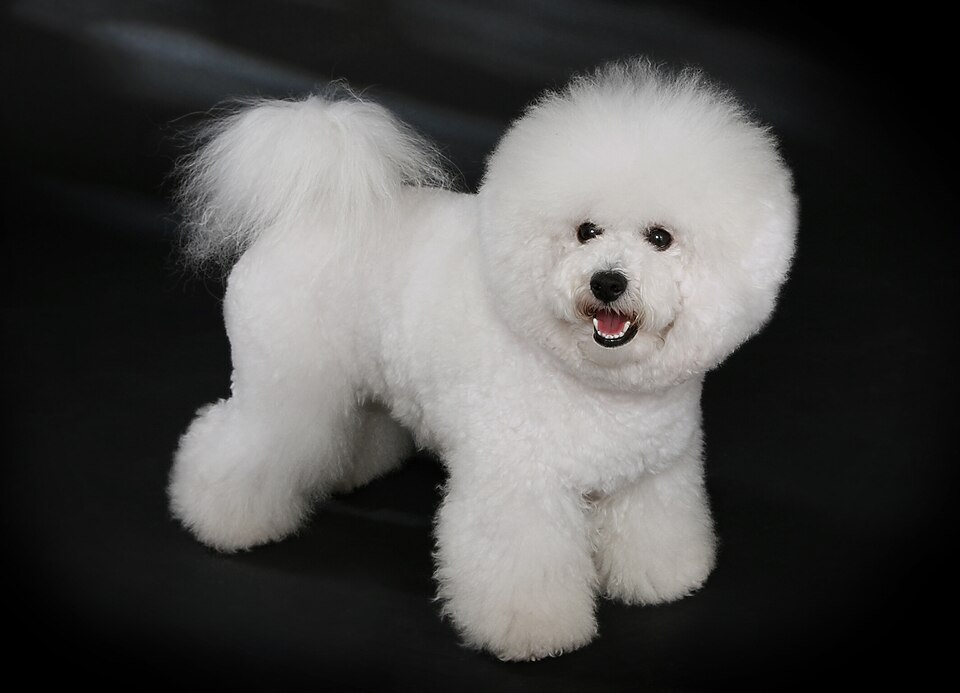
Reference photograph of a Bichon Frise. Compare the individual’s color and shape with the identification notes in the text.
Source: Heike Andres · Original material · CC BY-SA 3.0 de
1. Classification, origins and habitat
The Bichon Frise is associated with small companion-dog lines around the Mediterranean and developed into its modern breed in France and Belgium. The word “frisé” in its name refers to its curly coat. Its history includes aristocratic companionship and various popular roles, but this does not mean every individual is a born performing dog or has a particular royal pedigree. It is a breed within the domestic dog.
2. Appearance and identification
White curly hair and a soft undercoat create a full appearance, contrasting with dark eyes and nose. The rounded head shape is created by trimming the hair; it does not mean the skull is a round cotton ball. When the coat is wet or clipped short, the proportions of the torso and legs appear differently. A tendency in shedding must be distinguished from a guarantee that people will have no allergic reaction.
The Bichon’s rounded head outline is created by grooming, so not every individual always has the same cotton-ball shape. The muzzle and ears are more visible when the coat is naturally long or wet. Comparing it with a Maltese’s straight, flowing white hair allows differences in curls and undercoat to be observed. Even with photographs of a short trim, consider the breed information and whole-body proportions together; white color and a rounded face alone cannot confirm pedigree.
3. Behavior and way of life
Many individuals are cheerful and take part in play with people, but the nickname “Bichon time” is an everyday expression for sudden bouts of running. It is not a biological characteristic in which every individual performs the same behavior at a fixed time. Provide both time to enjoy excitement and opportunities to rest independently, and do not force the dog to be held by unfamiliar people.
4. Observation, conservation and care
The profuse coat can mat close to the skin, so introduce brushing and grooming gradually. Check the areas around the eyes, ears and feet, and do not force the dog to stand for long periods for the sake of appearance. Distribute walks, scent exploration and short training sessions through the day, and provide nonslip flooring indoors. Adjust time spent alone so the individual can become comfortable with it.
Evidence and references
- American Kennel Club — Bichon Frise
Breed origins, appearance, behavioral tendencies and grooming
- Defra — Dog welfare and living conditions
General principles for living space, food, normal behavior, social relationships and responsible care