
Dog Breeds
Chihuahua
Chihuahua
Classification and scientific name: Canis lupus familiaris
Sources checked:
Large upright ears, a rounded head and relatively large eyes stand out
The Chihuahua is a small domestic dog breed named after a place in Mexico. Large upright ears, a rounded head and relatively large eyes stand out.
Origins and distribution
Mexico
- Chihuahua
- Mexico
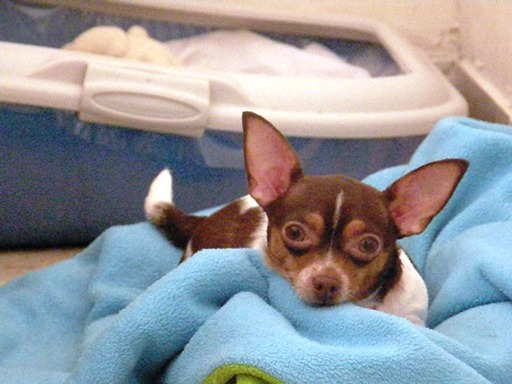
Reference photograph
Reference photograph of a Chihuahua. Compare the individual’s color and shape with the identification notes in the text.
Source: Davidstern · Original material · CC BY-SA 3.0
1. Classification, origins and habitat
The Chihuahua is a small domestic dog breed named after a place in Mexico. A connection with the Techichi, a small dog of ancient Mexico, is often discussed, but every line of descent from ancient dogs to modern registered individuals has not been established. Modern Chihuahuas are distinguished as short-coated and long-coated varieties. Being small does not mean they never grow up or need almost no care.
2. Appearance and identification
Large upright ears, a rounded head and relatively large eyes stand out. There are short-coated and long-coated varieties, with a wide range of colors and markings. Describing the head as apple-shaped helps identify its structure; an extremely small head or body must not be treated as a measure of health. If a photograph’s scale makes it hard to distinguish a puppy from an adult, check the age in the photograph’s information.
Long-coated Chihuahuas have longer hair around the ears, neck and tail, which can give them a very different appearance from short-coated individuals. Looking at their shared basic structure of large ears, a rounded head and a small body helps explain diversity within the same breed. A facial close-up that emphasizes the forehead and eyes can distort the impression of the whole body’s proportions. Checking actual records of age and build is more accurate than estimating an extremely low weight or adult size from a photograph alone.
3. Behavior and way of life
Many individuals live closely with people, but responses to unfamiliar approaches vary greatly with experience and the individual. Do not romanticize fearful behavior or growling simply as the personality of a small warrior. Provide a safe place to retreat and opportunities to choose, and introduce unfamiliar people and dogs gradually. Small dogs also need to explore smells and their surroundings on walks.
4. Observation, conservation and care
Adjust activity and rest in cold weather with the thin coat and small body in mind. Rather than automatically dressing the dog in clothes, check whether it can move comfortably and maintain its body temperature. Plan safe routes around high places and rough play with large dogs, and have an adult supervise when children pick up or touch the dog. Do not withhold food or restrict exercise in an attempt to produce an extremely small adult.
Evidence and references
- American Kennel Club — Chihuahua
Breed origins, appearance, behavioral tendencies and grooming
- Defra — Dog welfare and living conditions
General principles for living space, food, normal behavior, social relationships and responsible care