
Dog Breeds
Maltese
Maltese
Classification and scientific name: Canis lupus familiaris
Sources checked:
A small dog with a straight, long white coat and small, dark eyes and nose
The Maltese is a domestic dog breed associated with a long history of small companion dogs in the Mediterranean region. Its straight, long white coat and small, dark eyes and nose are characteristic features.
Origins and distribution
Mediterranean region
- Maltese
- Mediterranean region
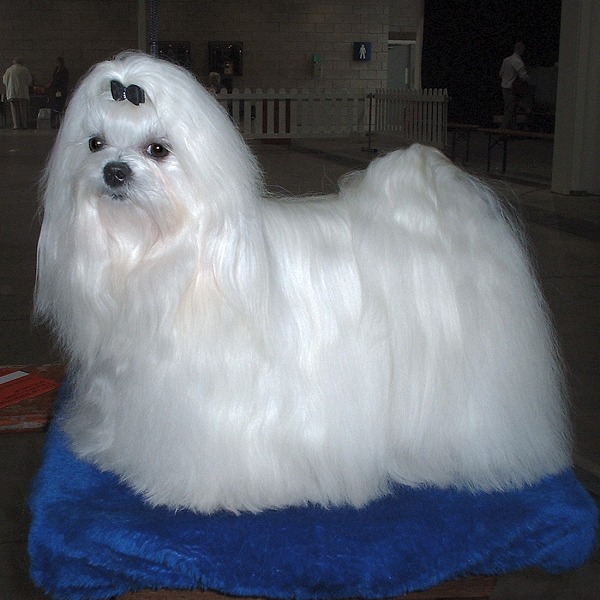
Reference photograph
Reference photograph of a Maltese. Compare the individual’s color and shape with the identification notes in the text.
Source: Sannse · Original material · CC BY-SA 3.0
1. Classification, origins and habitat
The Maltese is a domestic dog breed associated with longstanding lines of small companion dogs in the Mediterranean region. Although its name refers to Malta, its ancient origins cannot readily be assigned to one island and an exact year. It appears in aristocratic portraits and the history of companion dogs, and today is known as a small dog that lives alongside people. It is neither a separate wild species nor a puppy that never reaches adulthood.
2. Appearance and identification
A straight, long white coat and small, dark eyes and nose are characteristic features. A long show coat and a shorter everyday haircut can make the same breed look different. A coat without a thick undercoat does not guarantee that nobody will have an allergic reaction to its hair or dander. Look at the proportions of the face and body separately from the grooming style.
When comparing photographs, look at coat texture rather than only the shared white color. The curly coat of a Bichon Frise and the long, straight, flowing coat of a Maltese create different impressions. The difference can be less obvious after a short haircut, and a photograph showing only the face does not adequately show body proportions. The impression of a small white dog does not establish its pedigree; check the photograph’s breed description and actual source together.
3. Behavior and way of life
The breed has been selected as a companion that interacts with people, but individual dogs differ in their experience of being alone and their response to unfamiliar encounters. Small size is no reason to omit walks or opportunities to explore smells. A photograph of a dog being held reflects that individual’s experience; it does not mean every Maltese enjoys the same kind of contact.
4. Observation, conservation and care
Gently untangle the long coat, including areas where friction occurs, and check the hair around the eyes and the condition of the skin. Do not diagnose a disease from coat staining alone or apply bleaching products. Provide nonslip flooring and a resting place at a safe height, and adjust play and walks to the dog’s fitness and the weather. Small dogs also need a place to retreat and rest, and opportunities to choose.
Evidence and references
- American Kennel Club — Maltese
Breed origins, appearance, behavioral tendencies and grooming
- Defra — Dog welfare and living conditions
General principles for living space, food, normal behavior, social relationships and responsible care