
Dog Breeds
Papillon
Papillon
Classification and scientific name: Canis lupus familiaris
Sources checked:
Large ears spreading to the sides, long ear fringes, a small torso and a full tail are characteristic features
The Papillon developed from small European companion spaniels and is introduced in connection with little dogs depicted in old paintings. Large ears spreading to the sides, long ear fringes, a small torso and a full tail are characteristic features.
Origins and distribution
France, Belgium and European small spaniel ancestry
- Papillon
- France, Belgium and European small spaniel ancestry
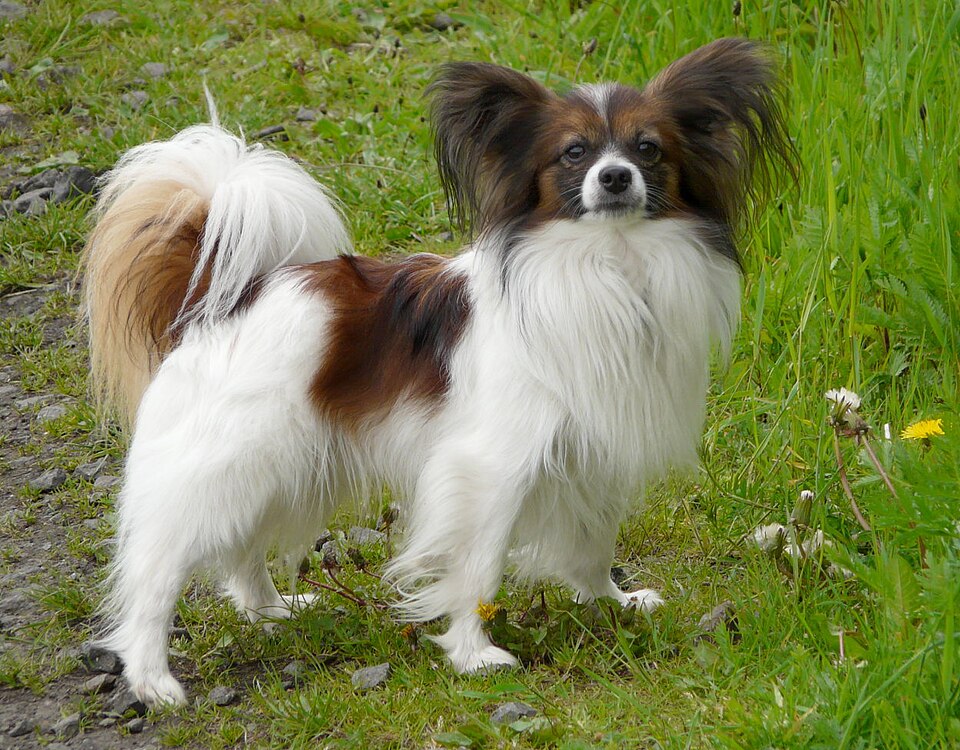
Reference photograph
Reference photograph of a Papillon. Examine the individual’s color and shape alongside the identification notes in the text.
Source: Gvdmoort · Original material · CC BY-SA 3.0
1. Classification, origins and habitat
The Papillon developed from small European companion spaniels and is introduced in connection with little dogs depicted in old paintings. Its French name means butterfly and relates to the impression created by its ears and their fringes. A drop-eared form called the Phalène is also distinguished within the same lineage, so a single photograph of upright ears must not restrict the appearance of the whole lineage.
2. Appearance and identification
Large ears spreading to the sides, long ear fringes, a small torso and a full tail are characteristic features. Markings of other colors appear on a white background, and facial markings and the length of the ear fringes vary between individuals. Adults with a long coat can give a different impression from young dogs. The butterfly-like ears are not actual wings: their shape is created by the position of the ears and their hair.
The parts that resemble butterfly wings are an impression created by the broad placement of the ears themselves together with the long hair growing at their tips. In young individuals whose hair has not fully grown, the ears may be more clearly visible than in adults. The Phalène, from the same small spaniel lineage, has hanging ears and a different silhouette. Looking at the angle of the ears together with their hair, and also at the arrangement of markings on the white background and the position of the tail, makes differences between small companion dogs easier to understand.
3. Behavior and way of life
Many individuals are agile for their small size and keen to play and learn, and they can also be seen in activities such as agility. Rather than presenting intelligence or performance as a ranking that applies to every dog, look at learned behavior and actual training experience. Small size is no reason to spend all their time carrying them: provide scent exploration, appropriate walking and quiet rest as well.
4. Observation, conservation and care
Check for tangles in the long hair on the ears and body, and help the dog experience grooming comfortably. Choose activities suited to body size and growth stage rather than high jumps and rough play. Do not pull or forcibly handle the ears to make them stand in a butterfly shape, and maintain a safe distance appropriate to the dog’s small size when meeting other dogs.
Evidence and references
- American Kennel Club — Papillon
Breed origins, appearance, behavioral tendencies and grooming
- Defra — Dog welfare and living conditions
General principles for living space, food, normal behavior, social relationships and responsible care