
Mammals (Horses)
Clydesdale
Clydesdale
Classification and scientific name: Equus caballus
Sources checked:
A large body, long legs and abundant hair below the fetlocks are characteristic
The Clydesdale is a draft horse breed developed through agriculture and transport in Scotland’s Clyde Valley. A large body, long legs and abundant hair below the fetlocks are characteristic.
Origins and distribution
Clyde Valley, Scotland
- Clydesdale horse
- Clyde Valley, Scotland
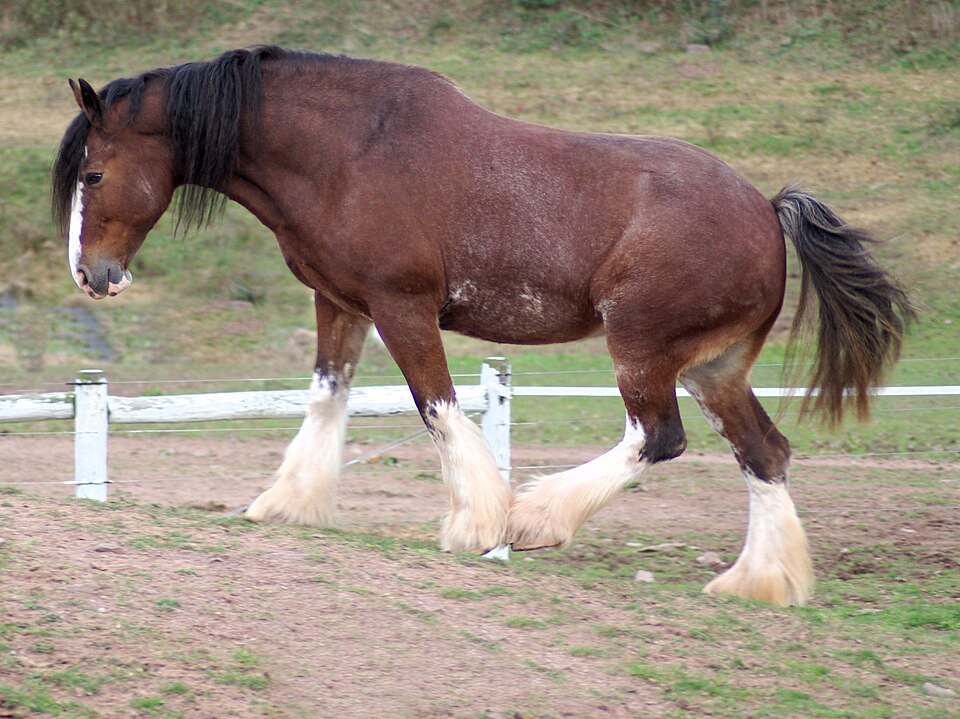
Reference photograph
Reference photograph of Clydesdale. Examine this individual’s color and form alongside the identification descriptions in the text.
Source: Bonnie U. Gruenberg · Original material · CC BY-SA 3.0
1. Classification, origins and habitat
The Clydesdale is a draft horse breed developed through agriculture and transport in Scotland’s Clyde Valley. After farm mechanization, it also became known through shows, events, carriage operation and conservation. One team featured in advertising or festivals does not represent every color and appearance of the breed.
Development in regional carriage and agricultural culture connects to modern events, but not every individual is an event horse. Distinguish conservation, breeding and work as different uses.
2. Appearance and identification
A large body, long legs and abundant hair below the fetlocks are characteristic. A bay body with extensive white on face and legs is well known, but colors and markings vary. Apparent resemblance to the Shire calls for checking registration information as well. Distinguishing feathering from actual hoof shape clarifies leg structure.
Broad white facial markings and sock-like leg markings extend differently in each individual. Understanding their range avoids treating famous advertising appearances as the whole breed standard.
3. Behavior and way of life
Selected to pull farm equipment and carts, these horses are still used for carriages and events. Several moving in step demonstrates training, not evidence that every individual follows people’s instructions from the outset. Large horses can also react to unfamiliar sounds or sudden approaches.
A synchronized team pulling shows repeated horse-and-human training. Size and an impression of steadiness do not guarantee reactions in unfamiliar environments.
4. Observation, conservation and care
Provide space, harness and non-slip movement routes suited to large adults. Check for moisture and dirt lingering beneath feathering, and maintain legs including hooves. At events, consider noise, crowds and waiting time together; do not let people approach freely because a horse appears relaxed.
Care for long feathering changes in rain or muddy conditions. Full hair can conceal skin condition, requiring regular inspection beyond surface appearance.
Evidence and references
- Oklahoma State University — Clydesdale horse
Species-specific information on origins, appearance, uses or ecology
- Defra — Welfare guidance for horses and ponies
Suitable environment, food, companions, training and responsibility for long-term care