
Mammals (Horses)
Explore classification, origins, appearance, behavior, observation and care through the published animal profiles for mammals (horses).
Browse categories
Riding, Racing and Diverse Domestic Horses
Explore domestic horse breeds and groups used for riding, racing and sport. Some entries concern coat patterns or outdoor-living populations rather than registered breeds, so distinguish the scope of each name. Build and ancestry alone do not guarantee riding suitability or sporting ability; check actual training, health and experience together.
Ponies and Small-Bodied Horses
Compare small adult horses and pony groups. A small horse differs from a foal, and size and conformation vary even within a registered population. Do not assume a horse is safe for children or needs little care from size alone; consider actual adult size, training and living conditions together.
Horses used for pulling and agriculture
This group introduces draft horse breeds used to pull farm equipment, carts and carriages. Understand their large bodies and strength alongside ground conditions, equipment, training and health. A history of labor does not justify excessive work or guarantee a calm temperament in every individual; consider modern use and conservation as well.
Published animal profiles
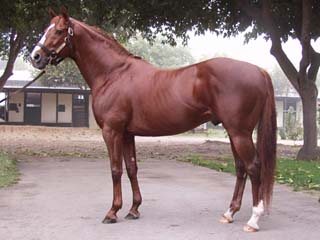
Thoroughbred
The Thoroughbred is a racehorse breed developed in the United Kingdom from Eastern-derived stallions and existing mares. Long legs, a relatively streamlined body, a long neck and defined muscles create a typical impression.
Read the guide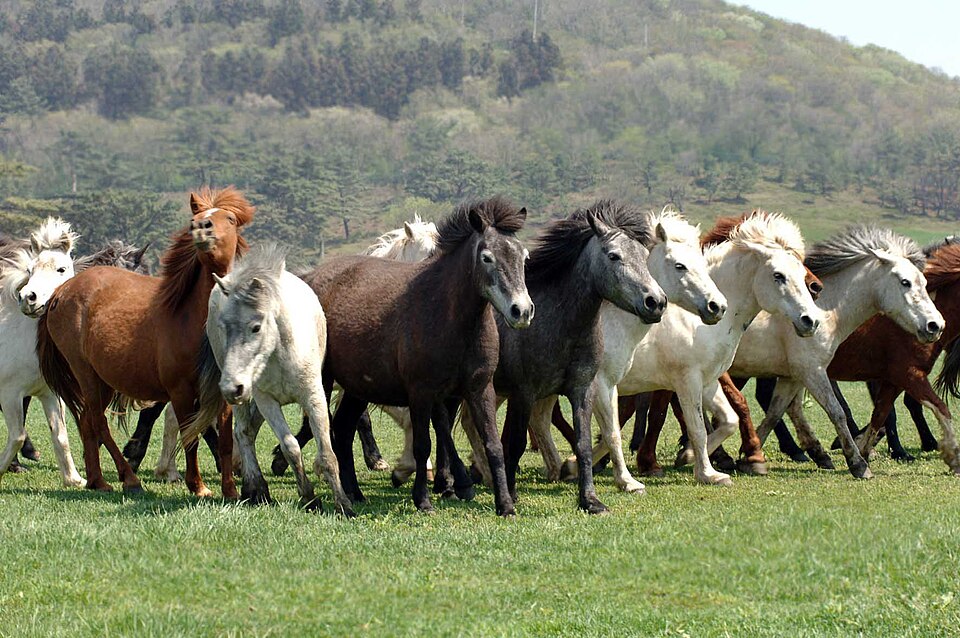
Jeju horse
Jeju horses are native equine genetic resources long used for agriculture and transport on Jeju. Compared with large racehorses, the body is smaller and compact and the legs look relatively short.
Read the guide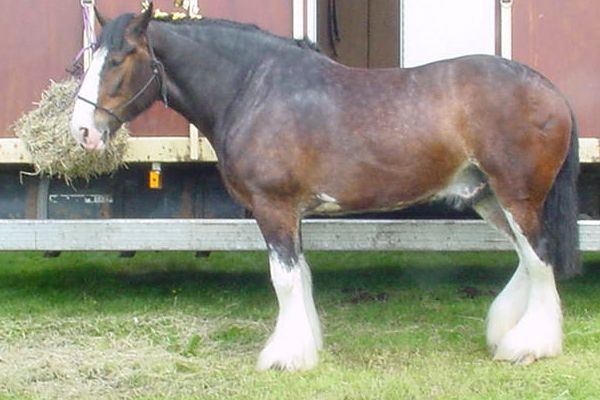
Shire
The Shire is a large draft horse breed associated with agriculture and transport in the United Kingdom. Great height at the withers, a deep body, long legs and abundant hair over the lower legs stand out.
Read the guide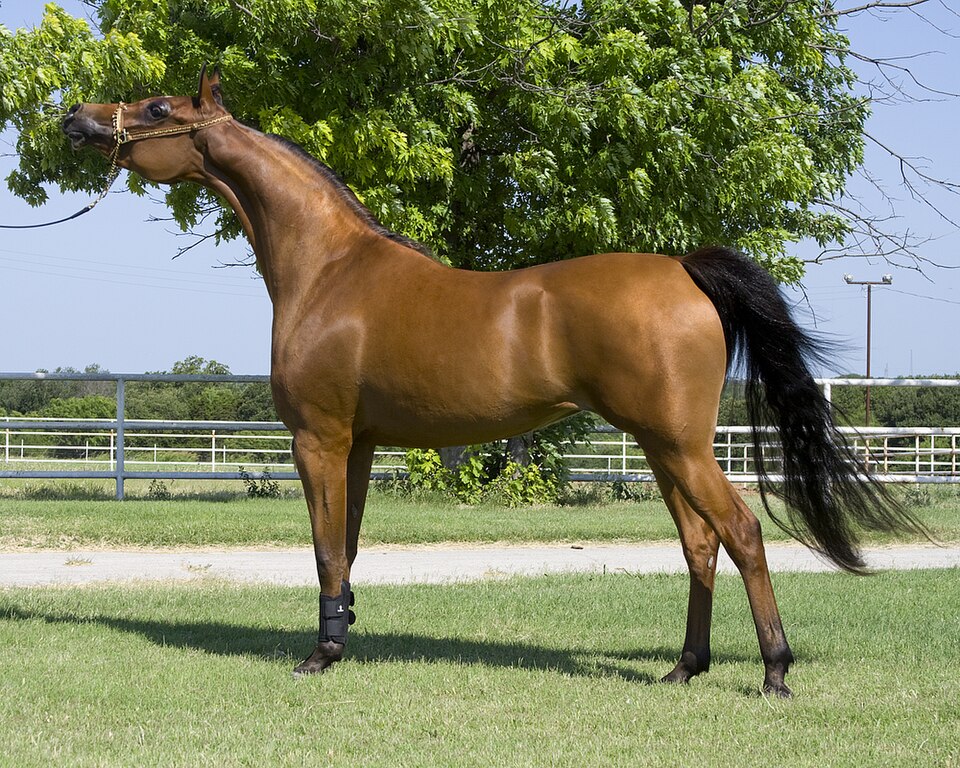
Arabian
The Arabian is deeply connected to horse breeding and movement cultures in West Asia and influenced the formation of several riding and racing breeds. A relatively small head, large eyes, an apparently concave facial profile and a high-carried tail are typical descriptions.
Read the guide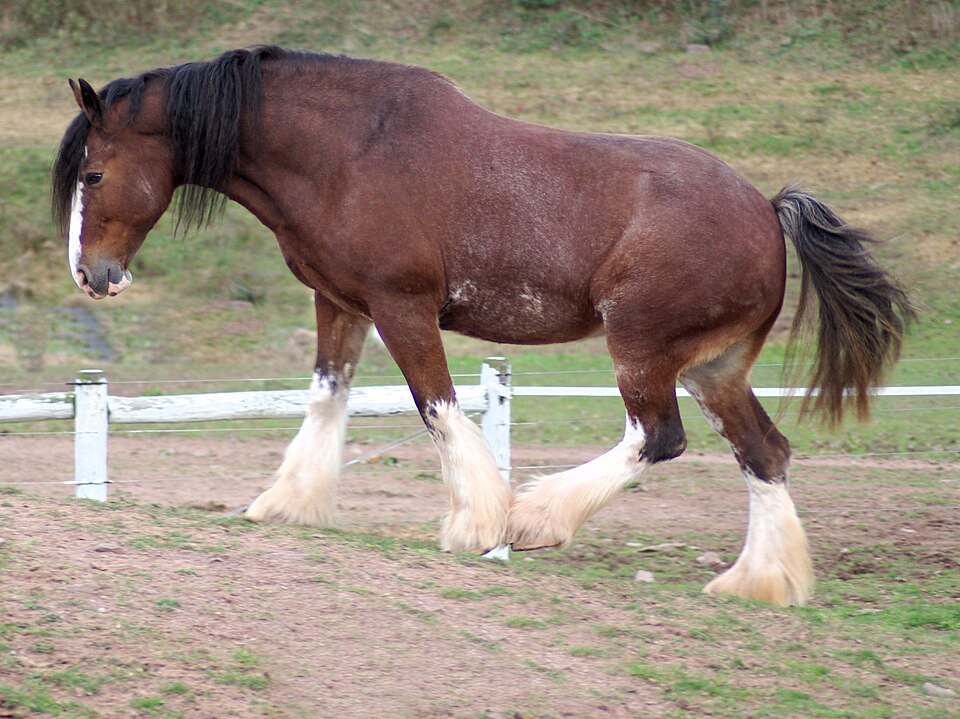
Clydesdale
The Clydesdale is a draft horse breed developed through agriculture and transport in Scotland’s Clyde Valley. A large body, long legs and abundant hair below the fetlocks are characteristic.
Read the guide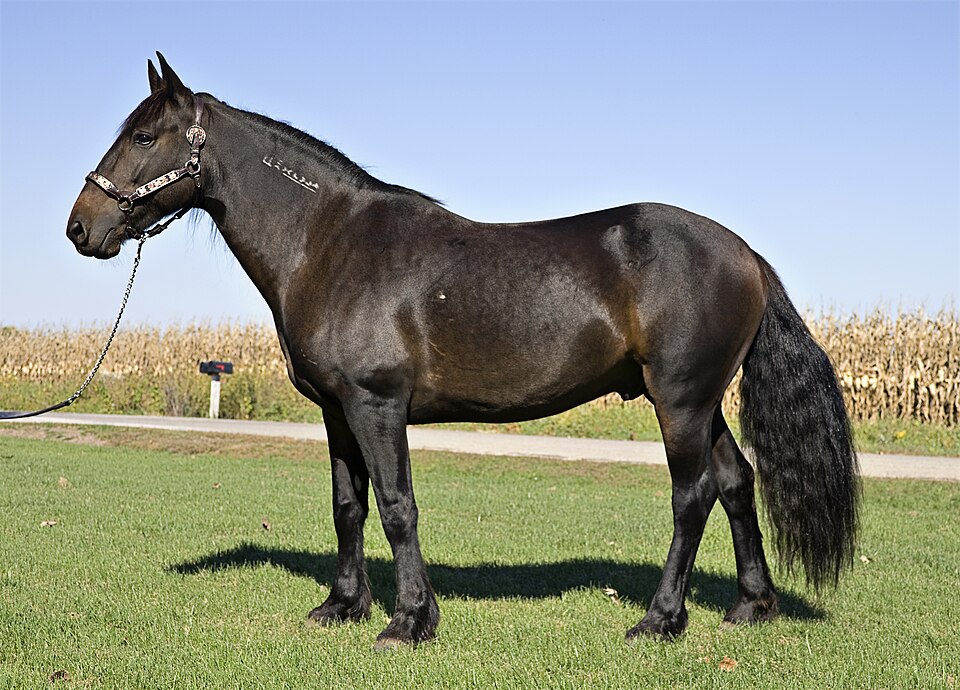
Mustang
Mustang names domestic-horse-derived populations that have lived and bred free-ranging in North America. Build and coat color vary among populations, including bay, black, gray and spotted appearances.
Read the guide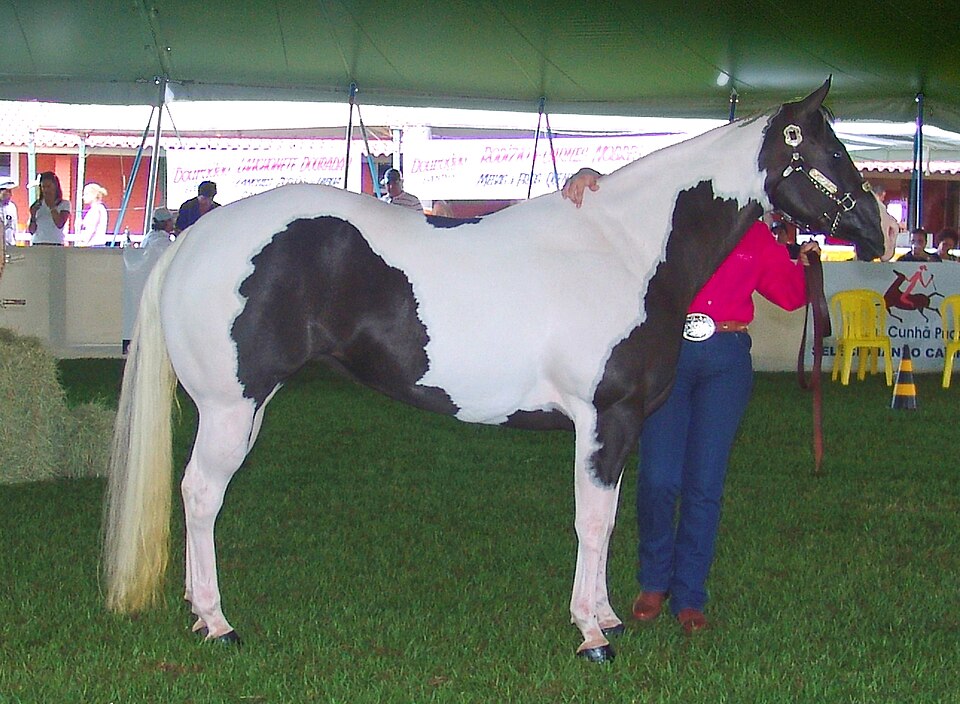
American Paint Horse
The American Paint Horse is a registered breed defined by both ancestry and coat-pattern criteria. Not every domestic horse with a patchy coat belongs to this breed. Large areas of white and another coat color form distinctive patterns that vary between individuals.
Read the guide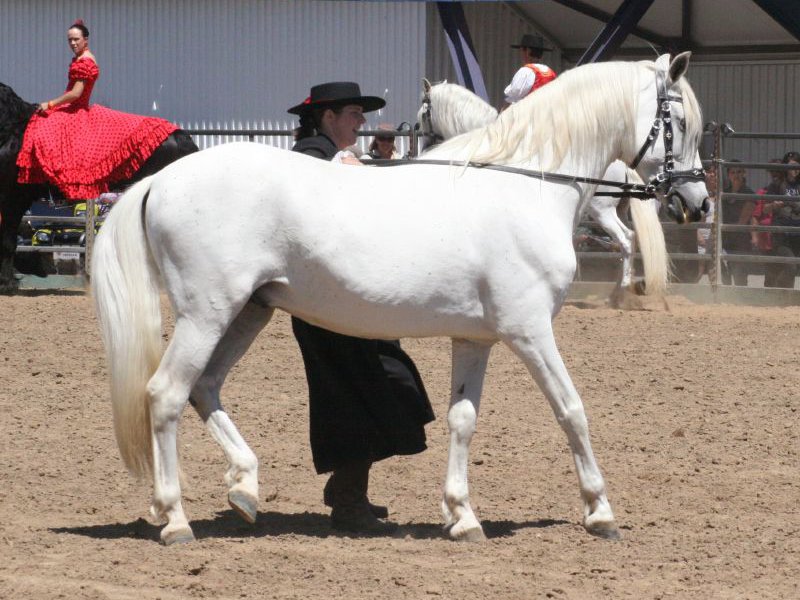
Andalusian
The Andalusian is a riding breed associated with horses of the Iberian Peninsula. Spain's Pura Raza Española registration criteria and the everyday name Andalusian need to be distinguished according to context. A substantial neck, abundant mane and balanced body are characteristic features. Gray is well known, but other coat colors also occur.
Read the guide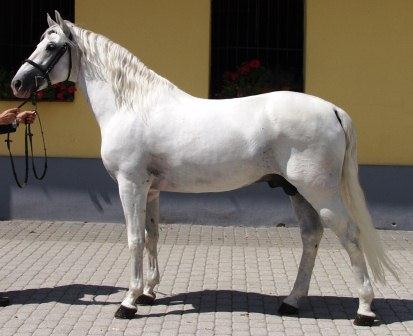
Lipizzan
The Lipizzan is associated with the Lipica stud and Europe's court riding traditions. It is also known through performances at Vienna's Spanish Riding School. Light gray coats are common in adults, while foals are often born dark and become lighter as they grow. Black or brown adults also occur.
Read the guide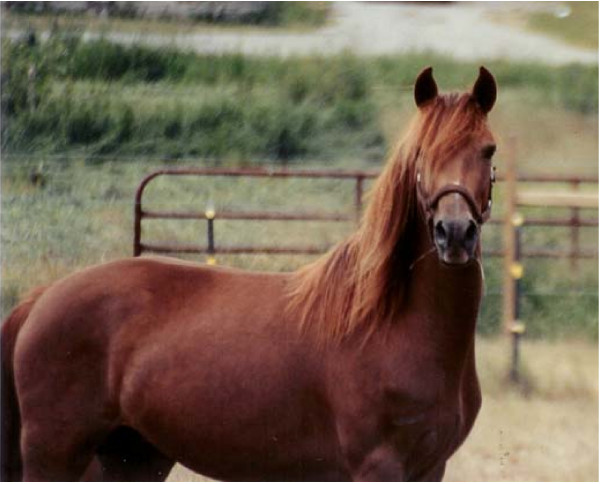
Morgan
The Morgan developed in the United States, with its pedigree history associated with the early stallion Figure. It has served various purposes, including riding and carriage driving. A relatively compact body, powerful neck and balanced legs are characteristic features. Its coat is not limited to one color.
Read the guide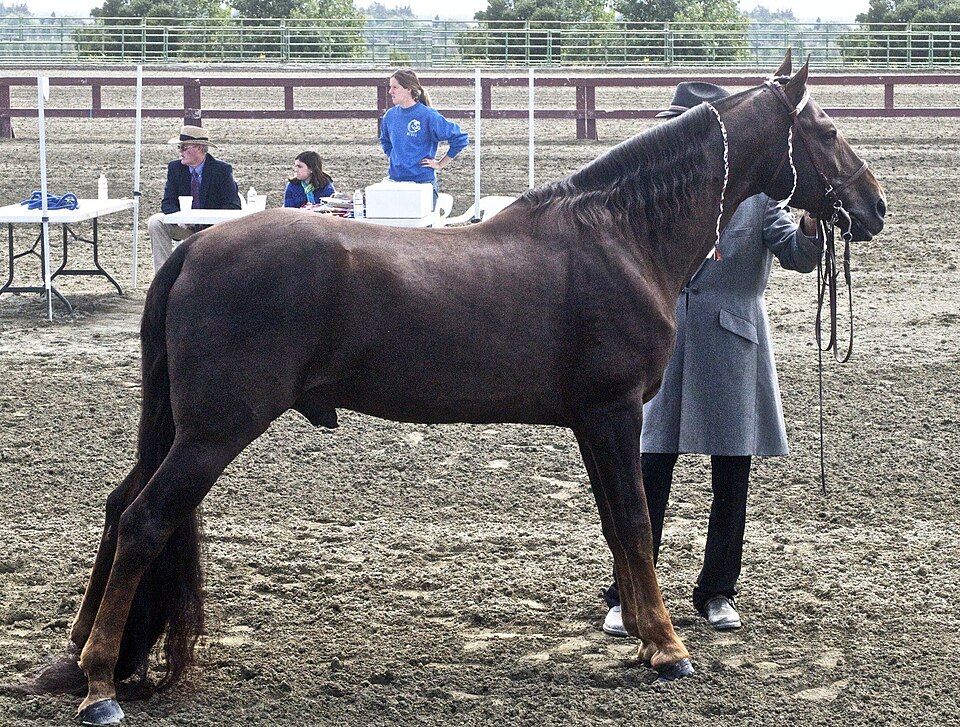
Tennessee Walking Horse
The Tennessee Walking Horse is an American riding breed developed around gait characteristics. Its name relates to a particular walking gait. Coat colors vary; the running walk is a more important distinguishing feature than body shape.
Read the guide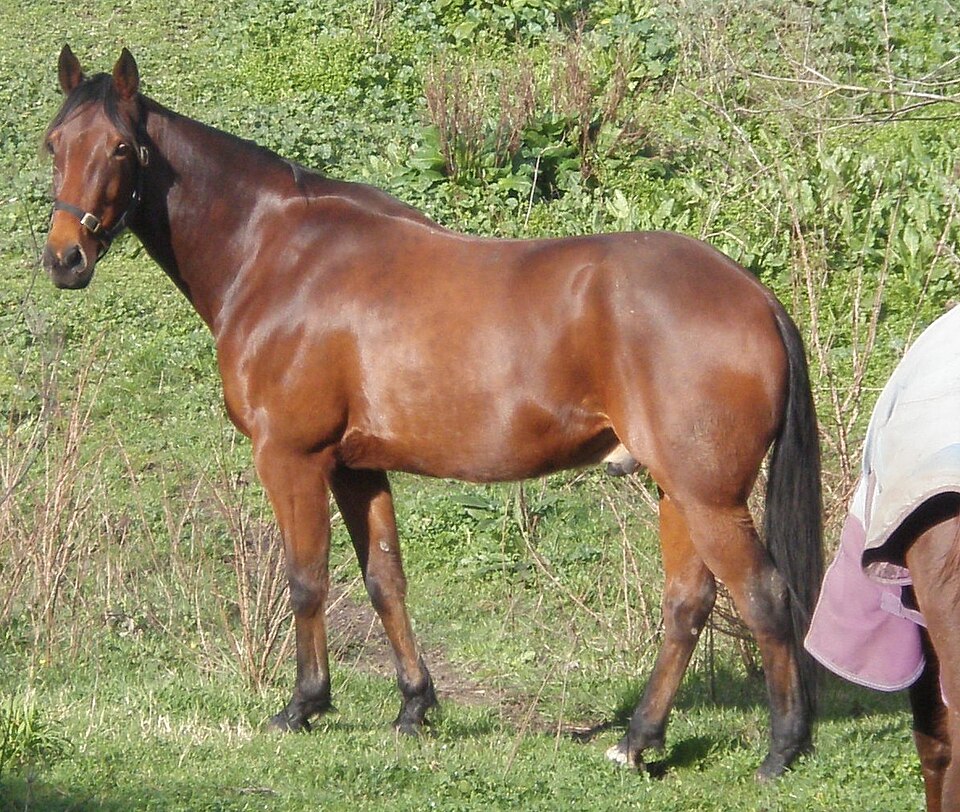
Standardbred
The Standardbred developed around performance records and pedigrees for harness racing. It is a separate breed from the Thoroughbred. Several solid coat colors occur, and the body has been selected for racing and pulling a vehicle. Appearance alone makes it difficult to distinguish trotters from pacers.
Read the guide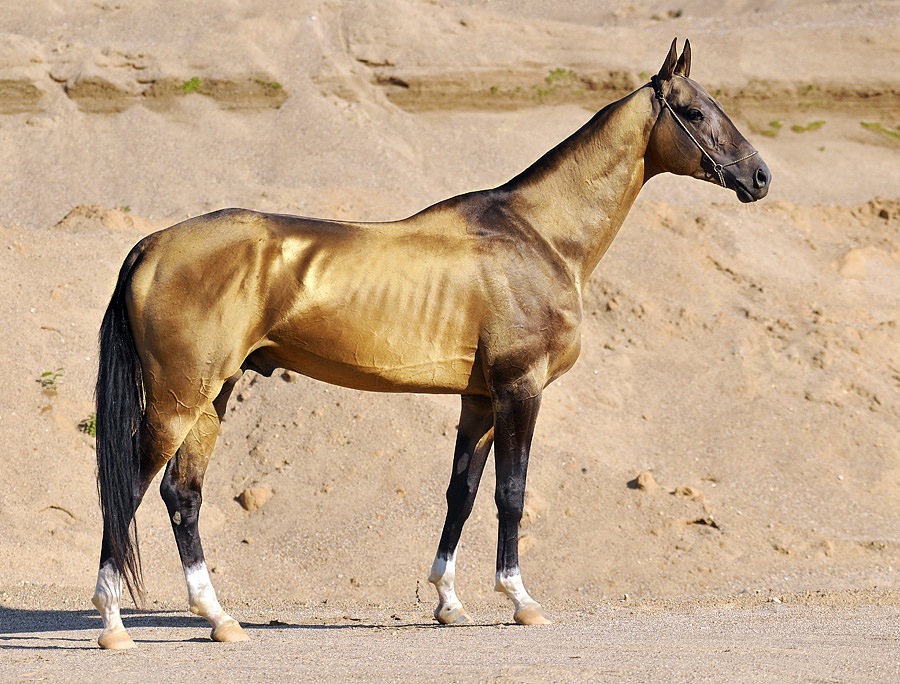
Akhal-Teke
The Akhal-Teke is a Central Asian horse breed closely associated with Turkmenistan. Modern pedigree records need to be distinguished from the history of older regional horses. A slender body, long neck and short, smooth coat are characteristic. Some colors show a metallic sheen, but not every individual is golden.
Read the guide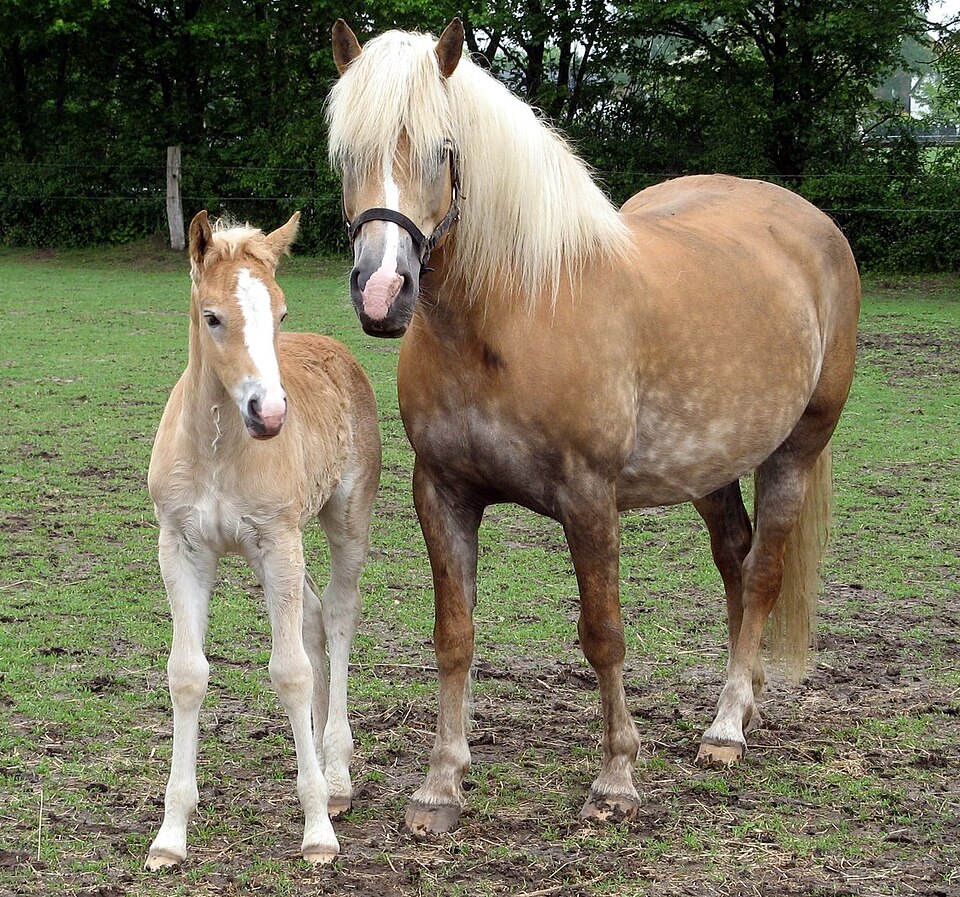
Haflinger
The Haflinger developed in the Tyrol region. Its small size and varied uses often lead to comparisons with larger riding horses. A chestnut coat with a light mane and tail is characteristic. Although relatively small, it has a solid body.
Read the guide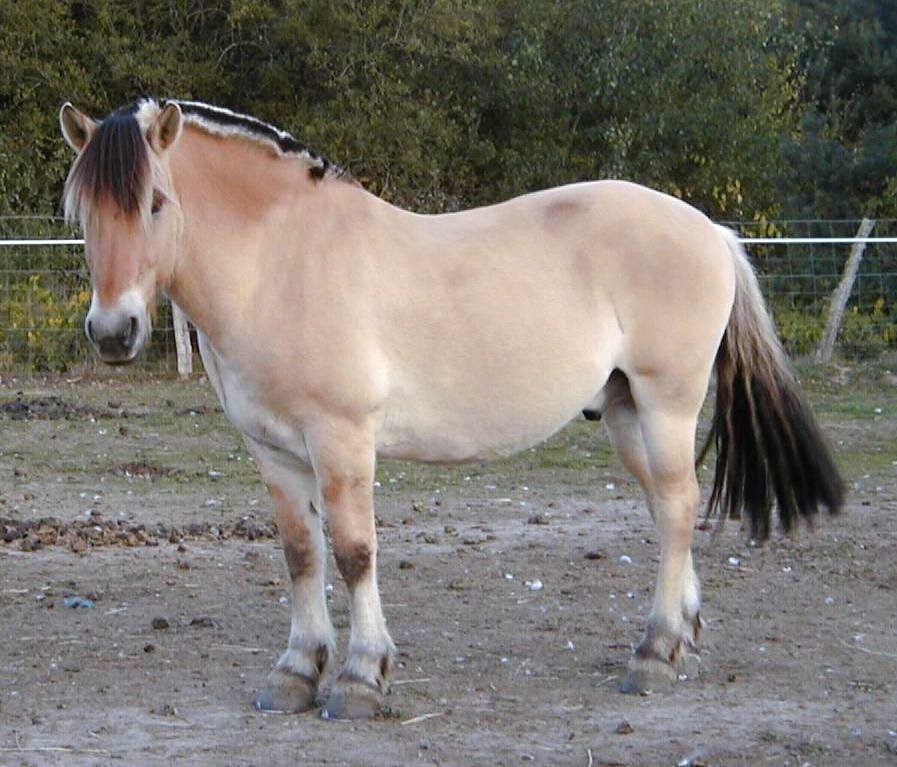
Norwegian Fjord
The Fjord horse developed in Norway. It has been used for farm work, riding and driving. Dun coat colors and a dark stripe along the back are characteristic. A dark band down the center of the mane stands out when the mane is cut short.
Read the guide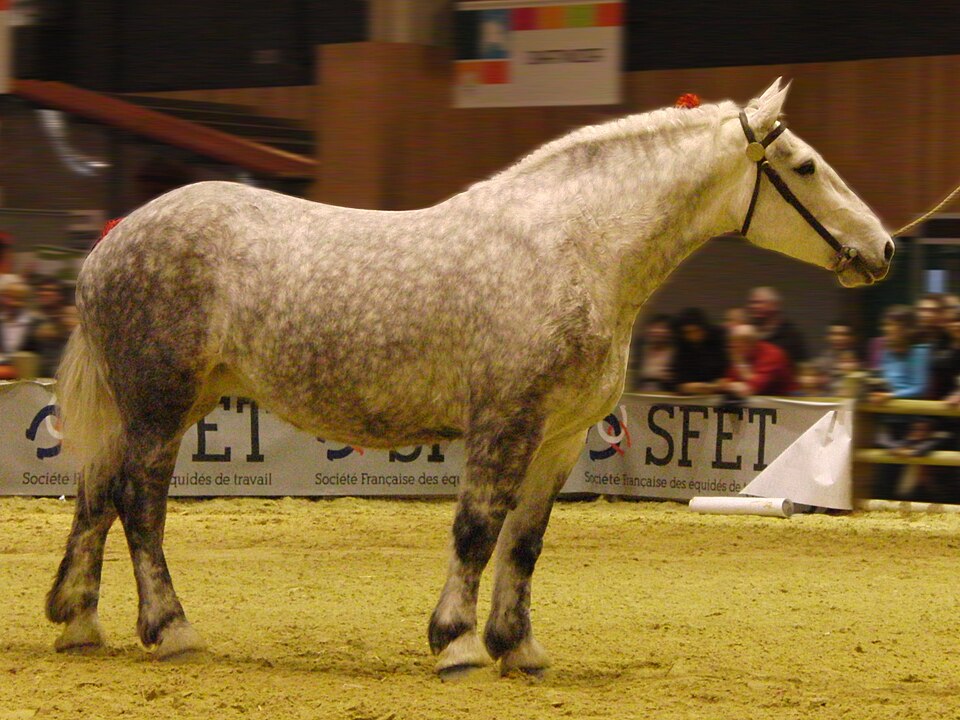
Percheron
The Percheron is a large draft horse developed in the Perche region of France. It was used in farming, transport and carriage work. A large, muscular body and relatively strong legs are characteristic; black and gray coats are well known.
Read the guide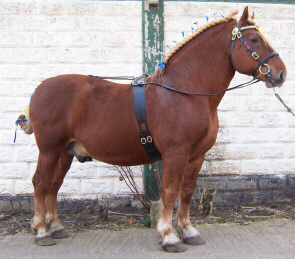
Suffolk Punch
The Suffolk Punch is an agricultural draft horse from Suffolk, England. It is one of the traditional livestock breeds managed by conservation organizations. A chestnut coat, deep body and powerful shoulders are characteristic. Its appearance can be compared with other draft horses that have extensive feathering around the lower legs.
Read the guide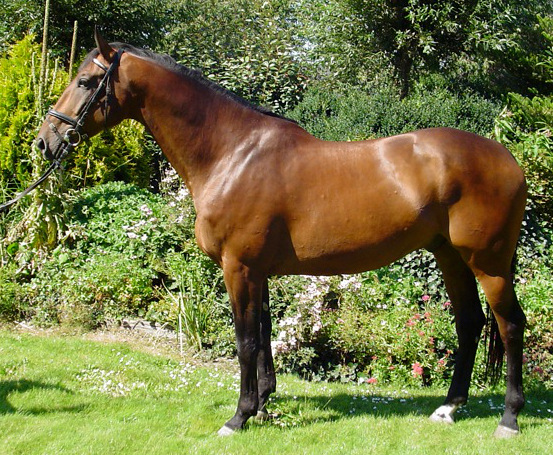
Dutch Warmblood
The Dutch Warmblood is a horse population selected in the Netherlands for sporting purposes. Warmblood is not a biological classification describing mammalian body temperature. Selection criteria for build differ by purpose, such as dressage or jumping. Coat color alone cannot identify the breed.
Read the guide
Hanoverian
The Hanoverian is a registered warmblood population developed in Germany's Hanover region. Modern selection for equestrian sport is important. Coat colors vary and the body is solidly built; balance between the head, neck and legs is considered in registration and assessment.
Read the guide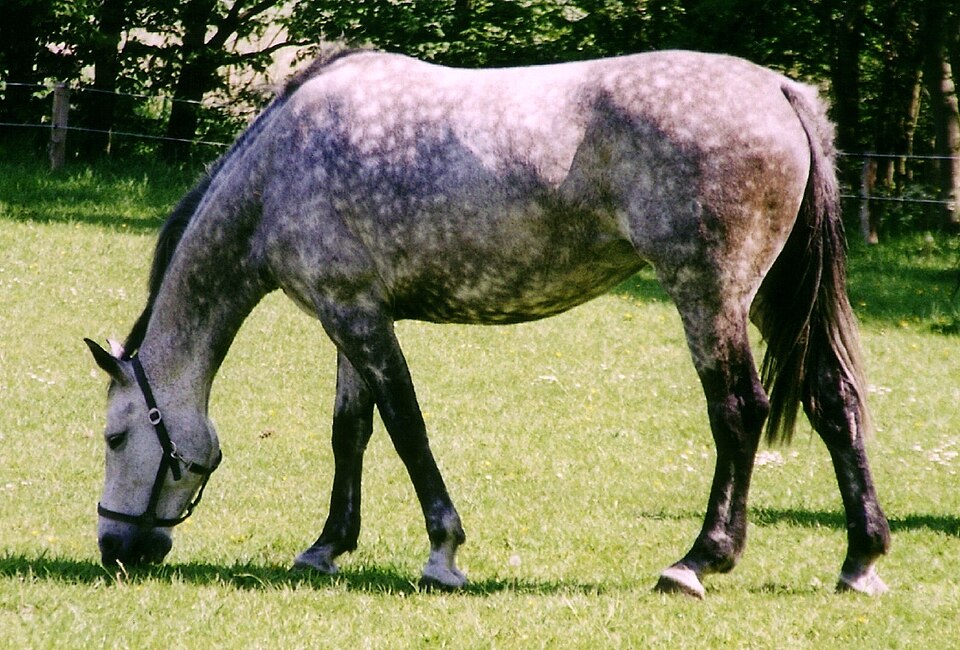
Holsteiner
The Holsteiner developed in northern Germany. It is a different animal from Holstein dairy cattle, which share a regional name. Selection emphasizes muscles and leg structure suited to sport, while coat color and size vary between individuals.
Read the guide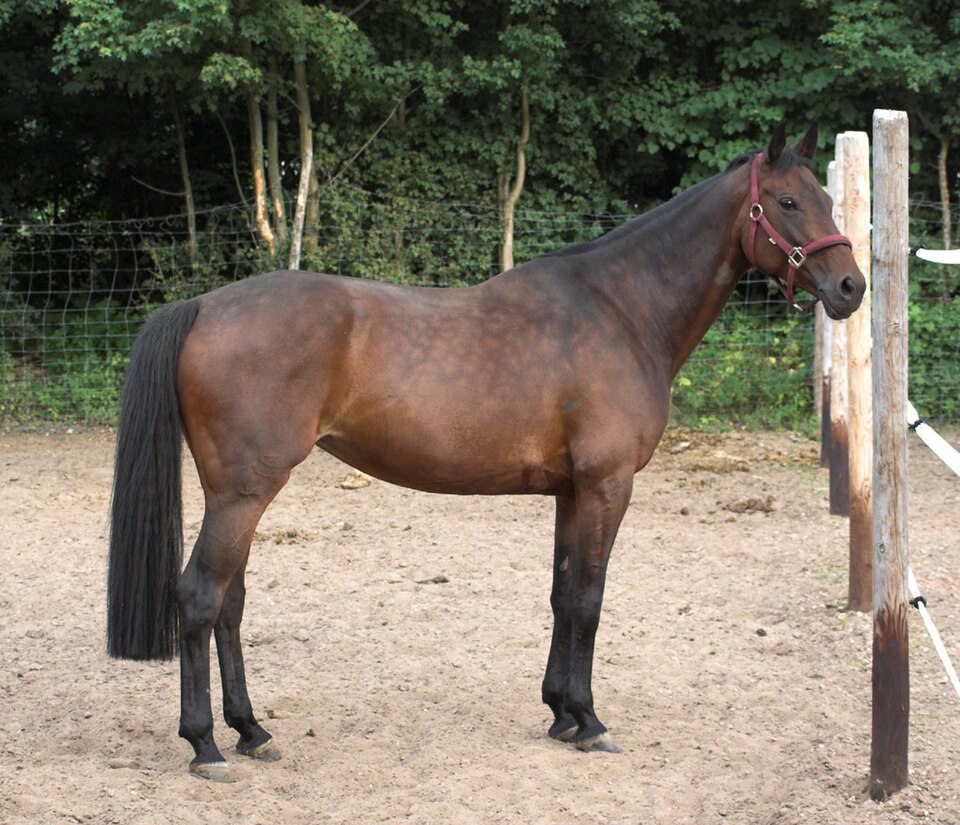
Oldenburg
The Oldenburg is a registered horse population developed in Germany, connecting a carriage-horse history with modern sport-horse breeding. Modern selection favors a body suited to sport, with diverse bloodlines and coat colors.
Read the guide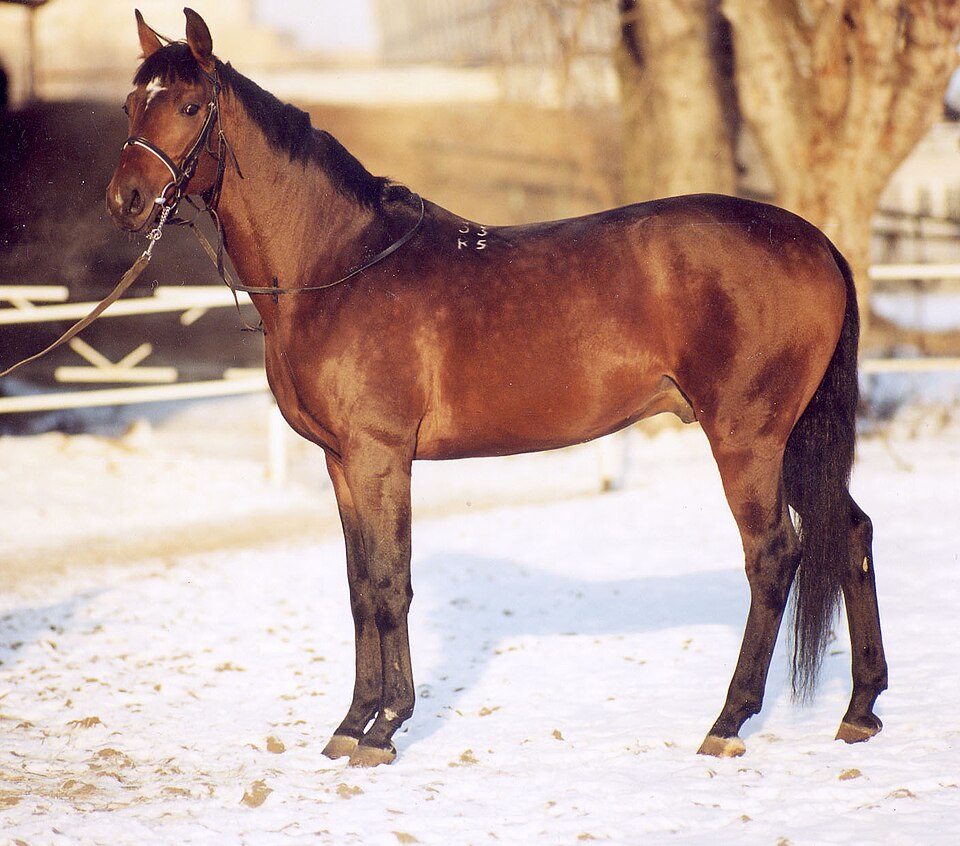
Trakehner
The Trakehner is a warmblood associated with the Trakehnen stud in former East Prussia. Its bloodlines survived war and migration and were preserved in several regions. A relatively refined head and balanced riding conformation are characteristic. Coat colors vary.
Read the guide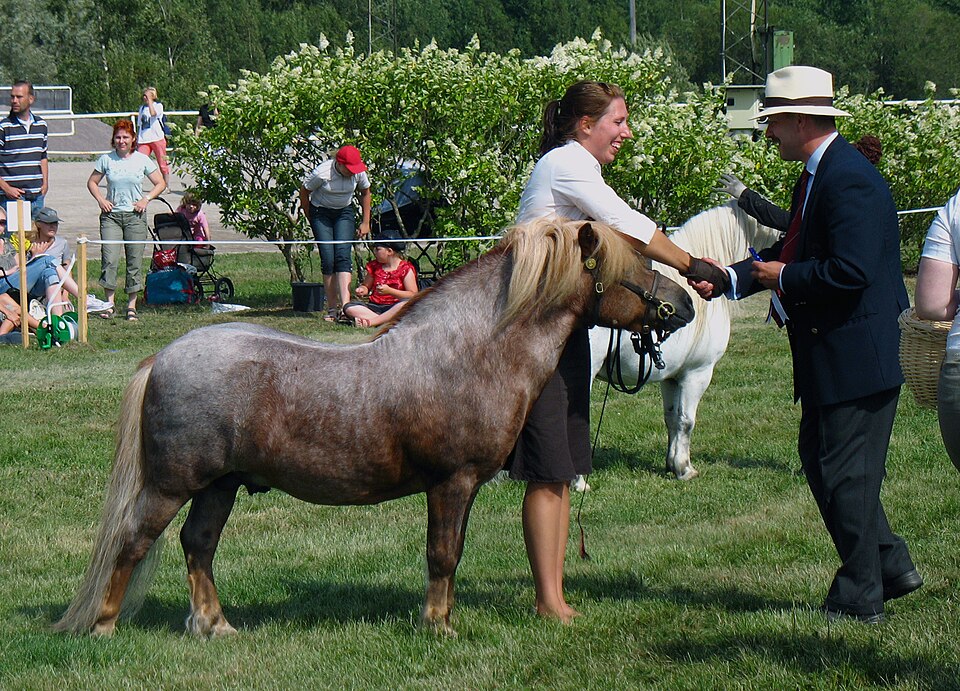
Shetland Pony
The Shetland Pony is a small horse developed in northern islands. Historically used for transport and work, it developed into different registered populations in several countries. Low height at the withers, a compact body and a thick coat are characteristic. Adults retain a small build and must be distinguished from foals.
Read the guide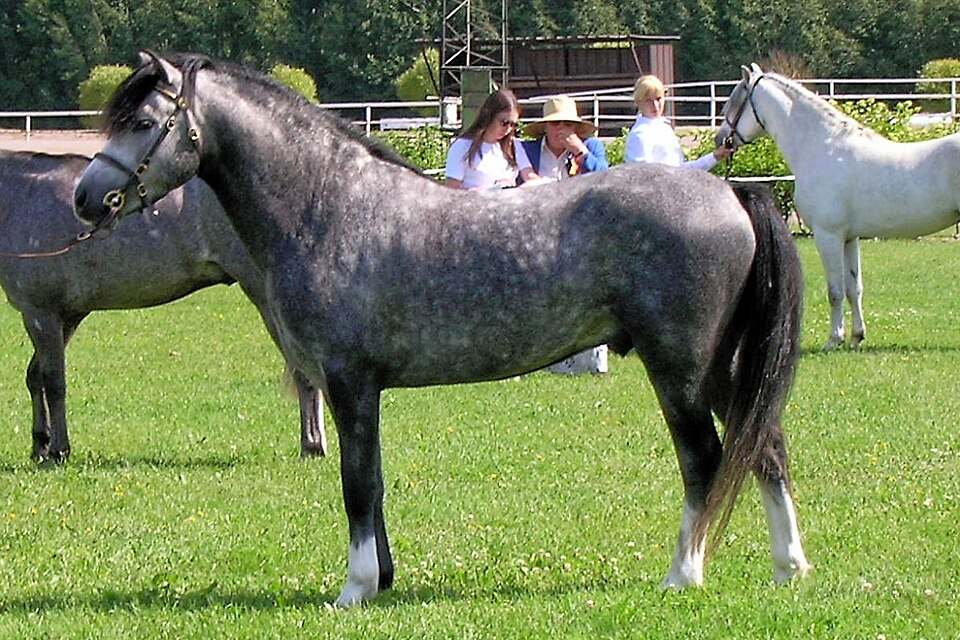
Welsh Pony
Welsh Ponies and Cobs are registered populations developed in Wales. Registries distinguish several sections by size and build. Build ranges widely, from small ponies to larger cobs. One fixed weight cannot apply to the entire population.
Read the guide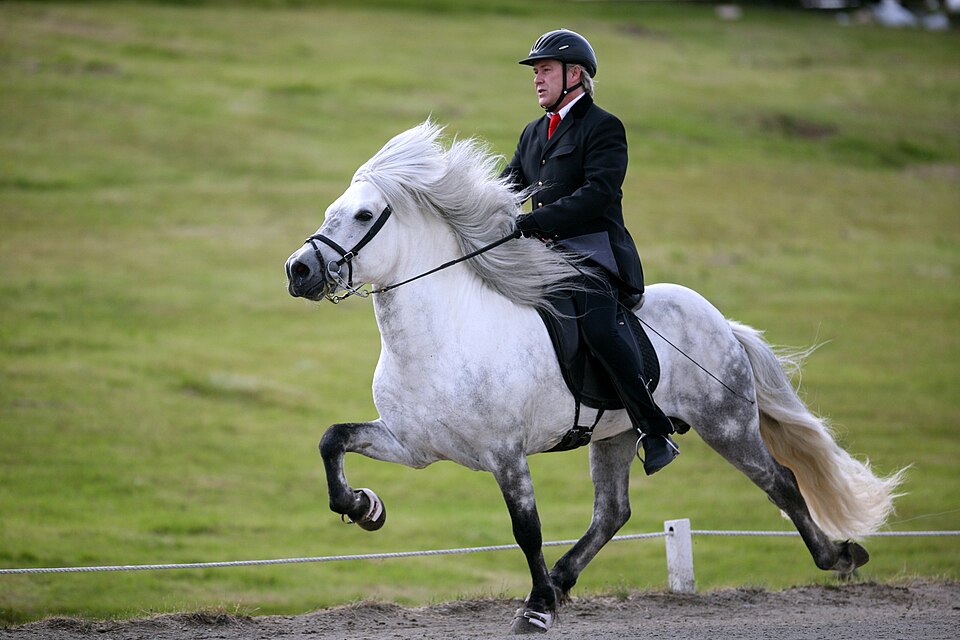
Icelandic Horse
The Icelandic Horse is a breed conserved and developed in Iceland. Despite its small size, the name horse is generally used rather than pony. A thick coat, abundant mane and various coat colors occur. Coat thickness varies seasonally.
Read the guide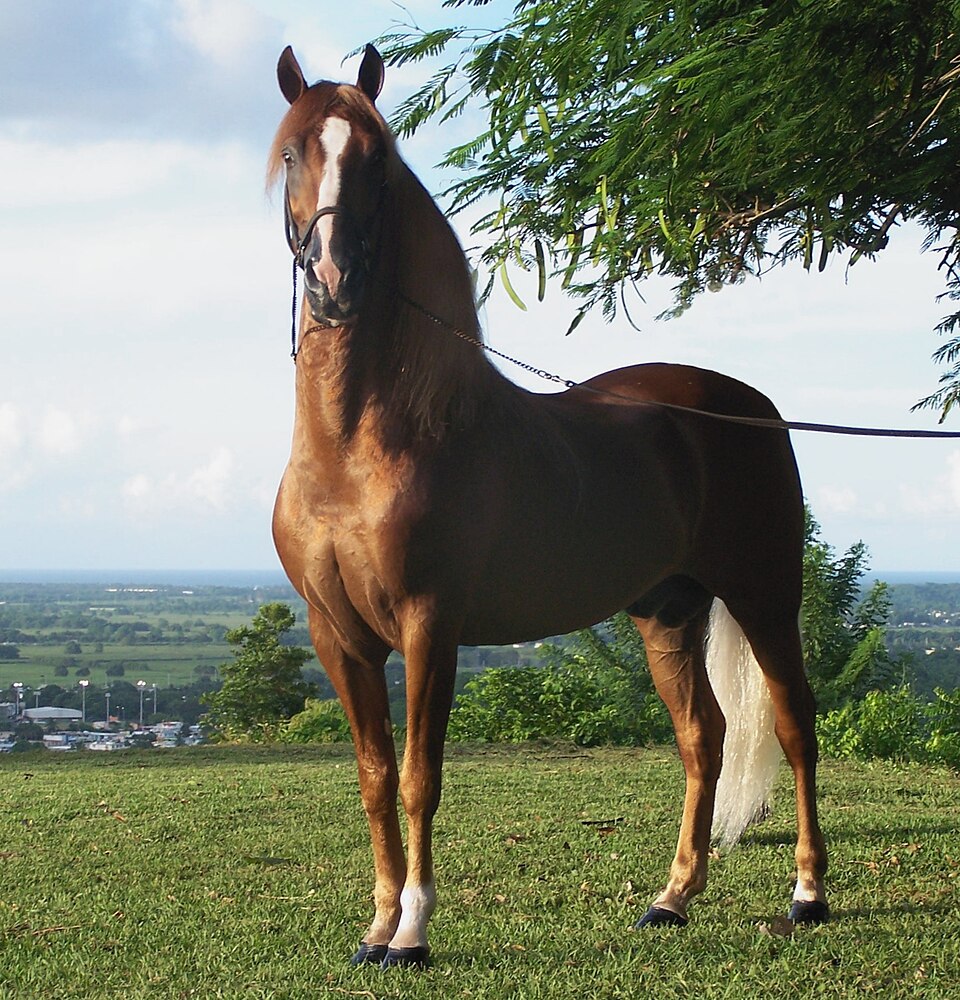
Paso Fino
The Paso Fino developed in Latin America from descendants of Spanish horses. Histories of Puerto Rican and Colombian lines are sometimes distinguished. Colors and sizes vary; the distinctive four-beat gait matters more than appearance.
Read the guide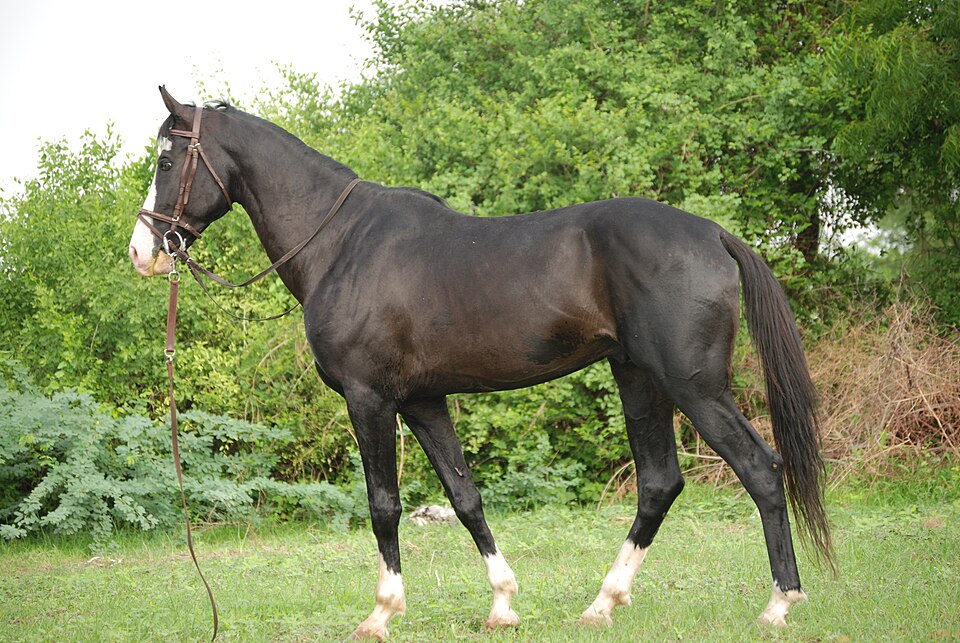
Marwari
The Marwari is associated with regional horses of Rajasthan, India. It has been used in local culture and riding traditions, and several accounts of its precise origins exist. Inward-curving ear tips that approach one another are a characteristic feature. Coat color and build vary between individuals.
Read the guide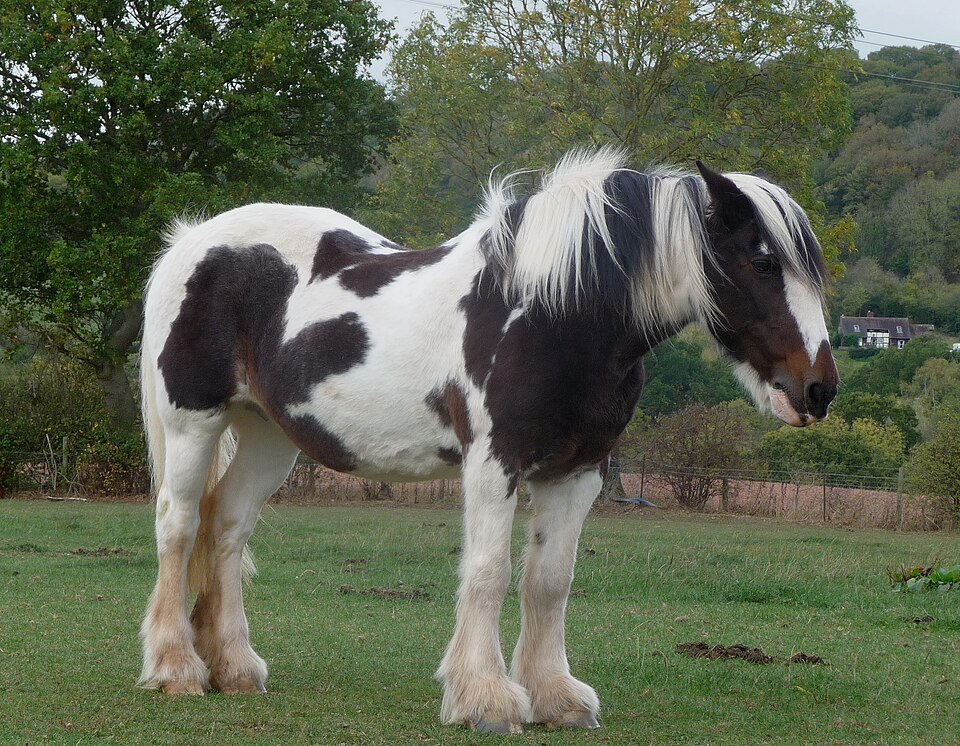
Pinto horse
Pinto describes a horse's pattern of large areas of white mixed with another coat color. The existence of registering organizations does not make it a single breed descending from one common ancestor. Different pattern names describe the positions and edges of white patches. Body size and mane shape also vary with the underlying breed.
Read the guide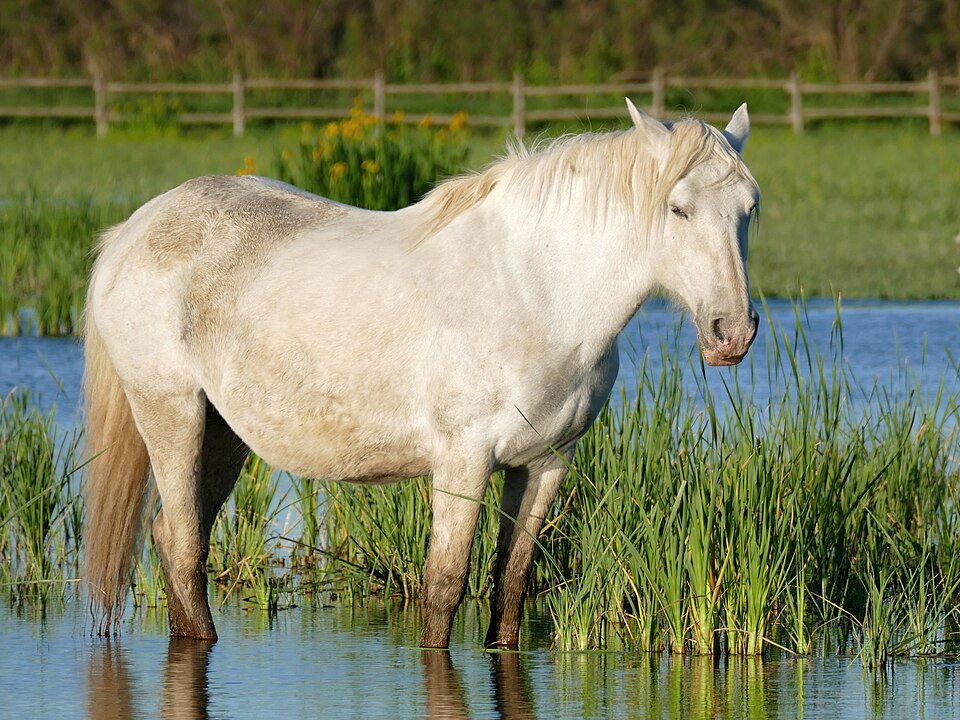
Camargue Horse
The Camargue horse is associated with the wetlands of the Rhône delta in southern France. It was used locally for riding while handling livestock. Adults are commonly gray, while foals are born dark. A compact body and conformation adapted to the regional environment are characteristic.
Read the guide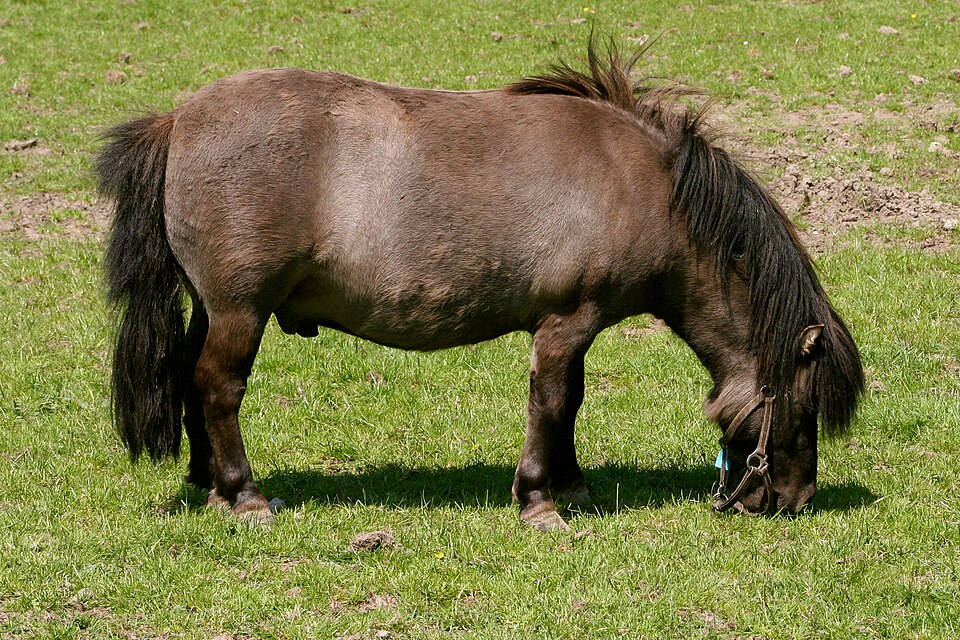
Falabella
The Falabella is a horse line developed in Argentina by selecting for small body size. Not every small horse is called a Falabella. Adults retain a very small height at the withers, with varied coat colors. Body proportions are not simply those of a large horse’s foal.
Read the guide