
Mammals (Horses)
Shire
Shire
Classification and scientific name: Equus caballus
Sources checked:
Great height at the withers, a deep body, long legs and abundant hair over the lower legs stand out
The Shire is a large draft horse breed associated with agriculture and transport in the United Kingdom. Great height at the withers, a deep body, long legs and abundant hair over the lower legs stand out.
Origins and distribution
United Kingdom
- Shire horse
- United Kingdom
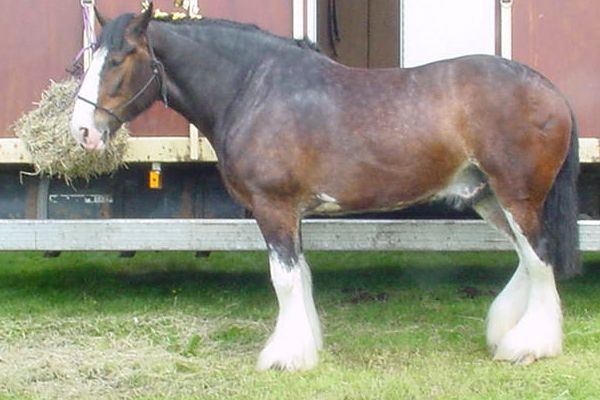
Reference photograph
Reference photograph of Shire. Examine this individual’s color and form alongside the identification descriptions in the text.
Source: Anthony Appleyard at English Wikipedia · Original material · CC BY-SA 3.0
1. Classification, origins and habitat
The Shire is a large draft horse breed associated with agriculture and transport in the United Kingdom. Its uses shifted from pulling heavy wagons and farm equipment toward modern shows, events and breed conservation. Historical working capacity and a suitable workload for one present individual are different information; consider equipment, ground and training conditions together.
Conservation after mechanization involves continuing bloodlines as well as recreating historical working scenes. Rarity figures should identify country and survey year.
2. Appearance and identification
Great height at the withers, a deep body, long legs and abundant hair over the lower legs stand out. Black, bay and gray coats and white facial and leg markings vary by individual. Photographs can resemble Clydesdales, so size and feathering alone cannot establish registered breed. Whole-body views clarify head and leg proportions.
Do not assume feathering color matches hoof color. Whole-body photographs show the deep body, leg length and shoulder angle together, helping explain a large draft horse’s structure.
3. Behavior and way of life
These horses have been used for draft work and carriage operation. A large body standing calmly does not prove docility in every situation. Trust with people and safe work relate to training and handling experience. Despite images of solitary work, social life with other horses and opportunities to move are also needed.
Pulling ability depends on ground, harness and training. Do not transfer historical work records into a suitable workload for one current adult.
4. Observation, conservation and care
Large bodies need appropriate stalls, entrances, transport space and safe working equipment. Long feathering is not merely decoration; skin and legs beneath it need checking too. Provide feed and hoof care suited to size, without making a large horse pull excessive loads or perform unreasonable work.
Harness and gateways should fit actual body form and movement routes, rather than simply enlarging arrangements for small horses. A resting space that permits comfortable lying and rising matters even for a large body.
Evidence and references
- Oklahoma State University — Shire horse
Species-specific information on origins, appearance, uses or ecology
- Defra — Welfare guidance for horses and ponies
Suitable environment, food, companions, training and responsibility for long-term care