
Mammals (Horses)
Percheron
Percheron
Classification and scientific name: Equus caballus
Sources checked:
A large, muscular body and relatively strong legs are characteristic; black and gray coats are well known
The Percheron is a large draft horse developed in the Perche region of France. It was used in farming, transport and carriage work. A large, muscular body and relatively strong legs are characteristic; black and gray coats are well known.
Origins and distribution
Perche, France
- Percheron
- Perche, France
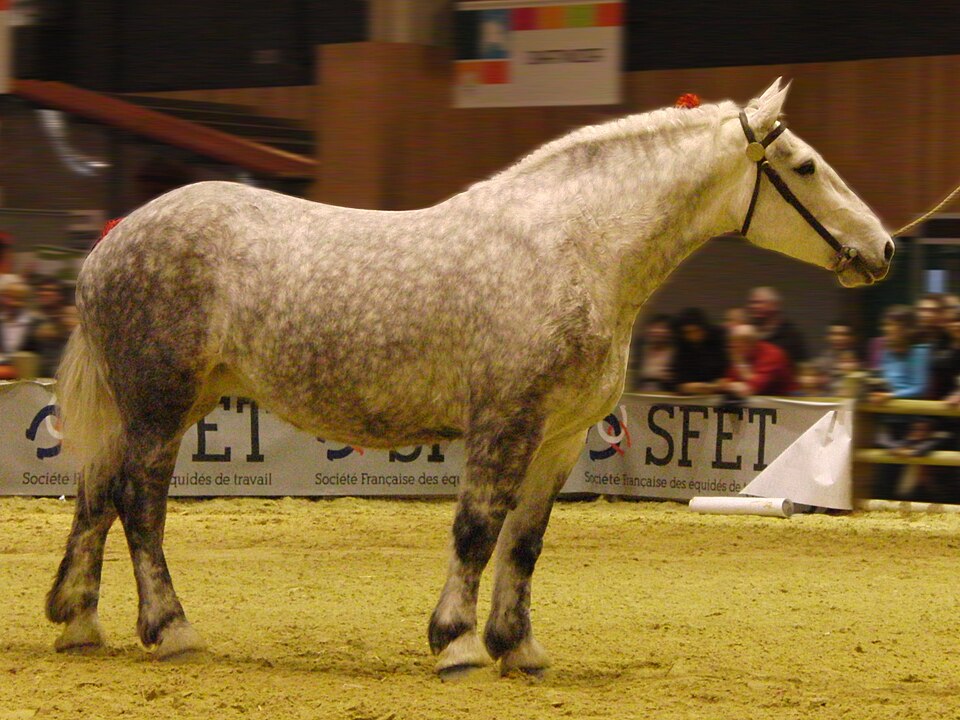
Reference photograph
Reference photograph of a Percheron horse. Compare the photographed individual's color and form with the identification information in the text.
Source: Eponimm · Original material · CC BY-SA 3.0
1. Classification, origins and habitat
The Percheron is a large draft horse developed in the Perche region of France. It was used in farming, transport and carriage work.
It developed into a large draft horse from horses used for transport and agriculture in the French Perche region. Selection for size and purposes varied by country and period, so its history should not be represented by a single fixed appearance. Today the breed also features in exhibitions, driving and pedigree conservation.
2. Appearance and identification
A large, muscular body and relatively strong legs are characteristic; black and gray coats are well known.
The breed has a large body and strong legs, with gray and black coats widely seen. Gray individuals may become lighter as they grow, so young and adult horses can look different. When comparing large draft breeds, consider the proportions of the head, neck and entire body alongside feathering around the lower legs.
Although Percherons, Shires and Clydesdales are all large draft horses, the outlines of their heads, legs and hair differ. Both black and light gray are familiar colors, so coat color alone does not establish that horses belong to different breeds. Check the actual pedigree information accompanying photographs.
3. Behavior and way of life
The breed was selected to pull heavy carts and carriages. A large horse's pulling ability varies with conditions including the ground, equipment and training.
A photograph of a horse pulling a heavy carriage shows an individual's training and equipment. Extreme records should not become the appropriate workload for every adult when describing the breed's strength. Work capacity is affected by the ground, climate, harness fit and recovery time.
4. Observation, conservation and care
Passageways and transport equipment must accommodate the large body. A working-horse history does not justify excessive work or repeated overloading.
Provide entrances and nonslip passageways suited to the large body, and check body and hoof condition after work. Care remains necessary regardless of coat thickness or mane length. A large horse's calm appearance and the safety of handling it need separate assessment.
Evidence and references
- Oklahoma State University — Percheron
Classification, origins, appearance, ecology or breed uses
- Defra — Welfare code for horses and ponies
Suitable surroundings, feed, companionship, training and long-term care responsibilities