
Mammals (Horses)
Arabian
Arabian
Classification and scientific name: Equus caballus
Sources checked:
A relatively small head, large eyes, an apparently concave facial profile and a high-carried tail are typical descriptions
The Arabian is deeply connected to horse breeding and movement cultures in West Asia and influenced the formation of several riding and racing breeds. A relatively small head, large eyes, an apparently concave facial profile and a high-carried tail are typical descriptions.
Origins and distribution
Equestrian cultures of the Arabian Peninsula and West Asia
- Arabian horse
- Equestrian cultures of the Arabian Peninsula and West Asia
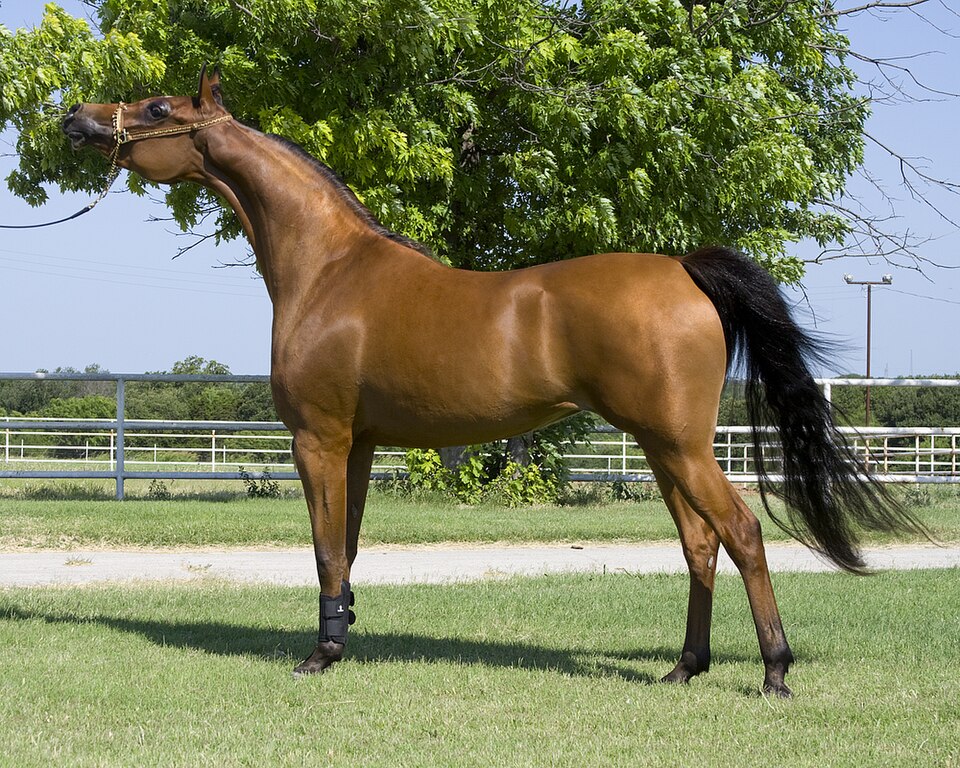
Reference photograph
Reference photograph of Arabian. Examine this individual’s color and form alongside the identification descriptions in the text.
Source: Ealdgyth · Original material · CC BY-SA 3.0
1. Classification, origins and habitat
The Arabian is deeply connected to horse breeding and movement cultures in West Asia and influenced the formation of several riding and racing breeds. Do not present numbers or origin stories from longstanding traditions with the same certainty as modern pedigree records. Bloodlines remain recorded and managed according to countries and registries today.
A bloodline’s contribution to other horse breeds is separate from one individual’s purebred registration. The reputation of an old lineage does not replace current body condition or riding suitability.
2. Appearance and identification
A relatively small head, large eyes, an apparently concave facial profile and a high-carried tail are typical descriptions. However, not every face is extremely concave, and colors include bay, chestnut and gray. Do not identify a pale gray adult and a dark foal as different breeds on color alone.
A high-carried tail varies with movement and arousal. Do not add features absent from a still photograph as though they necessarily appear.
3. Behavior and way of life
The breed is used for riding and endurance events and has contributed to other breeds’ improvement. Endurance does not mean prolonged running without water is acceptable. Individuals may respond sensitively to surrounding stimuli, but the entire breed cannot be labeled nervous or easy for everyone to handle.
Endurance-event records and everyday temperament are different information. Reactions toward people depend on handling experience and current environment, so do not predict them from a breed name alone.
4. Observation, conservation and care
Adjust exercise to actual training level and recovery. A desert-region origin does not justify restricting water and shade; environment and condition matter during long-distance activity. Do not judge breed excellence or health solely through an attractive facial outline; consider breathing, gait and overall body condition.
Look beyond imagery of sand and heat to climate, ground, drinking and recovery together. Registration information is the strongest clue when comparing other horses with similar faces.
Evidence and references
- Oklahoma State University — Arabian horse
Species-specific information on origins, appearance, uses or ecology
- Defra — Welfare guidance for horses and ponies
Suitable environment, food, companions, training and responsibility for long-term care