
Mammals (Horses)
Thoroughbred
Thoroughbred
Classification and scientific name: Equus caballus
Sources checked:
Long legs, a relatively streamlined body, a long neck and defined muscles create a typical impression
The Thoroughbred is a racehorse breed developed in the United Kingdom from Eastern-derived stallions and existing mares. Long legs, a relatively streamlined body, a long neck and defined muscles create a typical impression.
Origins and distribution
Racing bloodlines developed in the United Kingdom
- Thoroughbred
- Racing bloodlines developed in the United Kingdom
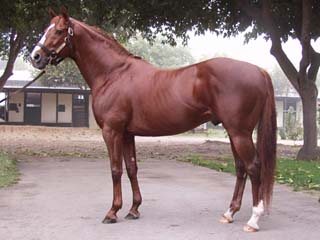
Reference photograph
Reference photograph of Thoroughbred. Examine this individual’s color and form alongside the identification descriptions in the text.
Source: Photograph taken by the managing farm for its website. This is an original photograph taken at the farm when Gentlemen arrived from Kentucky. It is the property of Gentlemen's business manager, Applebite Farms. · Original material · Public domain
1. Classification, origins and habitat
The Thoroughbred is a racehorse breed developed in the United Kingdom from Eastern-derived stallions and existing mares. Selection centered on pedigree registration and flat racing, and influenced riding and sport-horse improvement in many countries. Distinguish thoroughbred as a generic English term for purebred from its use as the name of a particular horse breed.
Systems recording pedigrees and performance are important to breed understanding. Do not equate particular ancestor names or winning records with a current individual’s ability; check the event and period to which records belong.
2. Appearance and identification
Long legs, a relatively streamlined body, a long neck and defined muscles create a typical impression. Coat colors include bay, chestnut, gray and black, with individual differences in white markings resembling stars or socks. A slender build alone does not establish a Thoroughbred, and visible ribs should not automatically be labeled a normal breed feature.
Racing equipment and a resting pose can create different bodily outlines in photographs. Describe visible features rather than inferring parts hidden by equipment or lighting.
3. Behavior and way of life
Although selected for fast running, individuals do not all achieve the same racing results. Some adapt to riding or other exercise after retirement, requiring a transition between previous training and a new life. Describing high activity and responses to stimuli as a fixed vicious personality is inaccurate.
A retired racehorse’s new life is an individual adaptation process. A history of running fast does not prove suitability for a beginner rider; actual training records should be checked.
4. Observation, conservation and care
Adjust exercise intensity gradually according to training history and present body condition. Racing experience does not mean the horse learned every instruction in general riding, so check transition training. Food, rest, hoof care and opportunities to live with companions are basic needs independent of athletic results.
Recording condition before and after exercise alongside ordinary feed intake is helpful. Do not treat forced fast running as a required way to display the breed’s appeal.
Evidence and references
- Oklahoma State University — Thoroughbred
Species-specific information on origins, appearance, uses or ecology
- Defra — Welfare guidance for horses and ponies
Suitable environment, food, companions, training and responsibility for long-term care