
Mammals (Horses)
Mustang
Mustang
Classification and scientific name: Equus caballus
Sources checked:
Build and coat color vary among populations, including bay, black, gray and spotted appearances
Mustang names domestic-horse-derived populations that have lived and bred free-ranging in North America. Build and coat color vary among populations, including bay, black, gray and spotted appearances.
Origins and distribution
Free-ranging domestic horse populations of western North America
- Mustang
- Free-ranging domestic horse populations of western North America
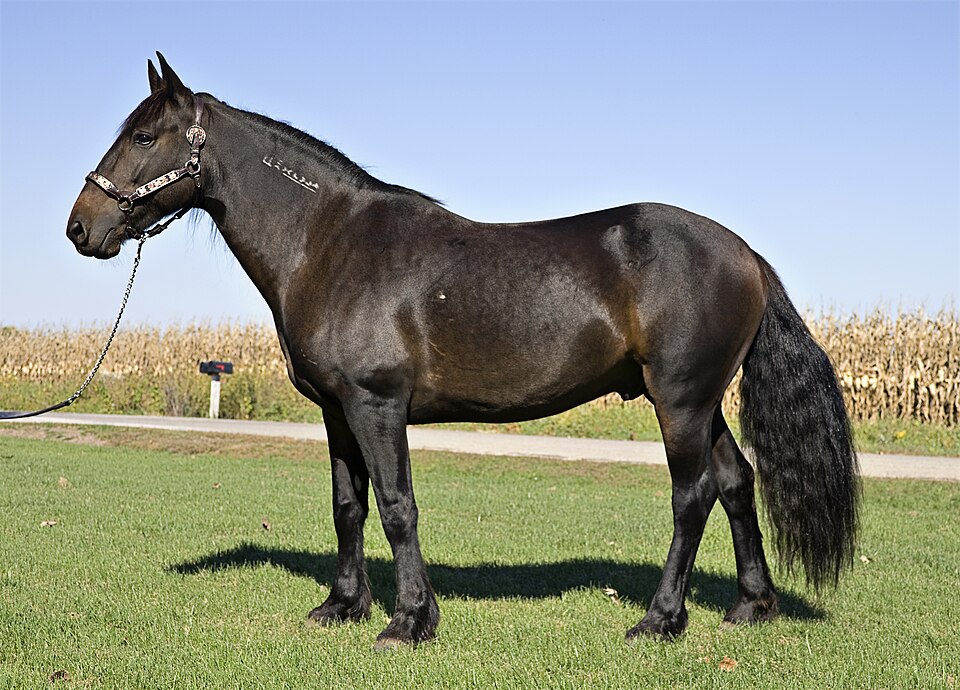
Reference photograph
Reference photograph of Mustang. Examine this individual’s color and form alongside the identification descriptions in the text.
Source: Ealdgyth · Original material · CC BY-SA 3.0
1. Classification, origins and habitat
Mustang names domestic-horse-derived populations that have lived and bred free-ranging in North America. As descendants of domestic horses established beyond human management, they are distinguished from a separate ancient wild species. Ancestral origins and current herd regions produce varied lineages and builds, so do not describe them as one uniform registered breed.
Descent from domestic horses living free-ranging is important to distinguish from originally wild species. Read management agencies’ term wild horse together with biological domestication history.
2. Appearance and identification
Build and coat color vary among populations, including bay, black, gray and spotted appearances. A thick mane or rough coat does not establish a Mustang. Herd setting, observation location and management-agency information matter as much as appearance. Whole-body views should also consider sex and growth stage.
Diversity in coat color and build reflects a history of domestic horses from several origins mixing. Do not identify Mustangs by a particular color or mane; check photograph information about the managed population.
3. Behavior and way of life
They interact with other horses in herds and move in search of water and food. One fighting or running scene should not be turned into a fixed free-spirited or fierce personality. Free-ranging life in protected or managed areas differs from life in care after adoption; becoming familiar with human instructions requires individual training.
Understand herd movements in the contexts of food, water, reproduction and avoiding danger. Approaching or making noise to obtain a galloping photograph disrupts normal life.
4. Observation, conservation and care
Wild-horse management policy considers habitat, water and pasture resources, other wildlife and human land use together. Observers should not chase herds or lure them with feed. Adoption and keeping require checking registration procedures, facilities and professional training capacity; prior free-ranging life does not justify neglect.
Prioritize on-site observation distances and land-use rules. If considering adoption, first prepare horse-handling skills and safe facilities, distinguishing cinematic imagery from actual management responsibilities.
Evidence and references
- Bureau of Land Management — Mustang
Species-specific information on origins, appearance, uses or ecology
- Defra — Welfare guidance for horses and ponies
Suitable environment, food, companions, training and responsibility for long-term care