
Mammals (Horses)
Dutch Warmblood
Dutch Warmblood
Classification and scientific name: Equus caballus
Sources checked:
Selection criteria for build differ by purpose, such as dressage or jumping
The Dutch Warmblood is a horse population selected in the Netherlands for sporting purposes. Warmblood is not a biological classification describing mammalian body temperature. Selection criteria for build differ by purpose, such as dressage or jumping. Coat color alone cannot identify the breed.
Origins and distribution
The Netherlands
- Dutch Warmblood
- The Netherlands
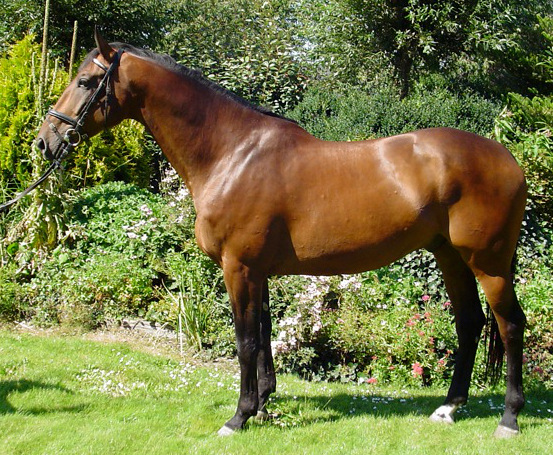
Reference photograph
Reference photograph of a Dutch Warmblood. Examine this individual's color and form alongside the identification descriptions in the text.
Source: Remy Overkempe · Original material · CC BY-SA 2.0
1. Classification, origins and habitat
The Dutch Warmblood is a horse population selected in the Netherlands for sporting purposes. Warmblood is not a biological classification describing mammalian body temperature.
Warmblood describes historical horse types and breeding purposes, rather than a physiological classification involving mixing cold and warm blood. The Dutch registration system illustrates selection for aptitude in different disciplines of modern equestrian sport.
2. Appearance and identification
Selection criteria for build differ by purpose, such as dressage or jumping. Coat color alone cannot identify the breed.
Build varies with the discipline selected for, such as dressage, jumping or driving, and with the lineage. Do not treat one coat color or head outline as mandatory for all Dutch Warmbloods. A registered name and assessment discipline accompanying a photograph help connect appearance and use.
Do not confuse Warmblood with the biological distinction between warm-blooded and cold-blooded animals. Like other domestic horses, this horse is a mammal that maintains a stable body temperature; the name is used in the context of historical breeding types and registration.
3. Behavior and way of life
Pedigree and ability assessments are used for equestrian sport. Training and performance differ between disciplines even within the same registered population.
Assessments of competition horses consider pedigree, movement and records together. Do not predict dressage results from a single jumping photograph, or guarantee an offspring's results from its parents' fame. Distinguish a sporting purpose from the training stage an individual horse has learned.
4. Observation, conservation and care
Read sporting horse material alongside the registry, assessment discipline and individual records. A famous pedigree alone cannot guarantee competition results.
Do not give growing horses the same exercise plan as competing adults. Consider professional training and rest, equipment fit and hoof condition together. Even high registration assessment scores do not replace checks of the individual's current health and responses suited to the rider.
Evidence and references
- Oklahoma State University — Dutch Warmblood
Classification, origin, appearance, ecology or breed uses
- Defra — Horse and pony welfare guidance
Suitable environments, food, companions, training and responsibility for long-term care