
Mammals (Horses)
Marwari
Marwari Horse
Classification and scientific name: Equus caballus
Sources checked:
Inward-curving ear tips that approach one another are a characteristic feature
The Marwari is associated with regional horses of Rajasthan, India. It has been used in local culture and riding traditions, and several accounts of its precise origins exist. Inward-curving ear tips that approach one another are a characteristic feature. Coat color and build vary between individuals.
Origins and distribution
Rajasthan, India
- Marwari
- Rajasthan, India
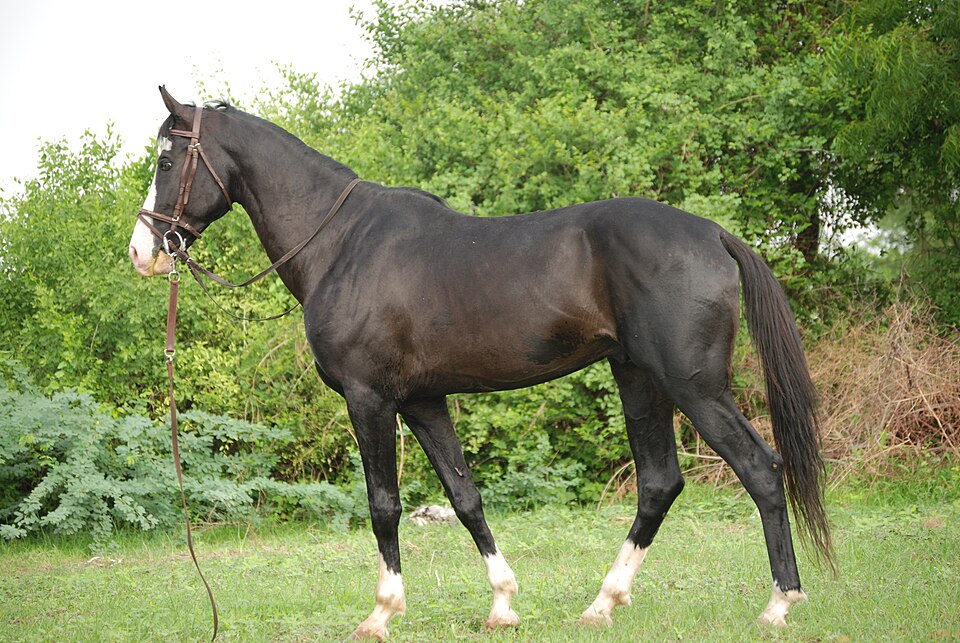
Reference photograph
Reference photograph of a Marwari horse. Compare the photographed individual's color and form with the identification information in the text.
Source: Virendra.kankariya · Original material · Public domain
1. Classification, origins and habitat
The Marwari is associated with regional horses of Rajasthan, India. It has been used in local culture and riding traditions, and several accounts of its precise origins exist.
Its background connects regional horse breeding in Rajasthan with traditional events. Legendary battle stories and modern pedigree and registration documents are not equivalent evidence. Distinguish its name and distribution from those of other Indian horses with curved ears, such as the Kathiawari.
2. Appearance and identification
Inward-curving ear tips that approach one another are a characteristic feature. Coat color and build vary between individuals.
The inward-curving tips appear close above the head, but posture and photographic angle affect that impression. Coats include brown, gray and patched patterns, so no particular color is the sole feature. Avoid establishing purebred registration from ear shape alone.
Depending on posture, inward-curving ear tips can appear closer together or farther apart. This shape is a visual clue in photographs, not evidence establishing pedigree registration or an individual's temperament.
3. Behavior and way of life
Marwaris are used for riding and regional events. Distinguish courage in historical traditions from the present responses of an individual horse.
Uses include riding, regional events and ceremonies, and photographs may show elaborate equipment. The colors and forms of that equipment document cultural use and should be distinguished from the horse's inherited body structure. Traditions describing courage are not guarantees that every individual is fearless.
4. Observation, conservation and care
Ear characteristics alone cannot establish registration. Check pedigree records alongside actual physical and training condition, and distinguish historical accounts from biological facts.
At events, consider noise, crowding and equipment fit together. Regardless of cultural value, the horse needs comfortable rest, water and opportunities for companionship. Do not handle or twist distinctive ears to inspect them; observe through photographs and official pedigree sources.
Evidence and references
- Oklahoma State University — Marwari
Classification, origins, appearance, ecology or breed uses
- Defra — Welfare code for horses and ponies
Suitable surroundings, feed, companionship, training and long-term care responsibilities