
Mammals (Horses)
Oldenburg
Oldenburg
Classification and scientific name: Equus caballus
Sources checked:
Modern selection favors a body suited to sport, with diverse bloodlines and coat colors
The Oldenburg is a registered horse population developed in Germany, connecting a carriage-horse history with modern sport-horse breeding. Modern selection favors a body suited to sport, with diverse bloodlines and coat colors.
Origins and distribution
Oldenburg, Germany
- Oldenburg
- Oldenburg, Germany
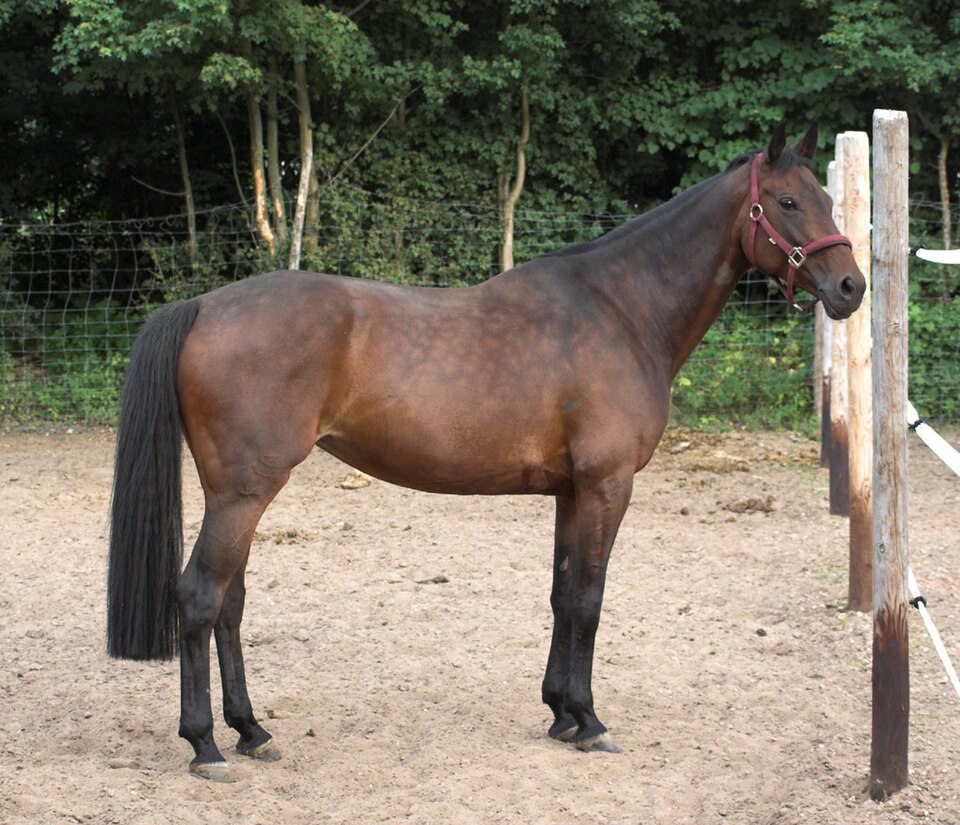
Reference photograph
Reference photograph of an Oldenburg horse. Compare the photographed individual's color and form with the identification information in the text.
Source: Martin Bahmann · Original material · CC BY-SA 3.0
1. Classification, origins and habitat
The Oldenburg is a registered horse population developed in Germany, connecting a carriage-horse history with modern sport-horse breeding.
The shift in breeding goals from earlier carriage horses to modern sport horses shows that a breed does not mean only a fixed appearance. Distinguishing current registration criteria from older agricultural sources helps explain why horses with the same name may look different across periods.
2. Appearance and identification
Modern selection favors a body suited to sport, with diverse bloodlines and coat colors.
Modern selection emphasizes long legs, balance and a body suited to exercise, while coat colors and head shapes vary. Similarity to other German warmbloods makes it difficult to establish the registered population from photographs alone. This is why pedigree information complements appearance.
Differences between the body types of older carriage-bred individuals and modern sport horses do not turn them into separate wild species. They illustrate breeding changes as purposes and registration criteria evolve.
3. Behavior and way of life
The breed is used in riding disciplines including dressage and jumping. Registration criteria changed over time, so distinguish sources about older carriage horses from those about current individuals.
Despite use in several disciplines, including dressage and jumping, an individual's assessment area and training need separate examination. Use of diverse foundation bloodlines does not mean any crossbred horse belongs to the breed. An individual's ability and actual competition experience are different matters.
4. Observation, conservation and care
Selection using several bloodlines for sport should not be described as one fixed appearance. Check registration documents alongside each horse's training and health records.
Fit saddles and harness to the body, and relate exercise intensity and rest to current body condition. Even a large, slender horse is not immune to overloading. Pedigree registration, assessments and current health and gait must be considered together when judging a suitable riding environment.
Evidence and references
- Oklahoma State University — Oldenburg
Classification, origins, appearance, ecology or breed uses
- Defra — Welfare code for horses and ponies
Suitable surroundings, feed, companionship, training and long-term care responsibilities